 Follow Us on Google News


 Follow Us on Google Discover
The adage”putting the cart before the horse” (CBH) is in common use. It is an adage one comes across early in life, such that by adulthood, it should have become a cornerstone of one’s life. Many people do put the cart ahead of the horse in early adult life, using the first monies earned in life to eat bean cakes—that is, akara. This is a Yoruba adage. The young buy expensive cars before having a business that assures regular cash flow. This is youthfulness enjoying bean cakes. A parent’s prayer is that their children quickly outgrow this and put the horse where it belongs, hinged in front of the cart.
Unfortunately, nations also behave like immature young adults, coupling the cart in front of the horse. Some nations outgrow this and get on the maturity path. Other nations remain trapped and make it a national character. They luxuriate in the habit and celebrate it. My nation is one and is currently making an art of it.
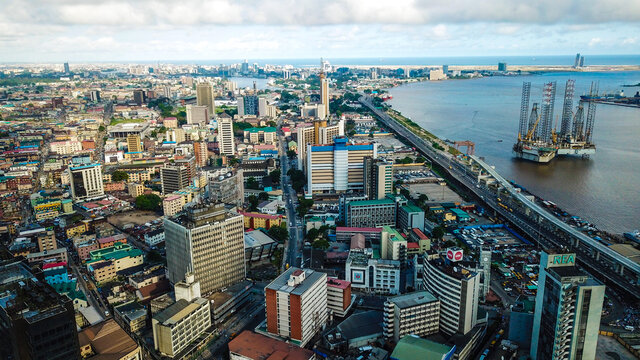
The Federal Government of Nigeria announced the construction of a High-Speed Rail (HSR) track between Lagos and Abuja, with construction scheduled to start in 2025. HSRs are powered by electricity and consume shiploads of steel. Neither of these two essentials is sufficiently available in Nigeria, yet the government wants to embark on HSR construction. This is a classic example of CBH—Cart Before Horse—the same way Abuja was built before self-sufficiency in cement, steel, or asphalt was ever achieved. Nigeria relied on importing these construction needs as the country was awash in petrodollars.
In this write-up, I give other examples from the past to the present, from which readers can judge if our government regularly puts the cart before the horse.
It’s in acquiring infrastructure for our dear country that CBH has been turned into an art form. The two examples above—HSR and the building of Abuja—are examples from our past and present. The new Lagos-Kano standard gauge rail, which has stopped beyond Ibadan, is a testament to our folly and comeuppance. How do you lay rail lines when you depend on imported steel and on the largesse of the Chinese for its completion? Sad. How could Nigeria have done it better? See earlier articles.
Not one emerging country that has done well regarding infrastructure has achieved these strides with imported steel, cement, and asphalt, or by importing builders and engineers. The exception is oil-rich, sparsely populated Arab countries like Saudi Arabia and other Gulf nations. South Korea, China, and India have all hitched the horse in front of the cart by warehousing in-country the Engineering, Procurement, and Construction (EPC) capacity and capability needed for any infrastructure or mega-production plants they so desired. We CBH countries patronise the Koreans, Chinese, and Indians for their expertise, never developing ours, thus slowing our rate of infrastructure acquisition to that of a snail nation.
Moving on. America has in place student loans but has minimal graduate unemployment. Aping the US, Nigeria implements loans for its undergraduates without solving the graduate unemployment problem. Is it the one-hour-a-week employment in Nigeria that will empower the Nigerian graduate to pay back the loans? The sustainability of the program depends on the student loans being paid back!

Currently, the government is pursuing tax reform before tackling inefficient government spending and treasury capture by politicians. Indeed, we have been thrown a red herring, and the party goes on. The Oronsaye report, which could have been a starting point, remains unimplemented.
As we wanted to delude ourselves into believing Nigeria was manufacturing cars, vehicles were knocked apart in Germany and France, crated, and shipped to Nigeria as Complete Knock Down (CKD) parts. On arrival in Nigeria, they were uncrated, coupled up again, and voila—Made in Nigeria vehicles were on our roads. It never lasted. Unfortunately, the policy was dusted up and became the centrepiece of a new auto policy fashioned under President Jonathan. Talk of not learning from the missteps of our past! We refused to see to the manufacture of vehicular components as spare parts for existing vehicles on our roads or satisfying segments of the supply chain that go into vehicular assemblage in other countries. Real wealth and technology transfer are in the manufacture of vehicular components, not in the assemblage of vehicles.
REGULATING WHAT WE DO NOT HAVE
States are setting up electricity boards to regulate what? Thin air, I suppose, since not one of the states can generate electricity. I imagine states expect their regulatory boards will open the floodgates for investors to rush in. I remember Ayn Rand’s quote: “When those who produce nothing are put in authority to license or make laws for those who produce stuff, know then your society is doomed.” Exactly what operates in Nigeria.
Initially, telecom companies were left to fix their rates freely, and their services got up and running. Now, they beg to fix their rates, and their services are deteriorating. Nigeria stopped PMS price fixing only to bring in, through the back door, price fixing in the telecom sector. Quite a lesson for prospective power providers.
About ten years ago, the then-finance minister tilted the nation’s debt profile. She canvassed for the country to assume more foreign debt despite our plummeting capacity to earn foreign exchange. Without fixing this problem, the Vice President proceeded on a country tour to sell to the nation a $30 billion borrowing spree, which they achieved. Before the end of their tenure, over 90 per cent of the government’s revenue was being used to service loans procured. CBH has consequences—some immediate, others chronic.
The lower interest rate on dollar loans was the attraction for increasing the ratio of foreign loans to naira-denominated loans. No expert told the then-Finance Minister that the naira was on perpetual devaluation, which would eventually raise the naira value of dollar loans—meaning a perpetual increase in interest payments each time the naira was devalued.
The consequence of CBH is that Nigeria cannot experience the transformative growth seen in Northeast Asian countries, where they put the horse where it should be—hitched in front of the cart, pulling the cart uphill. Let’s compare Ibadan and Shenzhen in China. In 1963, Shenzhen was a fishing village, while Ibadan was a regional capital that boasted Cocoa House, then the tallest building in Nigeria.
In the eighties, things began to change in China, and today, while Ibadan’s skyline remains the same with Cocoa House still dominating, Shenzhen’s skyline now compares with that of any first-world capital city.
Nigeria also took the CBH approach in its electric power evolution, which has put a limit on effective power delivery for industry and the populace. While developed nations built national grids from the bottom up, my country’s approach has been from the top down. In the developed world, local power stations sprung up to meet local demand. These stations were then integrated into regional grids. Thereafter, regional grids formed into a national grid, which was later integrated into continent-wide supergrids. It is excess electricity that is passed into national grids from regional grids.
Not so in Nigeria. After independence, Nigeria established the national grid and made it lord over existing local stations that served specific towns while building local power stations was prohibited. Meaning, rather than generating power close to where demand is, a grid generates the power—a misnomer—and transmits it over long distances.
Is Nigeria operating a cart-before-horse development philosophy a cultural thing? As a people, we celebrate the superstructure, not minding the absence of an underlying and unseen substructure. How we took pride in Cocoa House and WNTV, proudly chanting “FIRST IN AFRICA!”
Can we blame our politicians? The populace continually assesses politicians by superstructures—aka white elephant projects—and stomach infrastructure. Proper development of the substructure counts for nothing when assessing our politicians. This is not limited to the hoi polloi, as public analysts assess each government’s performance by superstructures seen. In short, we are in a vicious cycle, forever carried away by superstructures, never querying if an adequate substructure is in place.
Dr. Jaiyesimi writes via [email protected] | 08123709109

