 Follow Us on Google News
 Follow Us on Google Discover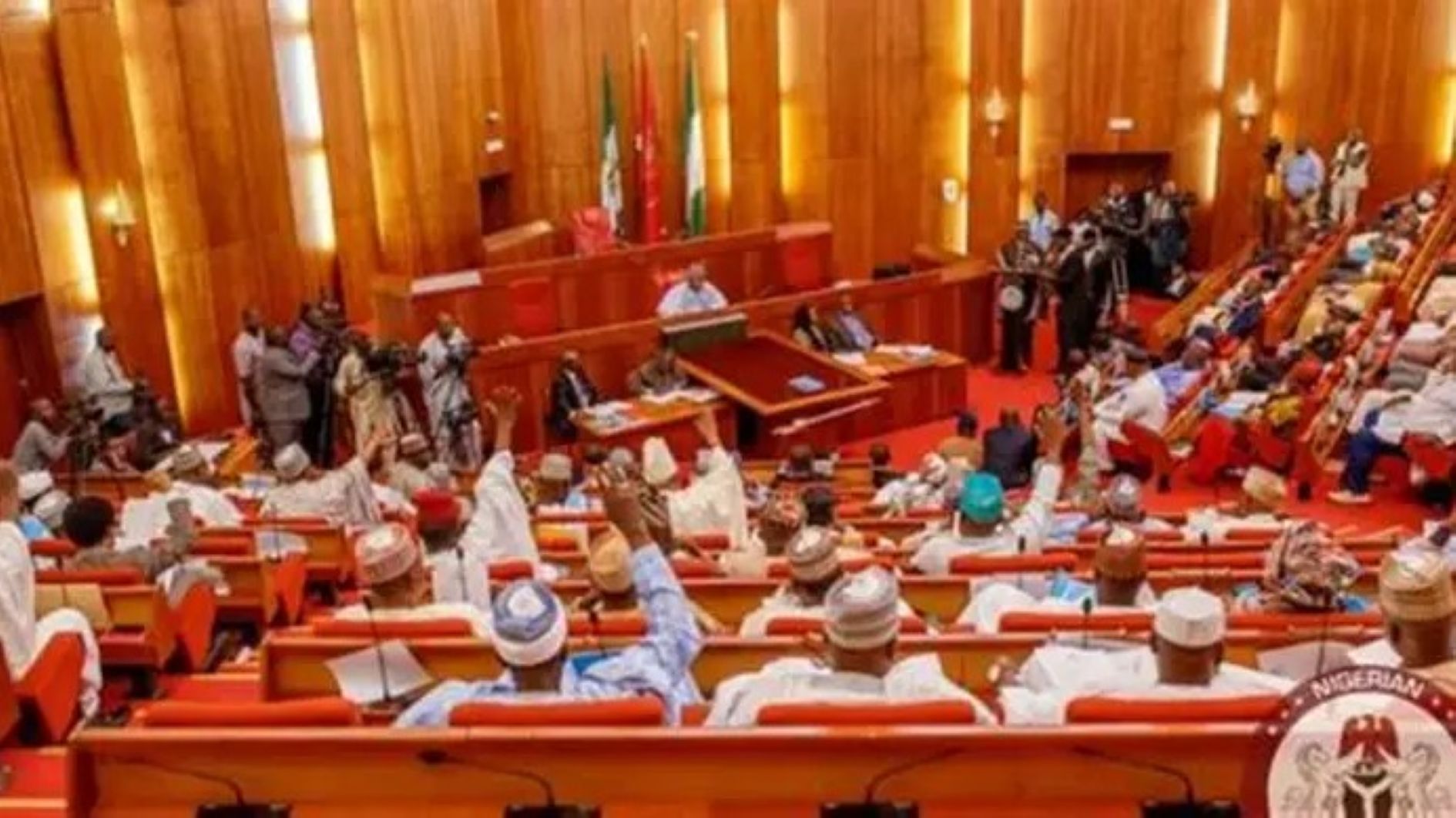
As Nigeria inches towards the 2027 general elections, the reported scramble by no fewer than 18 former governors to secure seats in the Senate raises fundamental questions about the quality, character and direction of the country’s political leadership.
The growing interest of former governors in the National Assembly is not entirely new. Several governors have successfully moved from state government houses to the Senate, while others are now positioning themselves to make the transition.
Among those reportedly linked to the 2027 Senate race are the Senate President, Godswill Akpabio, Orji Kalu, Ahmadu Fintiri, Bala Mohammed, Seriake Dickson, Ifeanyi Okowa, Adams Oshiomhole, Ibrahim Dankwambo, Yahaya Inuwa Yahaya, Hope Uzodimma, Ibrahim Shekarau, Adamu Aliero, Yahaya Bello, AbdulRahman AbdulRazaq, Dapo Abiodun, Simon Lalong, Aminu Tambuwal and Mai Mala Buni.
There is, in principle, nothing wrong with a former governor seeking election to the Senate. The Constitution does not prohibit it. Indeed, the experience acquired by a former governor in managing the machinery of state could enrich legislative debates, particularly on public finance, security, governance and intergovernmental relations. But political experience alone should never be treated as sufficient qualification for another public office. The Senate must not become a retirement home, political sanctuary or refuge for former governors seeking to preserve their influence after leaving executive office. Nor should senatorial seats become extensions of state political machinery through which former governors continue to exercise power by proxy.
If former governors compete with other candidates on a level playing field and win on the strength of their records, ideas and popularity, there should be no objection. The problem arises when incumbency, political godfatherism, state machinery and illicit influence are deployed to bulldoze a former governor into the Senate.
That is where the real danger lies. A former governor who deploys the enormous political influence acquired in office to manipulate a party primary or undermine the electoral process raises serious questions about his fitness to become a lawmaker. Worse still, if a politician leaves the state government house only to seek another office as a means of perpetuating the same political practices that damaged the state under his watch, Nigeria would merely be recycling its problems.
The Senate should be a chamber of serious lawmaking, scrutiny and accountability. It should not become a haven for political elites seeking to preserve influence, privilege or access to public resources.
There is also a troubling perception that some former governors seek Senate seats to retain political relevance or, in some cases, to shield themselves from accountability for their stewardship in office.
Such perceptions are damaging to public confidence in representative government. No public office should be converted into a sanctuary from legitimate investigation or prosecution.
The case of former Senate President, David Mark, illustrates the broader concern about the danger of excessively long political careers without commensurate accountability. Mark represented Benue South in the Senate from 1999 and served as Senate President from 2007 to 2015. His long public career was accompanied by controversies and allegations of financial impropriety, including matters that attracted the attention of anti-corruption authorities. Such allegations should not be presented as facts in the absence of judicial findings. But the episode underscores a larger national problem: the tendency to recycle political elites without sufficiently interrogating their records in public office.
Nigeria cannot continue to recycle failure. If a former governor performed poorly in office, what compelling reason should Nigerians have to believe that he would suddenly become an outstanding senator? If a governor was accused of mismanaging public resources, abusing state power or undermining democratic institutions, the appropriate response is not to reward him with another platform but to subject his record to rigorous public scrutiny.
Nobody should be rewarded with another public office merely because he once occupied a powerful office.This is where the electorate has an indispensable role to play. Representative democracy is ultimately about the power of citizens to reward good leadership and reject bad leadership. Nigerians should not vote for candidates simply because they are former governors, wealthy politicians, party leaders or political heavyweights.
They should ask difficult questions. What did the former state governor aspirant achieve as governor? What happened to the state’s revenues and federal allocations under him? What loans were obtained and how were they spent? What major contracts were awarded? Were public assets properly managed? What debts were accumulated? How transparent was the administration? What was its record on education, healthcare, security, infrastructure and employment? Above all, did the governor leave the state stronger or weaker than he met it?

These questions are particularly important at a time when Nigerians are struggling with economic hardship, insecurity, unemployment and declining confidence in public institutions.
Granted that former governors are entitled to contest elections. Under the present constitutional framework, a former governor who satisfies the applicable requirements is eligible to seek election to the National Assembly. Section 65 of the 1999 Constitution sets out the qualifications for membership of the National Assembly, while Section 66 provides grounds for disqualification, including certain criminal convictions and, subject to the constitutional provisions, indictment for embezzlement or fraud by a judicial or administrative panel of inquiry.
However, former governors should not be allowed to bulldoze their way into the Senate as if a senatorial seat is their entitlement. For instance, a former governor whose record is tainted by fraud should not be allowed to contest for the Senate. Likewise, a former governor against whom a competent court has made a final finding of corruption, fraud or misappropriation of public funds should face appropriate constitutional or statutory consequences, including disqualification for a prescribed period, where constitutionally permissible.
Every former governor seeking a senatorial seat should also be required to publicly account for his stewardship. Such an accountability statement should cover state revenues, federal allocations, loans, expenditure, major contracts, public assets acquired or disposed of, outstanding liabilities and other material aspects of his administration.
The Independent National Electoral Commission (INEC) could, subject to the necessary legal framework, be empowered to publish relevant accountability records of former governors seeking elective office. Political parties should equally be required to disclose the integrity criteria used in selecting such candidates.
This would shift the emphasis from political pedigree to public accountability. The reform should not stop with former governors. Former ministers, deputy governors and other senior public officials who seek elective office should equally be subjected to appropriate transparency and accountability requirements. The strongest restrictions, however, should apply to persons against whom there are established findings of serious misconduct.
The objective should not be to witch-hunt former state governors at all cost. It should be to ensure that public office is not used as a revolving door through which political actors move from one position to another without ever accounting for their previous stewardship.
Former governors must also learn to let go of power. There is nothing undemocratic about retiring from political office and allowing a new generation of leaders to emerge. The Senate is not the fiefdom of former governors. Neither is it a dumping ground for failed politicians seeking a second political life.
The 2027 elections must, therefore, be more than the familiar contest among political heavyweights. They should be an opportunity for Nigerians to demand a higher standard of representation.
The country needs senators who can scrutinise government expenditure, make sound laws, defend constitutional democracy, protect citizens’ interests and hold the executive accountable. It does not need politicians whose principal qualification is that they once occupied a Government House.
Former governors should be judged by what they did with power, not merely by the power they once possessed. The message to political parties and voters should be unmistakable: the Senate must not become a sanctuary for recycled political failure. In 2027, Nigerians should vote for competence, integrity, accountability and a demonstrable commitment to public service.
The ballot box remains the most powerful instrument available to the citizen. Nigerians should use it wisely.

