 Follow Us on Google News
 Follow Us on Google Discover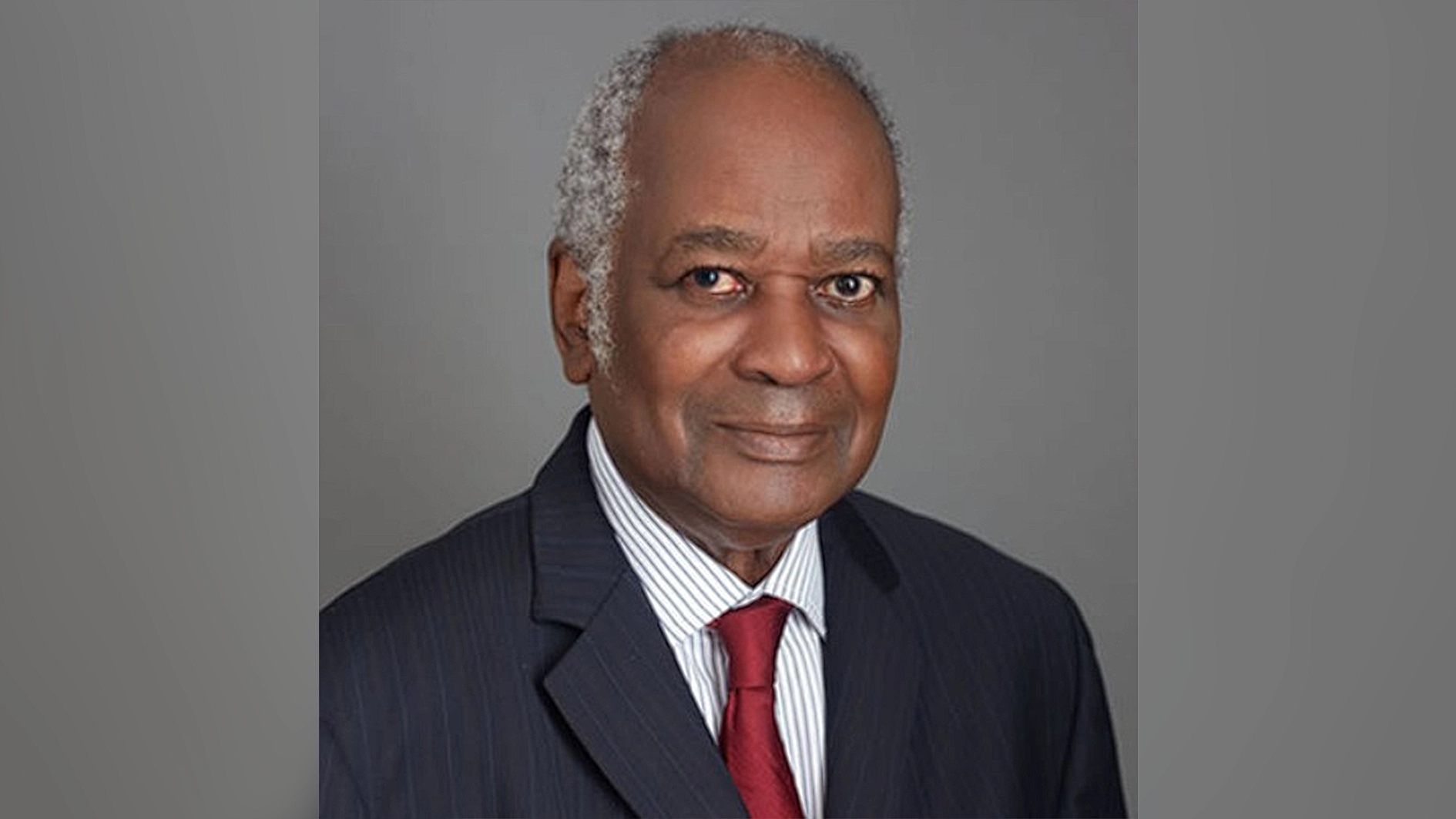
The death of Professor Alfred Bandele Kasunmu (SAN) is not just another solemn entry in the obituary columns of the Nigerian legal profession. His passing is an occasion for reflection on a tradition of legal practice that appears increasingly waning in intellectual rigour, integrity, and etiquette.
Kasunmu represented the lawyer’s identity of that era when the law was treated as a calling rather than merely a lucrative occupation.
Professor Kasunmu, who died on Sunday, August 9, 2026, at the age of 92, was one of the distinguished figures of the Nigerian legal profession whose career traversed scholarship, legal education, public service, and advocacy. Born on May 23, 1934, in Lagos to parents from Ilesa, Osun State, he attended Baptist Academy, Lagos, before proceeding to the University College London, where he obtained his Bachelor of Laws and Master of Laws degrees. He also studied at the School of Oriental and African Studies (SOAS) in 1961-1962. Called to the Nigerian Bar in 1964, he began teaching law at the University of Ife the same year before joining the University of Lagos in 1971.
At the University of Lagos, Kasunmu rose to become Professor of Law and served as Dean of the Faculty of Law from 1973 to 1975. His scholarly contribution was demonstrated early in his career with the publication, alongside a co-author, of Nigerian Family Law in 1966, a work that reflected the intellectual seriousness with which his generation approached the development of Nigerian jurisprudence. He also edited The supreme court of Nigeria, 1956-1970.
He was also a public servant of distinction, serving as Attorney-General of Lagos State from 1975 to 1978. In 1978, he was appointed a Senior Advocate of Nigeria. He subsequently founded Professor A.B Kasunmu’s Chambers LP in Lagos and remained in active legal practice for decades, eventually becoming the oldest surviving SAN in active practice. His professional engagements extended beyond advocacy to arbitration, notaries practice, and service as an international expert on Nigerian law.
Yet, for all these achievements, Kasunmu’s most enduring legacy may be found, not necessarily in the titles he accumulated or the positions he occupied, but in the values he represented. Kasunmu belonged to what many lawyers nostalgically describe as the good old days of the Nigerian Bar. It was a generation populated by men and women whose names carried authority long before the proliferation of social media, spectacular offices and elaborate professional titles. Their reputation was built in courtrooms, chambers, law books and, above all, through years of diligent and disciplined service to the law.
Kasunmu represented an era in which lawyers debated law. They argued over principles, jurisprudence and the proper development of the law. They disagreed vigorously without necessarily becoming disagreeable.
The courtroom was an intellectual arena in which the strength of an argument, rather than the volume of the advocate’s voice, determined its worth. That culture is worth recovering.
One of the troubling developments in contemporary legal practice is the increasing tendency to elevate technicality over substance. Procedure is indispensable to the administration of justice, but when technical rules become ends in themselves, the law risks losing its essential purpose. The finest lawyers of Kasunmu’s generation understood that advocacy was not simply about discovering procedural loopholes through which a case could escape. It was about helping the court arrive at justice through a compelling exposition of the law, while being masters of procedure. But their mastery was accompanied by a deeper appreciation of the philosophy and purpose of law. They appreciated that a lawyer could win a point and yet lose the larger argument about justice.
In his era, Kasunmu and many of his contemporaries were regarded as largely incorruptible. Their professional standing could not be simply purchased or negotiated. They did not come cheap because excellence never does, but neither did legal fees assume some of the extraordinary proportions associated with certain contemporary practitioners.
Kasunmu and his professional colleagues did not entirely lose its social conscience. He handled numerous cases pro bono, compared to the present age in which access to justice remains one of the most serious challenges confronting ordinary Nigerians.
A legal profession that serves only those who can afford it cannot fully discharge its constitutional and moral responsibilities. The lawyer is a professional and deserves to be properly remunerated. But the law is also an instrument of justice. The willingness of distinguished advocates to deploy their knowledge and standing in the service of people who could not afford their fees was a powerful reminder of that truth.
Kasunmu’s influence extended beyond the courtroom. That universities and other institutions have erected statutes and created enduring memorials in honour of distinguished legal figures of his generation speaks to the depth of their contribution to society. Such monuments are not merely celebrations of individuals; they are reminders of standards.
The real monument to Kasunmu, however, should not be cast in bronze. It should be found in the conduct of lawyers who come after him. His generation understood that legal etiquette mattered. Respect for the court mattered. The manner in which a lawyer addressed a judge mattered. Civility towards colleagues mattered. The dignity of the profession mattered. These were not cosmetic conventions but essential components of professional responsibility.
Kasunmu’s death offers an opportunity for renewal. The Nigerian legal profession needs lawyers who can combine intellectual brilliance with moral courage; lawyers who understand that advocacy is not merely a contest to be won but a responsibility to the administration of justice; lawyers who can command substantial fees without allowing money to become the measure of professional worth; and lawyers who remain willing to represent the vulnerable when circumstances demand it.
If the Nigerian Bar can rediscover the virtues of integrity, scholarship, civility, public service and fidelity to the deeper purposes of law, then the death of Professor Alfred Bandele Kasunmu will have occasioned something more enduring than mourning. It will be an invitation to restore the noblest traditions of the profession, so that the good old days can become the foundation of a better tomorrow.

