 Follow Us on Google News
 Follow Us on Google Discover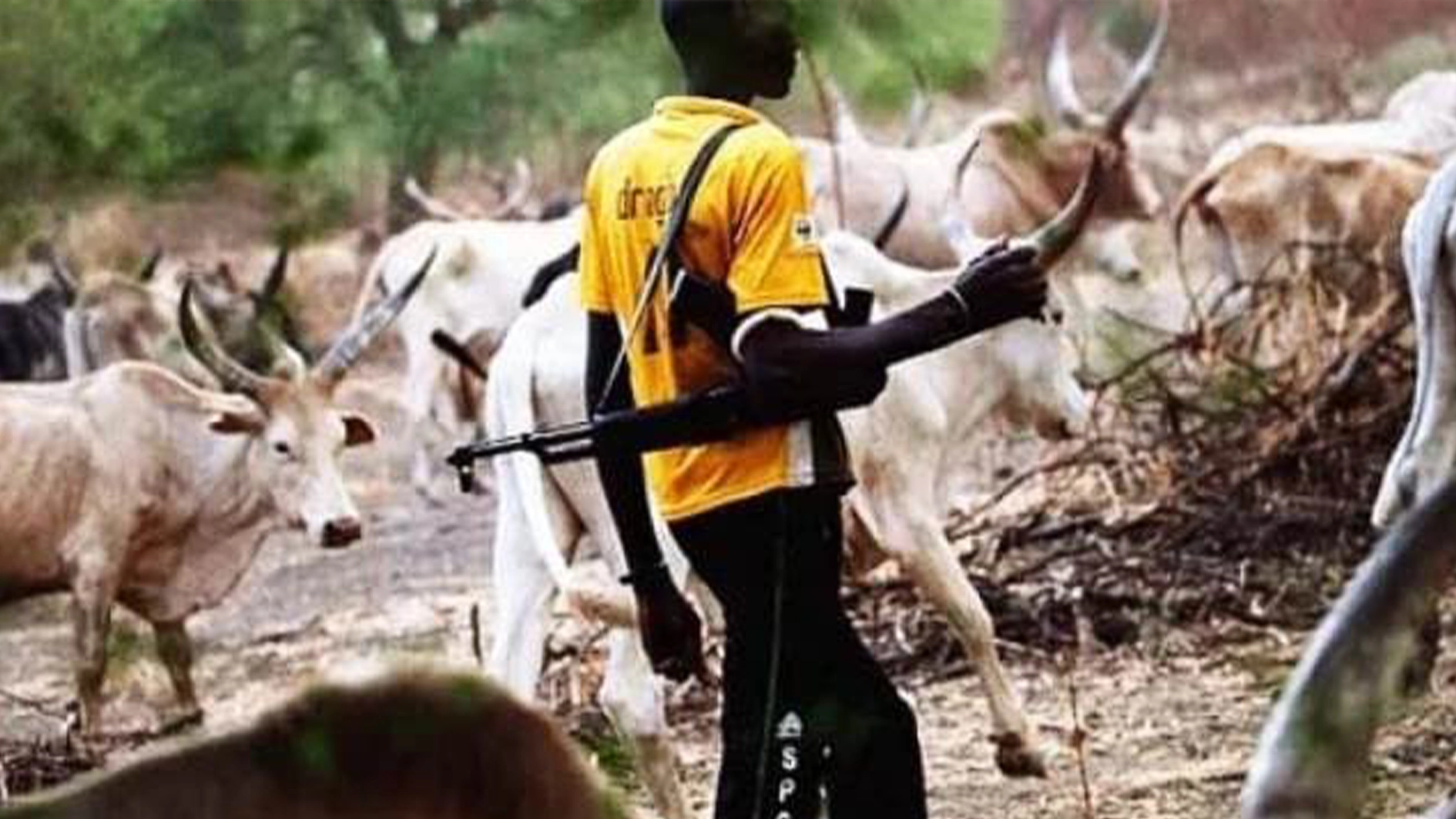
Reports that 3,000 people were killed in farmer-herder clashes in Nigeria’s North central, between 2018 and 2023, are damning and unacceptable. This raises questions about the sincerity and determination of the government to bring the decades-old menace to an end, and speaks to how poorly human life is valued in the country and how weak the government is in handling insecurity.
The reports strongly suggest that the government has either failed or has abandoned its constitutional responsibility to secure life and property, while at the same time being on top of political and electioneering matters. While it is not abnormal to prepare for 2027, everything is certainly wrong when such focus is made at the expense of the primary duty of government, which is security and welfare. Amidst the misplaced attention, agricultural communities continue to be theatres of violent clashes and loss of lives because herders insist on open grazing of their cattle on farmlands that have been painstakingly cultivated. The result, besides the avoidable loss of precious human lives, is that food security is endangered, fear prevails in the land, and the economy is destabilised.
The Programme Officer of Youth Against Disaster Initiative (YADI), Mr Farouk Bala, made the shocking revelation of 3,000 deaths and the displacement of 300,000 victims of farmer-herder clashes at a media event. Those were findings of the Centre for Crisis Communication and a 2024 report by the Nigerian Security Tracker.
The report points to the government’s reluctance and lack of political will to deal with rampant cases of farmer-herder clashes. The report is substantiated with almost daily news of carnage inflicted on farming communities in many northern states by marauding herders. And this is despite years of policy formulation and setting up of institutions to address the conflict. Sadly, the country is far worse than it was decades back, with cattle now contending for space with human and vehicular traffic even in the city centre of Abuja, the federal capital territory.
The point had been made many times, and in laws enacted by several state governments, that open grazing of cattle no longer has a place in animal science and livestock production. But each time efforts are made to sanitise and replace open grazing with modern alternatives, the Federal Government does not feel obligated to complement the efforts of states. Under former President Muhammadu Buhari, the menace of farmer-herder clashes became rife and emboldened, with the Federal Government insisting on reawakening ancient grazing routes. Buhari’s efforts in 2019 to implement the Rural Grazing Area livestock policy (RUGA) were mired in insincerity and provincialism. The fear that the Federal Government merely wanted to encourage or motivate nomadic herders to grab lands from agricultural communities for pastoral activities frustrated the efforts.
For best livestock yields, governments elsewhere have long adopted ranching in place of moving cattle across thousands of kilometres in search of grazing land. In the process, they trample on farmlands. Civilised countries have since overcome this challenge. But Nigeria appears trapped in a pre-colonial-era open grazing mentality.

Meat production in the country is low compared to countries such as South Africa and Tanzania. Brazil recorded about $9.3 billion in beef exports in 2024; the United States posted $7.2 billion; Australia earned about $8 billion, while Uruguay attracted $2.85 billion through high-quality, traceable beef production.
It is high time the government treated livestock farming as a private business, the way farmers of rice, cocoa, cotton, groundnut and other crops are treated. The federal government should confront the menace of farmer-herder clashes once and for all. Ranching has proven to be the best solution globally. It would settle perennial disputes between farmers and herders. It would provide pastoralists with settled communities, where they are provided with life-enhancing infrastructure – education for their children and health facilities for their families. In addition, ranching would boost productivity.
This was the promise of the Federal Government when President Tinubu created the Federal Ministry of Livestock Development (FMLD) on July 9, 2024. In November 2024, in Rio de Janeiro, Brazil, President Tinubu promised to end farmer-herder clashes in a renewed focus to drive international and local investments into livestock. On that occasion, he said, “What we’re doing right now is that we are solving a problem that afflicted humanity in that part of Africa, clashes between farmers and migrating cows that have caused some life and bloodshed, when there is a modern, civilised way to solve those problems and even bring a successful economy out of it.” Nigerians demand a civilised solution without further delay.
Notably, too, on that occasion in Brazil, President Tinubu signed a letter of intent between the Nigerian government and JBS S.A, one of the top three largest meat processing companies in that country. A $2.5 billion deal was signed on that occasion. The government needs to show Nigerians that the deal is on course.
In November 2025, President Tinubu declared a state of emergency on insecurity, with an order for herders to end open grazing and surrender the weapons they illegally acquired. He said, “Ranching is now the path forward for sustainable livestock farming and national harmony. The Federal Government, in collaboration with the states, will work with you to solve this problem, once and for all.” The government is yet to commence action on this.
Curiously and unfortunately, each time President Tinubu promises to deliver a solution, the problem actually worsens. In 2025, the federal government budgeted N11.8 billion for the development of the Livestock ministry. N315 million of the budget was for the construction of ranches in states that have high records of farmer-herder clashes. That budget was christened ‘Budget of Restoration: Securing Peace, Rebuilding Prosperity’. There are yet no traces of the ranches.
During the February 2026 budget defence, Minister of Livestock Development, Idi Mukhtar, stated that of the N11.8 billion proposed in 2025, the ministry had not received any funding. The minister added that from the 2024 approved take-off grant, only N20 billion was released to fund 40 projects.
All these portray a situation where the government massages problems with platitudes and empty rhetoric that are inimical to securing the lives of citizens or ensuring food security for the population. Worse still, it has been established that pastoralists are no longer looking for grazing land, but land to occupy. This is responsible for the deadly attacks on indigenous farming communities in Plateau, Benue, Taraba and Edo states and nearly every other state. That is abhorrent and must stop.
It is the government’s responsibility to provide an enabling environment for farmers and herders to thrive. The government’s failure to provide security and safety has led citizens to apply self-help to defend themselves. This is not the way to go as it is laced with new problems. Yet, government failure is brewing resistance across the country. In Ondo State, youths took to the Akure-Owo highway to protest the killing of farmers by suspected pastoralists. In Ekiti, communities have warned that they will take the law into their hands if the government continues to abdicate its responsibility for their safety. In Ekpoma, Edo State, there were protests in January 2026 against banditry and kidnappings that are often linked to herders.
Not only should the government investigate these cases and bring perpetrators to book, but the government must demonstrate commitment and the political will to make the country safe for all. Livestock budgets and policies should be implemented as promised and within specified timelines.

