The federal government’s proposal to operate two separate federal budget cycles simultaneously in 2026 has somewhat exacerbated the dissonance in managing the country’s public finances. This unwholesome practice had been accentuated when the National Assembly in 2024 approved multiple overlapping budgets for the government. By that, the country had operated three budgets simultaneously in 2024, which included the N21.8 trillion 2023 budget inherited from the Muhammadu Buhari administration, the supplementary budget prepared by the Tinubu administration in 2023 to the tune of N2.17 trillion, as well as the N28.7 trillion 2024 appropriation.
The trend continued in 2025, when the capital component of the 2024 budget, which should have ended in December 2024, was extended twice, first to June 2025 and then to December 2025. These actions were not in the best interest of the economy and have thus been injurious to the smooth running of the federal budgetary process. Seemingly, the Bola Tinubu administration appears oriented to this wrong practice, which is at variance with global best practices in budgeting and public financial management.
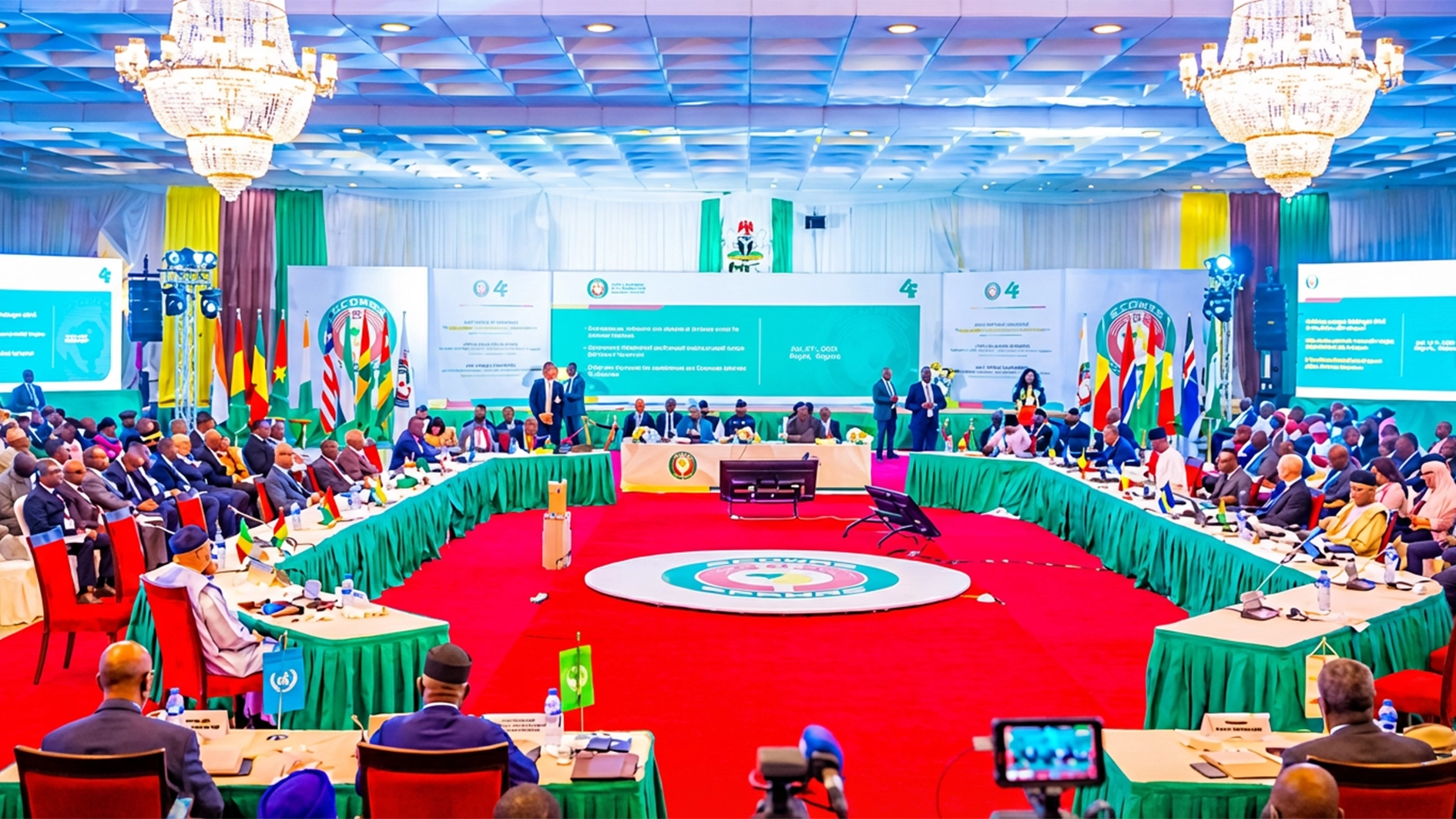
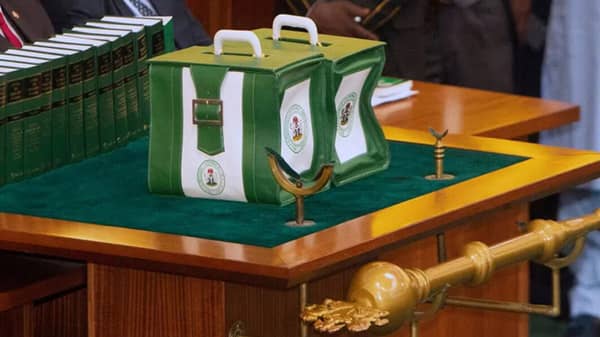
It is reflective that on Friday, December 19, 2025, President Tinubu while presenting the 2026 Appropriation Bill of N58.18 trillion themed “Budget of Consolidation, Renewed Resilience and Shared Prosperity,” to the joint sitting of the National Assembly, requested the approval for the extension of the 2025 Budget implementation to March 31, 2026, by transmitting to it, the Appropriation (Repeal and Re-Enactment) Bills for both the 2024 and 2025 budgets. The President’s proposal to the National Assembly is to repeal the existing Appropriation Acts and re-enact the revised expenditure plans, according to him, to reflect current fiscal realities and execution capacity.
His proposal, which advocated that the 2024 budget of N35.06 trillion be replaced with N43.56 trillion, while the 2025 budget of N54.99 trillion be re-enacted at N48.32 trillion to cover statutory transfers, debt service, recurrent expenditures, and capital development contributions, has been received with some scepticism in some circles. This smirks of some measure of uncertainty in the management of state affairs in an era when macroeconomic stability and certainty should be a hallmark of public policy.
By these past budgets’ repeals and re-presentations, President Bola Tinubu has increased the 2024 budget by over N8 trillion and scaled down the 2025 budget by over N6 trillion. The implication is that if the President’s request to extend and re-enact the 2025 budget is approved while the 2026 budget is also signed into law, Nigeria will effectively be operating two budget cycles simultaneously. Hence, the administration would be running overlapping budgets despite its earlier stated intention to streamline fiscal planning and improve accountability. These afterthoughts in policy formulation can be better managed, no matter the degree of urgency or changes desired.
Aside from these anomalies, another disturbing development is the inconsistency of information emanating from the executive arm of government. While the Minister of Finance, Wale Edun, lamented that only about N10.7 trillion was generated in revenue in 2025, far below the projected N40.8 trillion, the Presidency sang a different tune, that the government achieved the entire revenue target for the year. Edun attributed the shortfall to weak performance in the oil and gas sector, particularly Petroleum Profit Tax and Company Income Tax, as well as underperforming revenue subheads. Somebody somewhere is being economical with the truth and Nigerians deserve better than this.
Another area of concern is the penchant for borrowing by the administration. For the 2025 budget, although the government borrowed about N14.1 trillion, total inflows remained insufficient to fully fund the N54.9 trillion budget. Also, the 2026 budget indicates the government’s continued reliance on deficit financing to sustain growth and critical public spending. The budget indicates a proposed deficit of N23.85 trillion, which is equivalent to 4.28 per cent of the country’s Gross Domestic Product (GDP). Debt servicing is expected to consume N15.52 trillion, which is about 26.7 per cent of the total expenditure, exceeding allocations to several key sectors and remaining one of the largest single spending items in the budget. Probably with the new tax reforms coming into effect in 2026, the degree of deficit financing would be abated.
While the administration is basking in the euphoria of reports of easing inflation to below 15 per cent and increase in GDP growth rate to 3.98 per cent in the third quarter of 2025, up from 3.86 per cent in the same period of 2024, among other macroeconomic data, a lot still needs to be done to stabilise the economy as many Nigerians are still suffering and struggling very hard to eke out a living for themselves and their families.
There are fears, despite the government’s assurance to the contrary, that the new tax reforms may worsen the economic circumstances of many Nigerians. The administration needs to allay these fears by ensuring that the management of the country’s finances is handled with diligence, integrity and concern for the citizenry.
Nigerians deserve value for all these humongous amounts being bandied around in the budget documents.