 Follow Us on Google News
 Follow Us on Google Discover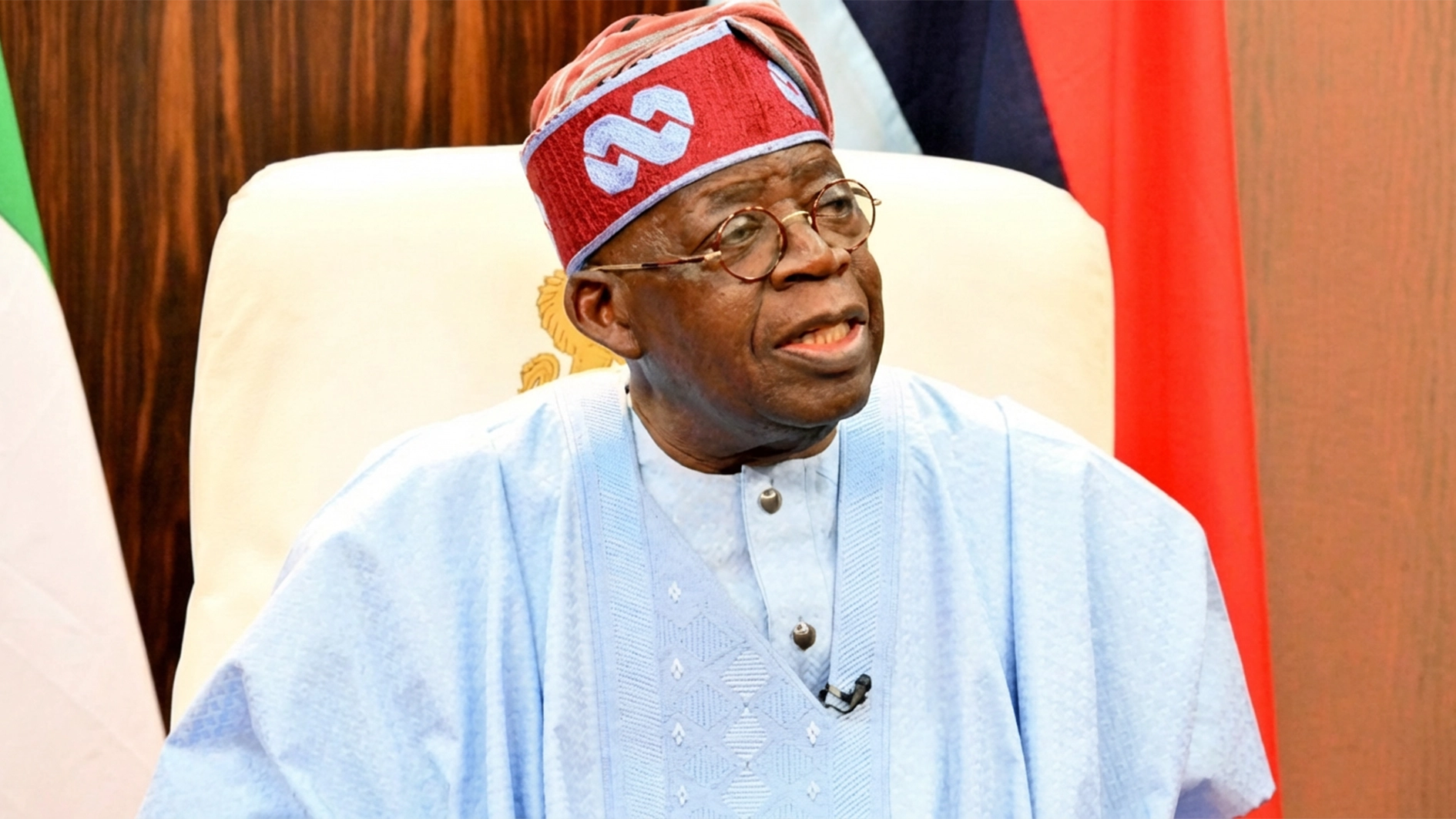
President Bola Tinubu’s public acknowledgement of terrorism as an immediate, major challenge facing his administration is particularly significant, coming at a time of surging terrorist activity in the country. He told state governors: “The next phase of our struggle is staring us in the face; it is the challenge of insecurity in this country. I’m making all the efforts to ensure it is we, collectively, that will share the joy and be proud of victory over tyranny.” The president’s admission can offer some hope to hapless Nigerians that the scourge of terrorism, banditry, kidnapping and associated vices will come to an end someday. Still, it’s insufficient considering the daily death tolls being recorded in many parts of the country.
Nevertheless, reports that terrorism-related deaths have surged by 46 per cent, leading to 750 fatalities in Nigeria in 2025, are very troubling, not only on account of the precious human lives so wasted, but also considering the huge financial outlay by the federal government to combat the menace in recent times. According to the Global Terrorism Index (GTI) 2026, Nigeria is now the fourth most affected country in the global terrorism ranking, climbing two places from its previous sixth position. Pakistan tops the index, followed by Burkina Faso and the Niger Republic.
It is unacceptable that Nigeria ranks among the world’s most terrorised countries, a tag that points to the government’s inability to protect its citizens. Yet, the security of lives is the primary purpose of government. A government that cannot prevent its citizens from being regularly slaughtered like ants has no business seeing itself as a government. This is a tag the country should reject in its entirety, by challenging the government to live up to its responsibility to free the country from the stranglehold of terrorists.
In 2025, the Federal Government allocated N6.57 trillion to security and defence. Rather than translate to tangible results commensurate with resources expended, the country has become more terrorised.
President Tinubu disclosed that President Macron of France, as well as European leaders, including former Slovak Prime Minister Eduard Heger, Switzerland’s Marc Jost and Austria’s Gudrun Kugler, have pledged support to tackle insurgency in Nigeria.
He told governors at the Eid-el-Fitr celebration that he had a lengthy discussion with Macron on existing lines of credit to acquire necessary equipment and support. He equally told the governors of efforts to contact other nations for support; “even if we have to spend out goodwill and line of credit, we have those who are willing to support us with equipment and training.”

Whatever international assistance the President has sought must be put to good use. Nigeria is reeling from its deadliest wave of terrorism since 2019, when Boko Haram insurgents first began operating as a localised insurrection known only in Borno State. Today, terrorism has become a national calamity, with terrorists’ splinter groups, such as ISWAP, Ansaru and Lakurawa, holding territories and running parallel governments across the Northwest and North-central. They collect taxes and security fees from citizens before allowing them to work on farms and trade in markets. No serious government should condone this. The Constitution of the Federal Republic (1999) does not permit insurgents and terrorists to set up governments aside from what is constitutionally recognised. The government should wake up to assert the country’s sovereignty and put an end to terrorism.
It is equally important that President Tinubu’s recognition of terrorism as the government’s main challenge should go beyond mere admission to ensuring that the government’s efforts achieve results. What Nigerians have witnessed is that, before now, the government appears to have prioritised politics over governance. Accepting defectors has become the order of the day while citizens are hacked down mercilessly by terrorists across the country. The government should take the fight to the terrorists rather than waiting to respond to a terrorist attack. By now, the government should be on top of vital information concerning terrorists’ locations in the Lake Chad region, Sambisa Forest, Mandara Mountain, forests in the Northwest and the Kainji and Borgo region in Kwara and Niger states. All their leaders ought to be known to the government. Islamic Cleric, Sheikh Ahmad Gumi, said the Nigerian government knows the identities and locations of terrorists and bandits. The Federal Government has yet to deny or accept this challenge.
While it is commendable that nearly 400 terrorism suspects were tried and convicted in a mass trial that took place over four days, there is more to be done, as that number represents a minute fraction of individuals taking arms against the Nigerian state. Many of those convicted received prison terms of up to 20 years after appearing before a panel of 10 judges. Naming and shaming is not sufficient; justice must be seen to be done.
The Tinubu government should take decisive action now. It is time for the government to change its strategy in combating insecurity. First, the government must develop the political will to confront the powers behind terrorism, in and out of government. Boko Haram was condoned in its infancy because of political sentiments. The Federal Government must confront the monster by exposing closet supporters of terrorism. There is, so far, nothing to convince Nigerians that the origins of Boko Haram and those who condoned and enabled it have been investigated and necessary action taken. The government should demand accountability.
Senator Ali Ndume, representative of one of the hardest hit constituencies, Borno South, has warned that if care is not taken, terrorists will capture Borno State. That might sound alarmist, but it is high time the government desisted from countering citizens’ genuine despairs with argumentum ad hominem. That is counterproductive and shifts the focus unnecessarily. No one can deny that terrorists are killing citizens and also killing military personnel. Not less than 10 soldiers were killed in a terrorist ambush in Kebbi State two weeks ago.
Good as foreign help might sound, continued dependence on offshore solutions does not portray Nigeria in a good light as a one-time regional power in West Africa and on the continent. Medium power countries such as Brazil, India, Pakistan, and Turkey have mastered arms production. Nigeria is the only country of its size and resources that is not maximising the opportunity to manufacture and sell arms. This is the time to look inwards and demonstrate capacity and discipline. The government should revive the local steel industry and machine tooling capacity.
The government needs to boost the morale of the country’s fighters through the sincerity of purpose of the political class. There should be transparency in funding and arms procurements. Nigerians are tired of big budgets and little results. The government should fully protect human life and not allow the normalisation of terrorism and bloodshed. Citizens must be alive for there to be a country.

