 Follow Us on Google News
 Follow Us on Google Discover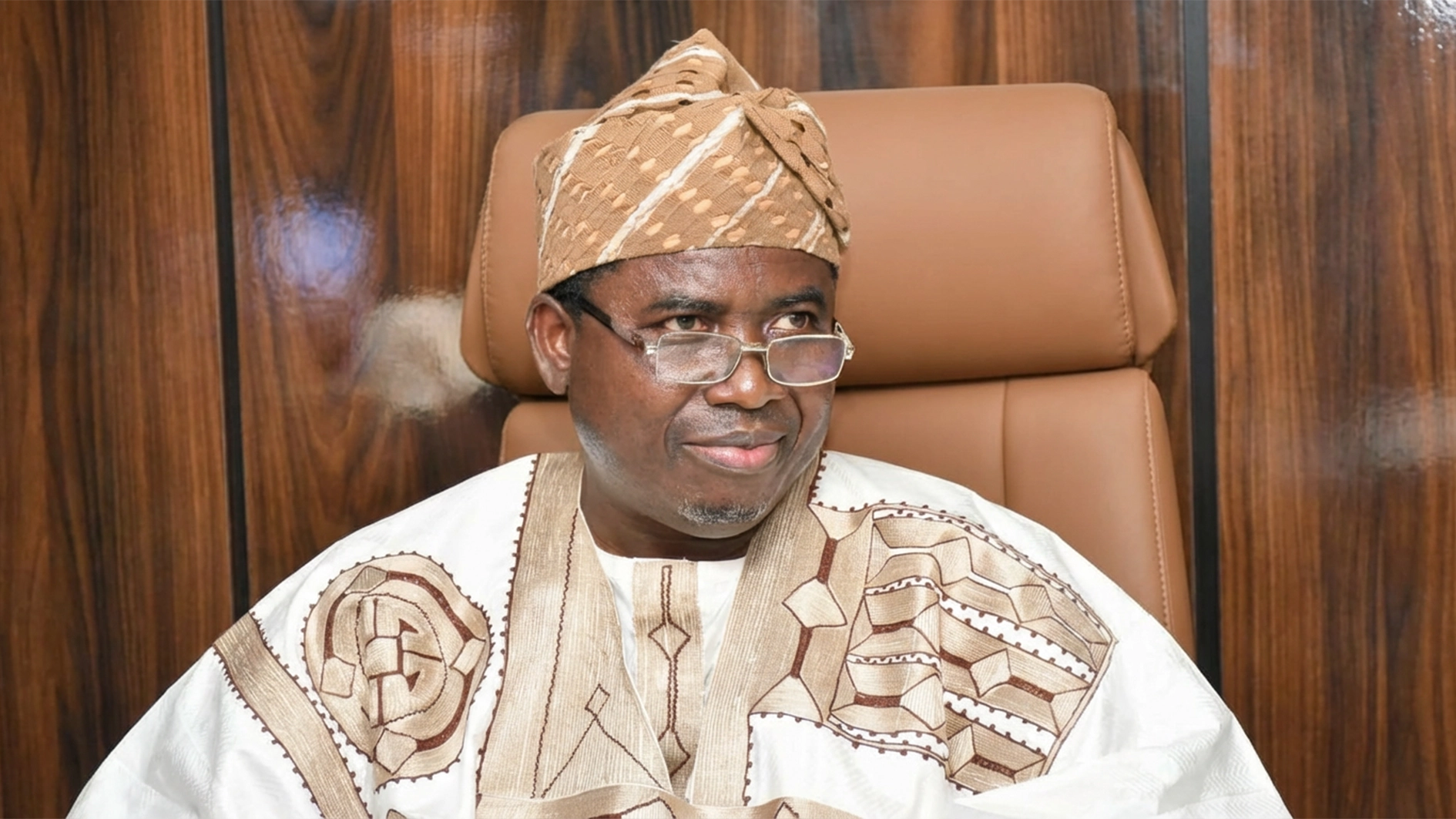
Coming from the Chairman of the Independent National Electoral Commission (INEC), the apex body charged with conducting general elections in Nigeria, Prof. Joash Amupitan’s lamentation about the apparent waning interest of citizens in elections is significant.
It shows, among other things, that no matter the commission’s efforts to organise credible elections, these efforts would be undermined by voters’ apathy or seeming lack of interest in elections. While Amupitan has notably promised to conduct elections that reflect the wishes of the electorate, the deficit of keeping the promise is huge; and until INEC and the government get it right, convincing Nigerians to go out willingly to vote on election days will remain a tall order.
For instance, many Nigerians are yet to be convinced that the omission of a mandatory provision for real-time electronic transmission of results in the amended Electoral Act is in their best interest.
Many see the superiority of manual transmission, depicted in the new electoral law, as a potential disincentive to voter participation in future elections. Given the high rate of voter apathy in recent elections, INEC needs to demonstrate the capacity and willpower to organise a credible and transparent election if it is to improve voter turnout in the 2027 elections.
At a leadership workshop organised by the International Foundation for Electoral Systems (IFES), INEC’s Chairman, Prof. Amupitan, echoed public concerns over growing civil nonchalance towards elections. He lamented waning public confidence in Nigeria’s electoral process. Prof.
Amupitan acknowledged that Nigerians expect an electoral management body that is independent in thought and action, transparent in its processes, professional in conduct and credible in its outcomes. Accordingly, he reaffirmed the Commission’s commitment to tackling voter apathy and strengthening public confidence in the electoral process.

He, however, correctly observed that misinformation and disinformation have increasingly undermined public perceptions of elections. “In an era where fake news travels faster than the truth, INEC is often compelled to defend its integrity against orchestrated falsehoods even before the first vote is cast,” he said.
The current high rate of voter apathy in Nigeria is alarming. Not only does it undermine the legitimacy of elected governments, but it also weakens democratic institutions as the ruling class directs their loyalty to political investors rather than the people.
Voting is one of the ways ordinary citizens can participate in governance. Therefore, a true democratic setting must have an electoral system that allows the people to freely and fairly elect preferred leaders without interference. Undeniably, an electoral process predicated on equality, fairness and transparency will attract mass participation.
Credible elections are the primary antidote to voter apathy. Disappointingly, the voting trajectory since Nigeria transitioned to the current civilian dispensation has consistently declined.
For example, the 2007 general election recorded 57.5 per cent voter turnout; 2011, 53.68 per cent; 2015, 43.65 per cent; and 2019, 34.75 per cent. The 2023 general election recorded the lowest voter turnout with 26.71 per cent, representing 24.96 million voters out of 93.47 million registered voters. The trend shows a steady decline in electoral participation.
The question, therefore, is: why are Nigerians manifesting a lack of interest in leadership recruitment? While many factors affect the quality and credibility of the country’s electoral system, INEC has, since its establishment in 1998, often failed to live up to its responsibilities. It seems not to be in total control of the entire process. The electoral law and guidelines are brazenly flaunted without consequences.
For instance, political parties openly engage in premature campaigns, double-nominations, illegal candidate substitution, vote-buying, underage voting, violence, etc., without let or hindrance.
The current leadership of INEC should take 2027 as the litmus test of its capacity. It is duty-bound to conduct credible elections. Consequently, the necessary measures and structures to guarantee free, fair, seamless and transparent elections should be put in place.
The failure of governance is also a salient catalyst for voter apathy. Nigeria has been plagued by poor leadership over the past two decades, as each succeeding government has been worse off than its predecessor. Many sectors of the economy are not functioning optimally after 27 years of uninterrupted democracy!
Nigerian rulers continue to fail to deliver on campaign promises. The government is discharging its twin responsibility of security and welfare minimally. The dividends of democracy are a mirage for common citizens, while the commonwealth remains the exclusive preserve of political elites. Sadly, the system has failed to hold political officials accountable.
Nigeria is battling existential-threatening security challenges, but the national government is fixated more on politics while critical sectors (health, education, justice, agriculture, security, etc.) struggle. Government at all levels has failed to remedy the worsening living conditions of the people. Access to basic healthcare and social amenities remains an illusion to over 130 million Nigerians. Yet, politicians lavish the country’s common patrimony unapologetically.
The situation is aggravated by the judiciary’s failure to meet public expectations, while reports from various organisations, including the Independent Corrupt Practices and Other Related Offences Commission (ICPC) and National Bureau of Statistics (NBS), portray the judicial sector as a corrupt institution. Some reports linked election-related and high-profile political cases to high-value bribery, although the judiciary’s leadership denies the allegation.
Furthermore, the current party system is an albatross to election participation and good governance. Nigerian political parties are hardly founded on national values or democratic ideals. Politicians lack philosophical and moral depth and mainly use party structure as special-purpose vehicles to advance personal interests. This explains the inter-party defections by serving political officeholders.
The party nomination process is determined by considerations other than merits. Nigerians are usually put between the devil and the deep blue sea with the calibre of candidates presented by the parties. Many of the candidates have questionable records or are under investigation for fraud. The choices offered to the electorate are usually depressing.
Overwhelmed by the systemic failure, Nigerians have now adopted an attitude of electoral pessimism. Ironically, this fuels bad governance, as low turnout is leveraged to manipulate election results. Therefore, people should not despair, as they still have the collective power to effect the desired change through the ballot box.
Citizens’ participation in the electoral process is crucial to national growth and stability. As stated by a public analyst: “Democracy seems to be a failed process when citizens are unconcerned about who emerges victorious in an election.” Accordingly, the various organs of the government must offer servant-leadership service to the people. With good governance, Nigerians will vote en masse.

