 Follow Us on Google News
 Follow Us on Google Discover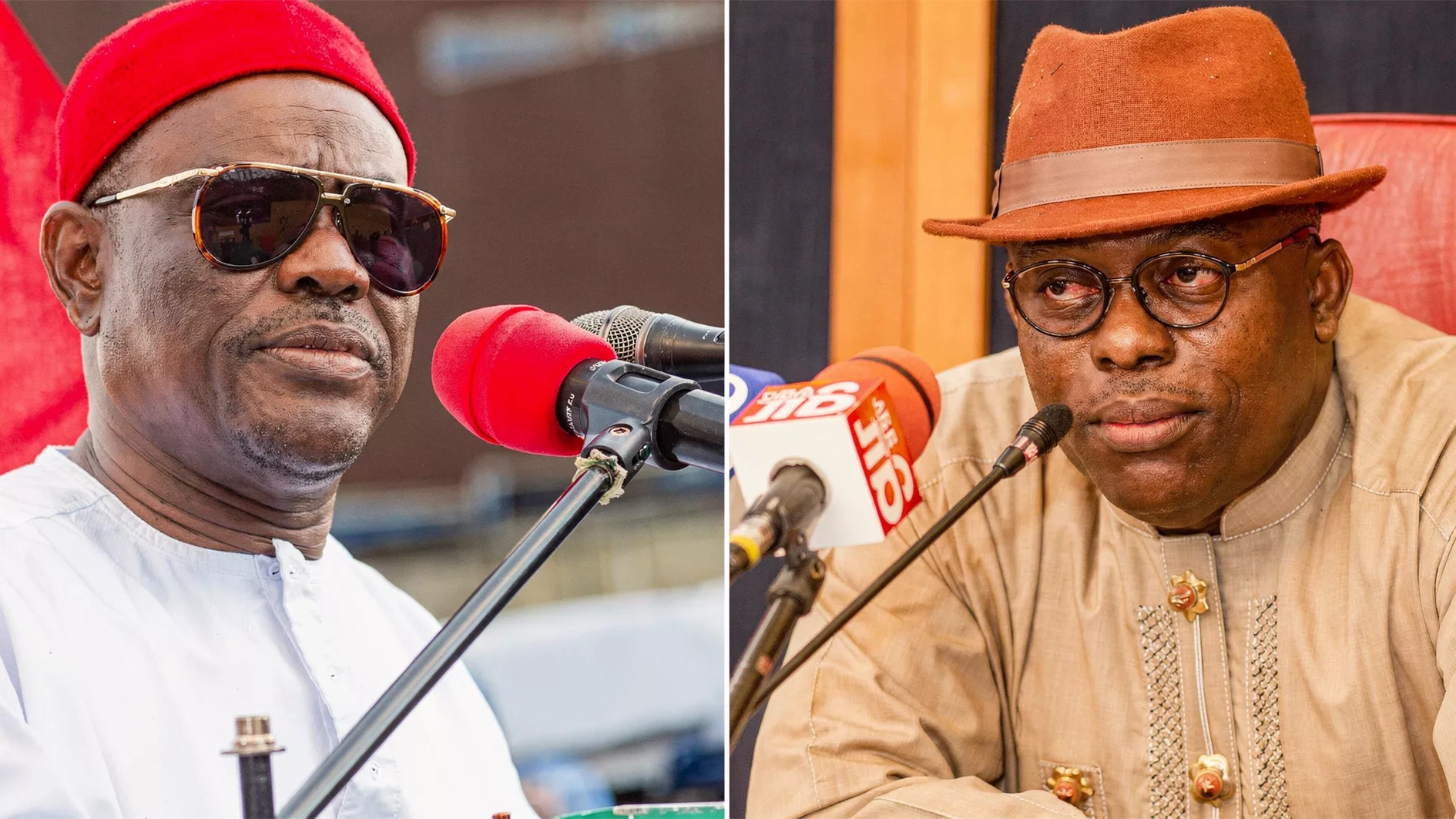
Following the latest intervention by President Bola Ahmed Tinubu in the protracted political crisis in Rivers State, Nigerians expect the protagonists to fully and finally sheath their swords and allow peace to reign. In particular, Rivers State and its people deserve a break from their travails since 2023 to enable the state progress and manifest dividends of democracy. To this end, it is gladdening that the warring parties have, yet again, spoken in manners that suggest that the path to peace has finally been negotiated. While it has become compelling for the gladiators to shield their swords on account of presidential intervention which has truncated the impeachment plot against the governor, it would be necessary for them to demonstrate commitment to lasting peace.
Thus, the recent peace pledge by the Governor, Similari Fubara and the Minister of Federal Capital Territory, Nyesom Wike should not be compromised, considering that both the governor and the minister had, in the past, backtracked on truce leading to the escalation of tension and prolonged uncertainty in Rivers State. Whatever the case, the Rivers State conundrum should pass for a study in political shenanigans which negates the spirit and letter of democratic practices as well as undermines the Constitution of Nigeria. Notwithstanding, it is hoped that recent rapprochement would douse tension and restore democracy in Rivers State in the overriding interest of genuine governance and development.
It is, indeed, lamentable that the people of Rivers State have been denied genuine governance on account of the frosty relationship between the governor and members of the legislative arms of government who are loyal to the minister Nyesom Wike. It would therefore not amount to exaggeration to conclude that the electorate in Rivers State has been shortchanged by the political actors entrusted with the mandate of governance in 2023. More disturbing is that the disagreements between the former governor; Wike and his protégé, the incumbent governor Fubara that snowballed into long-drawn crisis have no place in constitutional democracy. The crisis was avoidable and should not have been contemplated under whatever guise. It should be deemed unsettling and unacceptable that the crisis which broke out barely six months into the administration of Governor Fubara crystallized into series of litigation and continued after the expiration of six-month emergency rule during which the governor and the legislators were suspended from office.
Considering the entrenched interests that have coalesced around the crisis, it thus remains to be seen how the momentum ahead of 2027 will shape the politics and governance of Rivers state as politicians jostle for relevance.
Going forward, it has become pertinent that political actors in Rivers State should consider the overarching interest of governance over and above individual egos and self-glorification. Political actors in Rivers State should be more interested in pursuing the greater good of the greater majority of the stakeholders. Unresolved political crisis inhibits governance and only serve to benefit the narrow interest of a few who rely on corridors of power for sinecure. It is about time the overwhelming majority of stakeholders in Rivers State come to the realisation that the state has been held down for too long over disagreement that is essentially not about governance but on account of self-aggrandisement by political actors. It should be instructive to assert that Rivers State electorate voted for governance and political stability rather than the theatre of the absurd they have witnessed for close to three years out of the four years tenure of the present elected representatives.
Whereas President Tinubu has featured as the chief mediator in the unfortunate political crisis in Rivers State, it must however be asserted that the failure of Mr. President to rein in on his minister seemed to have allowed the crisis to fester. The Minister of the Federal Capital Territory like other appointees of Mr. President has no constitutional role or authority to exercise in Rivers State and therefore ought not to have been condoned with the assertion of a counter-force to the state governor. Disagreements between incumbent governors and predecessors who are their godfathers have become a familiar feature of the politics since the restoration of democracy in 1999.

Interestingly, such disagreements have not been allowed to degenerate into the exercise of parallel authority as witnessed so far in Rivers State. While the governor has been distracted from exercising the mandate of governance, the legislative arm of government has not settled down to the business of governance beyond show of force with the state governor.
On a final note, there should be no denying that the crisis in Rivers State is rooted in the predisposition for incumbent governors to compromise electoral process in favour of the emergence of their lackeys. As it turned out in Rivers State however, the desire of the godfather to perpetuate his stranglehold on power has gone sour; leaving the anointed puppets in quandary. In retrospect, the scenario in Rivers State would have been avoided if succession process had not been unduly tinkered through imposition rather than democratic selection. It is therefore hoped that the useful lessons of the turbulent political scenario in Rivers State will serve to dissuade individuals consumed by the desire to build political dynasties through manipulative politics whose ultimate end portends crisis and uncertainties for governance.

