 Follow Us on Google News
 Follow Us on Google Discover
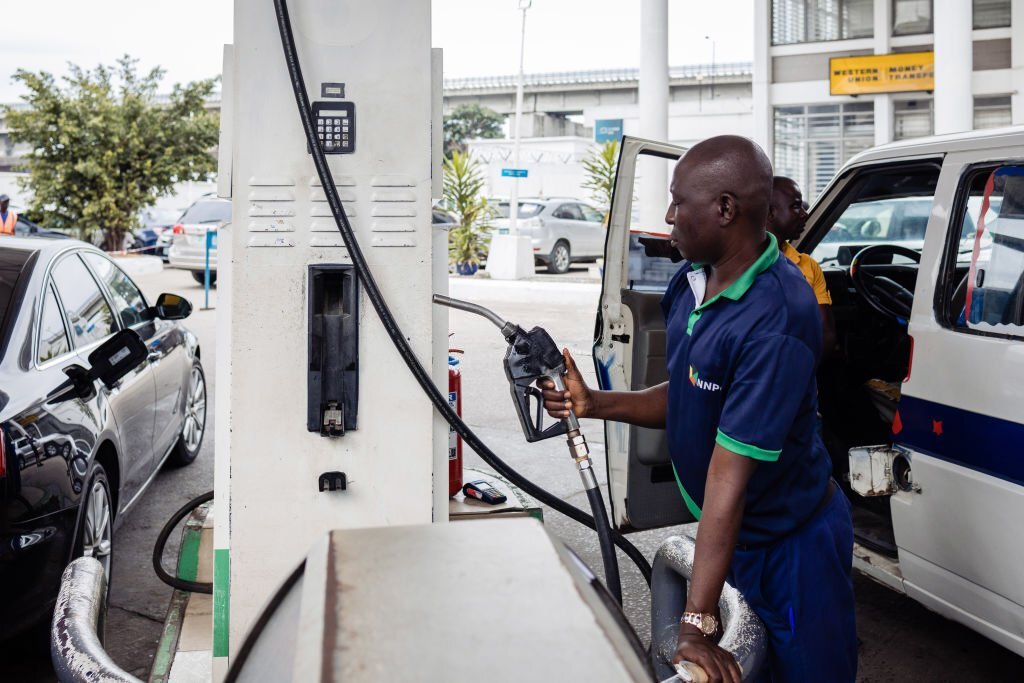
The confusion in the petroleum sector, manifesting in higher prices and scarcity of petrol is a metaphor for Mr Bola Tinubu’s reforms, after16 months in the saddle. Although the jump in price has been a writing on the wall in the past few weeks following erratic supply and long, sometimes interminable fuel queues at filling stations, government had sadly pretended that all was well, and thus failed to provide any cushion for the masses who are consequently faced, suddenly, with more excruciating personal economies, at a time they are reeling from runaway inflation in all sectors, including food items.
[ad]
The President, who also doubles as the Minister of Petroleum, superintends over the price hike chaos, barefaced lies of opaque Nigerian National Petroleum Company Limited (NNPCL), and the doomsday realities that are befalling helpless Nigerians. Put together, Mr President falls short of the real, strategic, and empathetic leadership that Nigeria needs the most at this desperate time.
Without warning, and while Mr President was in China last week, the pump price of petrol at NNPCL stations nearly doubled in just a day. The official statement denied the spike but didn’t reverse the uniform rate at the stations. But when Tinubu met the Nigerian community in China four days later, he revealed that: “Nigeria is going through reforms…We are taking very bold and unprecedented decisions. For example, you might have been hearing from home in the last few days about fuel prices. But, can we help it?” he queried.
Specifically, as the minister of petroleum, Tinubu presides over the NNPCL that acts as both a regulator and operator in the critical sector that accounts for 90 per cent of Nigeria’s total export value. But the same NNPCL has the tradition of opacity, non-compliance with statutory rules, and a culture of telling lies that the selfish political class has found most acceptable.
It begins with the fact that Nigerians don’t know the amount of crude oil the country processes daily, nor the amount of fuel they consume. Neither the Petroleum Industry Act (PIA) nor the current administration has been able to halt that culture of impunity. Since June 2023, NNPCL has been denying the return of subsidy to achieve pump price stability despite the exchange rate hitting N1,800-plus against the dollar, with the government purchasing refined petrol in dollars. When newspapers reported that the company owed its oil suppliers to the tune of $6.8 billion to partly explain the supply rationing and queues at filling stations, NNPCL promptly denied the claim.
In August, the company even announced that its revenue from crude oil sales in 2023 had jumped up to N14.07 trillion, an increase of 298.7 per cent. This was against the N3.52 trillion earned in 2022. Barely three weeks later, the same NNPCL admitted indebtedness to suppliers and in dire financial condition due to the cost of supplying PMS! While the landing cost hovers around N1,117/litre, NNPCL has been subsidising the shortfall to sell at N565/litre at the stations.
Therefore, the cash-strapped NNPCL can no longer subsidise petrol, hence the unprecedented jack-up in the pump price. So, where is Tinubu’s reform and where has his ‘subsidy’ gone, despite the buffeting pains of the so-called post-subsidy era?
[ad]
Contrary to Tinubu’s claim on reform, the lack of it and clearheaded plan has led the country to the present cul-de-sac. For a fact, Nigeria has its back against the petrol price wall, and for which Dangote petrol promises no substantial salvation. Nigeria has to choose between FG/NNPCL’s version of “energy security” – which means paying subsidy for importation and to Dangote, to have NNPCL play the PIA role of supplier of last resort – or have the sale of the white product at prevailing market rate of over N1000 to N1,500-plus/litre, which promises to backfire in the tenuous economy and among a fed up masses that have no purchasing power to match the energy cost.

The way out requires a short to medium-term solution that must be concerted, albeit it begins with Mr President waking up to the urgency of rectifying the miscalculations of his government in tackling the oil subsidy behemoth. In the interim, and a grim reality too, Nigeria cannot avert subsidy in the entire value chain of the petroleum product. But the presidency can accord the regulator, like the Nigerian Midstream and Downstream Petroleum Regulatory Authority (NMDPRA), its strong backing to become active in managing the situation in the public interest. In the current circumstance, the trio of NNPCL, the Independent Petroleum Marketers Association of Nigeria (IPMAN) and the Major Energy Marketers Association of Nigeria (MEMAN) can all purchase and sell at their prices, but under the close monitoring of the regulator, to ensure fair pricing and non-exploitation of the Nigerian public. Unfortunately, the current administration has not shown much of that discretion.
The next step is the design of a coordinated policy that secures the border from smuggling of Nigerian petrol to neighbouring countries where petrol readily yields 100 per cent profit. Clearly, Nigerians in connivance with officers of Nigerian Customs have nurtured the invincible and invisible economy of transnational trade and smuggling in the Sahara region that needs more than a passing interest to tackle. A solution-oriented administration would have issued a marching order to its Comptroller-General of Customs to completely change the narrative, instead of settling for daily seizures and revenue earnings as tenure achievement.
[ad]
The medium-term step is to ensure and encourage local production of the products and fully end the aberration of import dependency. A reformist and sincere President would have made that happen in 16 months without excuses. Over 60 private licences were issued along with those of Dangote and BUA. Holders of the licences should be encouraged to come upstream.
The NNPCL leadership, which should have been condemned to the dustbin of history in a serious country, must make all four government-owned refineries work in six months, or sell their assets to regional interests without further delay. The alternative is to trade them in scraps, while the government shifts regulatory attention to the growth of modular refineries that security agencies are busy destroying on the grounds of being illegal operations.
Lastly, the chaos in the petroleum sector and the economy at large is symptomatic of Mr Tinubu’s quality of leadership both at the critical ministry and the country itself. While Nigerians are languishing, the President is not showing his sensitivity or understanding of their plight; and if he does, only in words and not in deed.
Many Nigerians are now awaiting his magic wand before the next avoidable mass protests, which is imminent unless the President and his team can run the country differently, and achieve a result that will drastically ease the pains of Nigerians.
[ad]

