 Follow Us on Google News


 Follow Us on Google Discover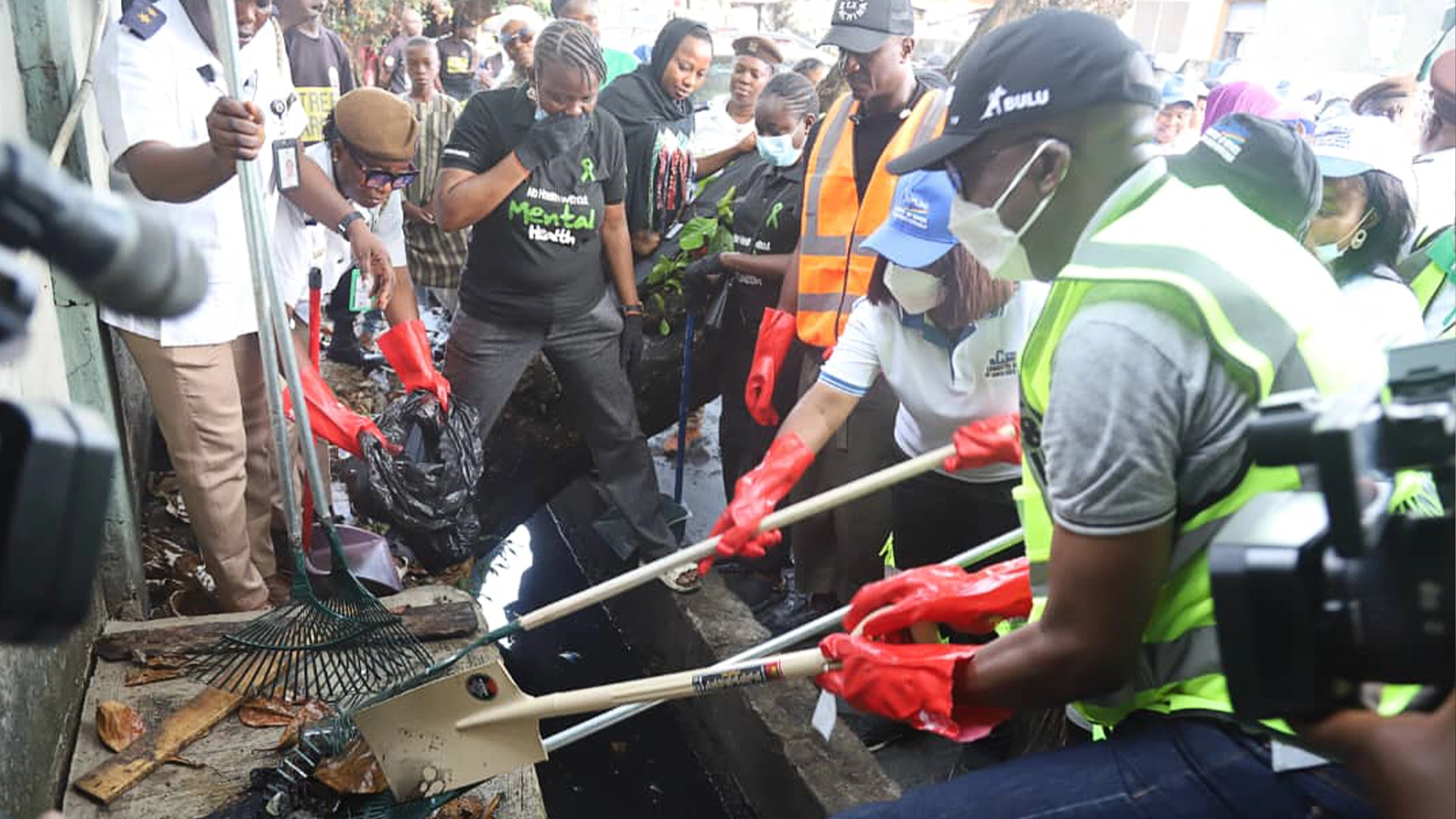
The reactivation of a monthly environmental sanitation exercise in Lagos State exactly three months ago is a remarkable development in a rapidly evolving megacity struggling to counter hordes of unhygienic practices. Indeed, with a huge daily influx of people from the hinterland and from outside the country, keeping Lagos clean and healthy is a herculean task, compounded by inadequate public facilities for refuse disposal and a weak enforcement mechanism. Therefore, the resuscitation of the sanitation exercise will be meaningful, particularly if tailored as part of a whole process to really sanitise the city’s health and environment.
On Saturday, April 26, 2026, the monthly environmental sanitation restarted in Lagos State after a 10-year break, following some disputes relating to the restriction of movement of the residents that went to court, and a subsequent suspension of the exercise every last Saturday of the month. The state government reintroduced it with a promise to shift from the total lockdown that was enforced before the initial court ban to what it described as ‘controlled movement’.
No doubt, environmental sanitation, particularly in a fast-growing city like Lagos, is crucial to attaining a level of cleanliness in the congested environment, not only to prevent outbreaks of diseases but also to boost the economic prosperity of the state. It is important, however, that the exercise should not be carried out in any way that will lead to infringement on the fundamental human rights of the residents. The goal is to clean up Lagos; it should not be turned into an opportunity to harass, intimidate and extort the people. These irregularities, unfortunately, characterised the reintroduction of the exercise, according to reports. The sanitation authorities will do well to correct the anomalies to maintain the right focus on the exercise’s core goal.
The government itself must lead by example. Some of the tasks involved in the cleaning exercise are in the purview of the constitutional responsibility of the government, especially at the local level. With the constant increase in the quantity of waste being generated in the highly populous Lagos, the task of efficient disposal is becoming enormous, and so the government should give it the priority it deserves, particularly in terms of funding and logistics. The authorities should begin to think about how the waste can be turned into wealth. Environmental sanitation should not encumber the operation of other businesses, private or public.
When the exercise was reintroduced, it elicited mixed reactions from some residents. While some people commended it, particularly for taking place from 6:30 a.m. to 8:30 a.m. (from the previous 7 a.m. to 10 a.m.), still allowing them to continue their daily businesses for the rest of the day, others faulted the timing, wondering why people should be made to do the exercise at such early hours of the day. Some reprimanded the government for poor handling of the disposal of the wastes and for failure to perform some of its own tasks in the cleaning process. The government should take note of complaints and do the needful.
Governor Babajide Sanwo-Olu and the Commissioner for Environment and Water Resources, Tokunbo Wahab, had promised that movement would not be forcefully restricted during the cleaning exercise, but when it was reintroduced, there were reports of arrests of some residents by government officials, and extortion of some people by street urchins in places like Mushin, Agege, Oshodi, Coker and Surulere. In one of the reports, a resident said he was arrested while walking to his place of business in the Surulere area and had to part with some money before he was released.

As promised, Governor Sanwo-Olu and Wahab have a responsibility to ensure that the rights of the residents are protected during the exercise. It was learnt that the legal battle on the sanitation exercise is still pending in the Supreme Court. In any case, there should be no intimidation of residents. Besides, environmental sanitation is supposed to be a daily exercise, not restricted or scheduled for a particular day. There should be a way of making people do it continuously and without the use of force. One way of doing that is for the government to perform its own part of the job.
In the Fourth Schedule of the 1999 Constitution of the Federal Republic of Nigeria (as amended), local governments are saddled with the responsibility of constructing, maintaining, and regulating sanitation infrastructure to promote public health and prevent flooding. Paragraph 1 (h), which is about sewage and refuse disposal, specifically mandates local governments to provide and maintain public conveniences, sewage and refuse disposal services. This responsibility includes clearing gutters to ensure the free flow of water and proper waste disposal to prevent blockage of the drainage systems. But while ‘Highway Managers’ employed indirectly by the state government are usually seen at work, the local government can rarely be seen doing this in Lagos.
Another concern is the delay in evacuating the wastes generated in the communities, including those that are dug out of the drainage systems. At different times, residents have voiced their frustration with the Lagos Waste Management Agency (LAWMA) for not being readily available to collect the refuse. What happens most times is that affected communities become choked with accumulated wastes, while those dug out are washed back into the drainages by the next rainfall, rendering all the cleaning efforts wasted and the sanitation exercise wasteful and dangerous to health.
The management of the waste disposal needs to be sanitised and not enmeshed in too much politics. When an evacuation contract is given out based on political leaning with the party in power rather than competence and capacity, the sanitation exercise would be flawed and ineffective. There are public complaints of an insufficient number of waste disposal vehicles and competent personnel. And discharging the waste at the available dumpsite is fraught with inordinate delays.
The situation at the waste dump site is a serious issue that the Lagos government will need to address by opening or creating new sites, because it is obvious that the existing ones are full. It takes days for waste trucks to evacuate at the sites currently being used in Epe and Badagry. During the delay, many communities become choked with old and newly generated waste. Whenever this is the case, improper disposal of wastes, particularly through patronage of truck pushers, becomes rife and can lead to contamination of surface and groundwater, while nearby dumpsites attract rodents that carry diseases and emit unhealthy odour.
While encouraging residents to cooperate with the government in making Lagos a healthy environment, the government has a greater role to play in managing sanitation without violating freedom of movement and other fundamental rights of the people.

