 Follow Us on Google News
 Follow Us on Google Discover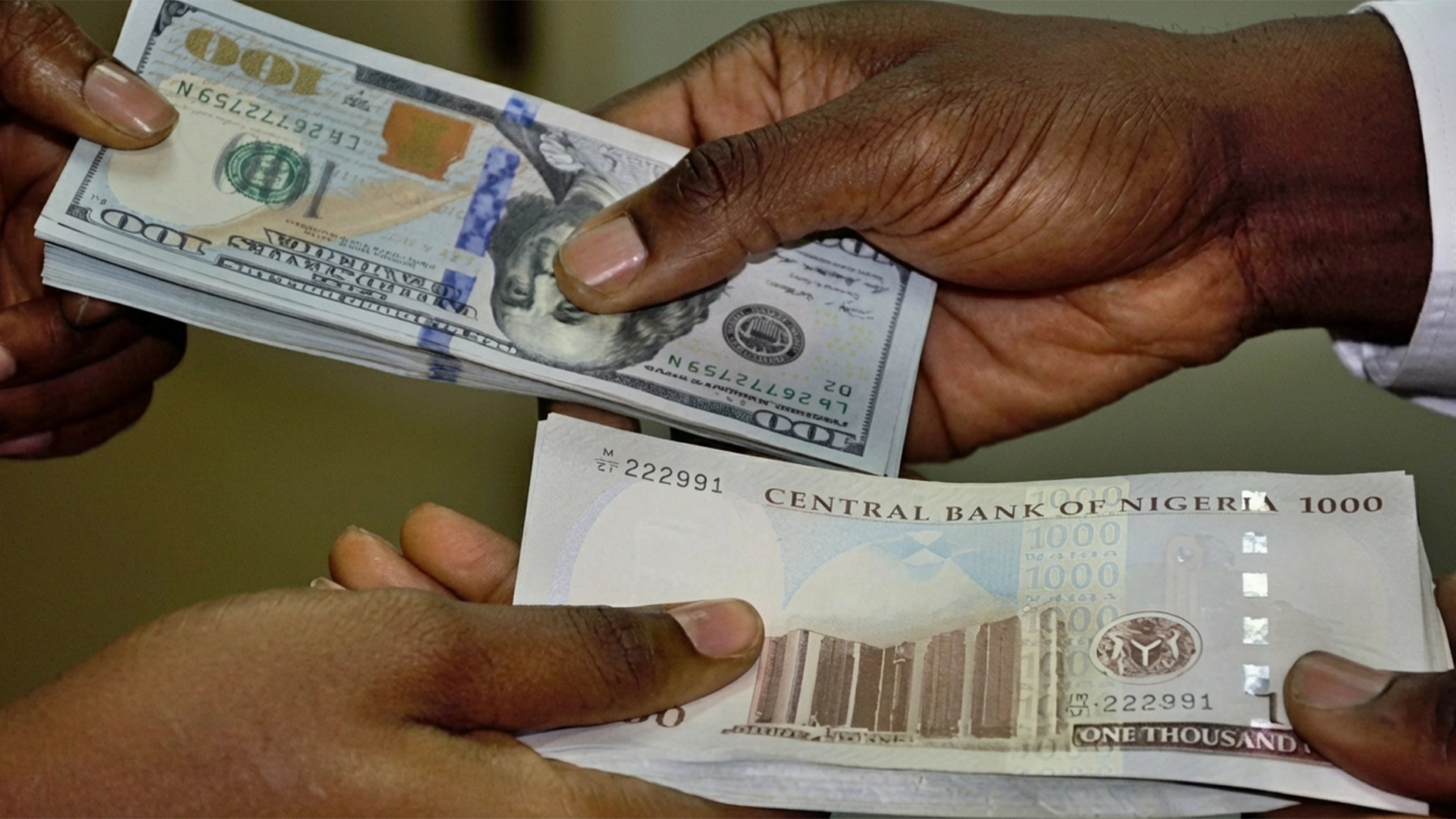
By Chris Enyinnaya
Over the years, the Central Bank of Nigeria (CBN) has been making what has turned out to be a futile attempt to revitalise the value of the naira vis-à-vis. other foreign currencies. These attempts have yielded zero results because the firm foundation has not been laid nor an enduring recovery plan put in place. This is so, even when all the factors leading to continuous naira depreciation have been identified.
The three main factors according to available reports are: First, import dependence. Nigeria relies heavily on imported goods ,energy and raw materials requiring persistent foreign currency outflows.
Second, lack of export base. It is estimated that over 75 per cent of Nigeria’s export earnings are attributable to crude oil and gas. Thus each time there is drop in international price of crude oil and gas, or decline in production, foreign exchange liquidity dries up.
Third, is market distortions. Government attempts to enforce punitive bans or put a cap on the exchange rate, shortages trigger off speculative behaviour in the foreign exchange market widening the gap between the official rate and the parallel or black market rate.
From the foregoing, it is very clear that the problem of exchange rate determination is that the policy maker (CBN) relies on the template provided by the International Monetary Fund (IMF) and the World Bank in exchange rate management. This is due to the fact that Nigeria is a debtor to these institutions and a creditor has an insurable interest in the debtor. The templates does not take into consideration the structure of the Nigeria’s economy to make policies that aligns with it for stability. Such policies often lead to volatility in the foreign exchange market.

Nigeria is an import dependent and trading economy. Nearly everything consumed is imported, including tooth picks. Therefore, exchange rate naturally should be based on a policy that revolves around the structure of the Nigeria’s economy.
Nigeria’s economy is largely a trading economy that is informal. Manufacturing activity is less than 20 per cent. Being an import dependent trading economy, the foreign exchange policy ought to be aligned to our trade policy. Rather than being managed by Monetary Policy Department of CBN, it ought to be managed by Trade and Exchange Department. We shall revisit this angle later.
Let us go down the memory lane on the exchange rate of the naira. Prior to 1973, Nigeria had Nigerian pounds as its national currency. The Nigerian pounds was at par with the British pounds at 1:1. But in 1973, the Nigerian government phased out the Nigerian pounds and introduced the naira. The initial exchange rate was N2 to £1. By 1980, 65 kobo was equal to one $.
By 1986, Nigeria was experiencing balance of payments disequilibrium. The international trade accounts was not balancing. Our foreign reserves could not support 90 days import bill which was the benchmark for credit worthiness.
There was a general call by the international finance institutions that naira was over valued and needed to be realigned to its true value through devaluation.
At that time, the CBN was using managed float to determine the exchange rate of Naira to the other foreign currencies. Under the government of General Ibrahim Babangida, the banking sector and the general economy were reformed. The foreign exchange market was deregulated, which was a radical departure from the fixed exchange rate regime. This means that the exchange rate of Naira to other foreign currencies was to be determined by market forces of demand and supply in an auction organised by the CBN in which bid was accepted from every bank.
In August 1986 when the first bidding session was conducted, the opening exchange rate was $1.3326/N1. After the bidding the closing rate was N3/$1.That is how the deterioration in the value of the naira began. Today the exchange rate could be anything from.N1,300 to N1,400/$
One can attribute the continuous fall in the value of naira to other foreign currencies to faulty application of principle of devaluation as a policy tool to boost exports. The then Finance Minister, Dr Kalu Idika Kalu, worked on this principle of devaluation of Naira to boost exports by making it cheaper and imports dearer to discourage importation and conserve foreign reserves.
This is correct economic policy. But unlike the practice elsewhere, when you devalue your local currency, the only way to make exports cheaper is to invoice exports or sell your goods and services in your local currency, in our own case you invoice or sell in naira. Rater than invoice exports or sail in naira, Nigerian government continued to invoice or sell in U.S. dollars. How then will exports be cheaper?
By not invoicing or selling goods in naira, we lost the advantage or benefit derived from making exports cheaper. We ended up making imports dearer or expensive which is why many factories closed shop because they could not afford to import raw materials in the era of import substitution. They collapsed because of the high volume of naira needed to import raw materials and complete knocked down engines and parts. This harsh trend has continued resulting in the exit of many multinational companies from Nigeria.
Going back to my thesis that Nigeria ought to use trade policy rather than Monetary Policy to manage the exchange rate of the naira since ours is largely an informal trading economy, what does that demand?
It demands that the dollar be made a third currency. In order words, if the CBN makes a policy that makes dollar to be chasing naira, then naira will recover, and with it inflation and general cost of running business will be tamed.
One commodity we will be selling in naira is our crude oil. We all can see the benefits of selling export goods like crude oil in naira where the price of locally refined oil is lower than the landing cost of imported oil. The oil cabal and NNPC that import refined petroleum products are at war with Dangote Refinery because Dangote Refinery can afford to sell below the landing cost of imported Petroleum products and still make decent profit. The oil cabal are fighting the war of their life against Dangote Refinery so they can remain in business.
The naira can never recover under the present policy unless there is policy change that creates demand for naira. The demand for naira equals the demand for goods and services naira will buy. So when you invoice or sell our crude oil in naira, foreign buyers will come with their dollars and approach the CBN for naira through their Nigerian banks so they can buy oil. This is so because statutorily, the CBN is empowered to issue and manage the volume of naira in circulation.
That transaction template will not stop Nigeria from earning dollars since they surrender dollars to the CBN in exchange for naira. Under this circumstances, naira will become scarce due to high demand for Nigerian Bonny Light and the value of naira will rise. CBN will now be in a pole position to dictate the rate it will exchange dollar to naira rather than forces of demand and supply which is subject of abuse by currency speculators.
Implementation of this policy requires the Federal Government of Nigeria to muster the political will to do so especially since even by Britton Woods agreement, there is a political element in exchange rate determination. Also the right calibre of personnel are needed to implement the policy.
By making the dollar to chase the naira, all exchange risk associated with the foreign exchange market are eliminated and with it excess liquidity and inflation that is triggered by converting the Petro dollars to naira. This model can be implemented, not by foreign trained Economists, but by home grownprofessionals who have deep knowledge of money and banking in Nigeria, Nigerian Financial System and the structure of the Nigeria’s economy.
Finally, the time has come, after many years of trial and error for the CBN to put on their thinking cap and think outside the box by taking another route so that the naira can recover. Since the deregulation of the foreign exchange market and the banking industry in 1986,they have been going round in circles looking for an answer.
Experience over the years suggest that IMF and World Bank policies is not the answer to the problem of exchange rate determination. They are not an answering machine which is why this writer has become a questioning machine, questioning the workability of their policies.
If they have all the answers, how come we are in a mess with Nigerian economy not working? Why has the naira not recovered?
Enyinnaya, fellow Chartered Institute of Bankers (FCIB). He wrote via: [email protected]

