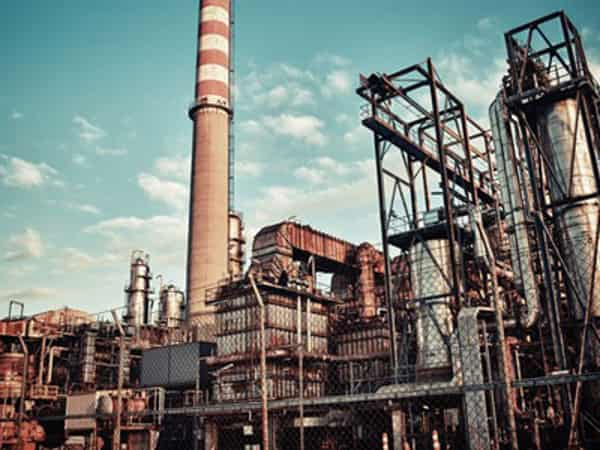
 NIGERIA has been particularly dependent upon imports for light products (petrol, diesel and dual-purpose kerosene/aviation kerosene), and long on dark products (fuel oils, etc) for nearly two decades.
An estimated $12-15 billion per annum is expended on importing light petroleum products at present. Meanwhile, it would cost about $2.5 billion to construct 100,000 barrels per day (b/d) refinery plant.
It is also estimated that there is a 650,000 b/d refining gap over the next 10 years. The current name-plate capacity of national refineries is 445,000 b/d, but capacity utilization is usually below 30% and should increase marginally with the recent turn-around maintenance.
Nigeria requires at least a million b/d refining capacity to meet current and projected petroleum products demand. Increasing existing refinery utilization to even 100% would not meet this demand. For a country with a population of nearly 170 million people, this situation is quite dire.
How do you drive industrialization, provide a boost to economic development, and create jobs when funds that should be channelled towards developing infrastructure for crude oil refining, production of petrochemicals, power generation & transmission, transport systems, agriculture, etc are instead diverted to importation of refined petroleum products? In some countries, this could have led to huge social unrest or even a revolution! This is reckless!
In most oil producing countries, governments enter into partnerships with the oil majors or large independent oil companies to construct large-scale refineries. In the case of Nigeria, we chose to go it alone (i.e. NNPC’s monopoly of refineries) and have made a huge mess of it.
But, it is not too late to make amends. We can privatize existing refineries in such a way that one of the oil majors would be the ‘Operator’, and with significant shareholding. We can also encourage a joint venture between the government and one or some of the oil majors in constructing new mega-refineries and petrochemical complexes.
There is also a role for small-scale private refiners, because it is a recurring Nigerian government policy to encourage indigenous participation in all aspects of the oil and gas value chain.
Going into the refining business as a national monopoly without partnering with the international oil companies (IOCs) has cost this country greatly. Another ‘royal fuck-up’ would be to allow private individuals (domestic or foreign) to construct mega-refineries.
We can ill-afford private individuals threatening our national security by deliberately reducing the supply of petroleum products or determining political outcomes to the latest generations with the colossal cash flows that attend such business.
The present circle of petrol importers can even now hold up economic activities in this country, let alone when you allow some of them to own 200,000 – 400,000 b/d private refining capacity (i.e. a mega-refinery).
There are anti-trust issues to be weighed and considered here. The American government was not stupid when it broke up the Rockefeller and Bill Gates monopoly, and yet America is the world’s most advanced free market economy.
There is no Organization of Petroleum Exporting Countries (OPEC) member-state that has adopted these models (i.e. going into refining without partnerships with the IOCs or allowing individuals to construct mega-refineries). Not even the ‘all-mighty’ Gaddafi of Libya owned a private mega-refinery in Libya, Saddam Hussein did not own a mega-refinery in Iraq, nor were the Arab oil sheiks allowed to own private mega-refineries in Iran, Saudi Arabia, Egypt, United Arab Emirates, etc.
In all these countries, the model adopted was a partnership between the government and one or some of the IOCs with the latter being the ‘Operator’. Let’s keep it that way! But then, how do we encourage the IOCs to make the ‘leap of faith’?
Currently, Nigeria’s value proposition for investors is import parity pricing, 60% crude oil availability, ample regional demand, a deficit local product market, especially for petrol and demand barrel alignment.
However, investors’ decision not to invest in greenfield refineries appears to be driven by the regulatory environment, particularly the policy of regulation. According to Segun Akpata (General Manager, Total Nigeria), “multinational oil firms stay away from acquisition of stakes in Nigeria’s refineries and the establishment of new, private refineries because the conditions set by government for owning and operating refineries are unclear. There is no specific guarantee by government that it is possible to recoup investment made in private refineries”. Mike Mullier (Shell Global Leader, Crude Trading) also has this to say: “Shell has no intention of developing its downstream portfolio in Africa…low returns on downstream investments and peculiar situation in some African countries where government regulates prices of petroleum products are part of the constraints which have necessitated the decision”. Ed Johnson (CEO, Sirius Petroleum) opined that, “besides security considerations, there is no incentive for companies to invest in the downstream as they know the regulatory laws make refining unprofitable”.
The critical issue, it would seem, is not just regulation of petrol prices but ‘right pricing of crude oil’ for domestic refining and consumption to ensure profitability for investors. If our government can offer discounts to some crude oil traders and some Economic Community of West African States (ECOWAS) countries, it follows that government can offer special discounts for domestic refining. The difference here is that government will be subsidizing local production of refined petroleum products instead of subsidizing imports of light refined products.
Some have argued that domestic refiners may capitalize on the discounts and sell the crude oil instead of refining it. This argument takes into account the ‘corruption factor’, but this argument is rather too presumptuous and even if that should happen, government can also take pre-emptive steps to discourage such behaviour. What is important here is to create enabling laws and policies that will encourage domestic and foreign investors.
However, foreign investors are unlikely to invest in refineries in Nigeria, if the government charges international spot prices for crude oil for domestic processing and consumption.
They will consider it more profitable to procure the same volume of feedstock at the same price in New York or Rotterdam and operate their refineries in Europe or in the USA, where refining margins are higher, markets bigger, institutional environment more stable, and social overhead capital more developed.
Therefore, foreign investors and indeed domestic investors would require the right incentives (i.e. a guaranteed profit margin) to enable them venture into the Nigerian refining market.
•To be continued tomorrow.
•Prof Nwaozuzu is a Downstream Petroleum Economics & Policy Expert and Deputy-Director at Emerald Energy Institute for Energy & Petroleum Economics, Policy, & Strategic Studies, University of Port Harcourt.