 Follow Us on Google News
 Follow Us on Google Discover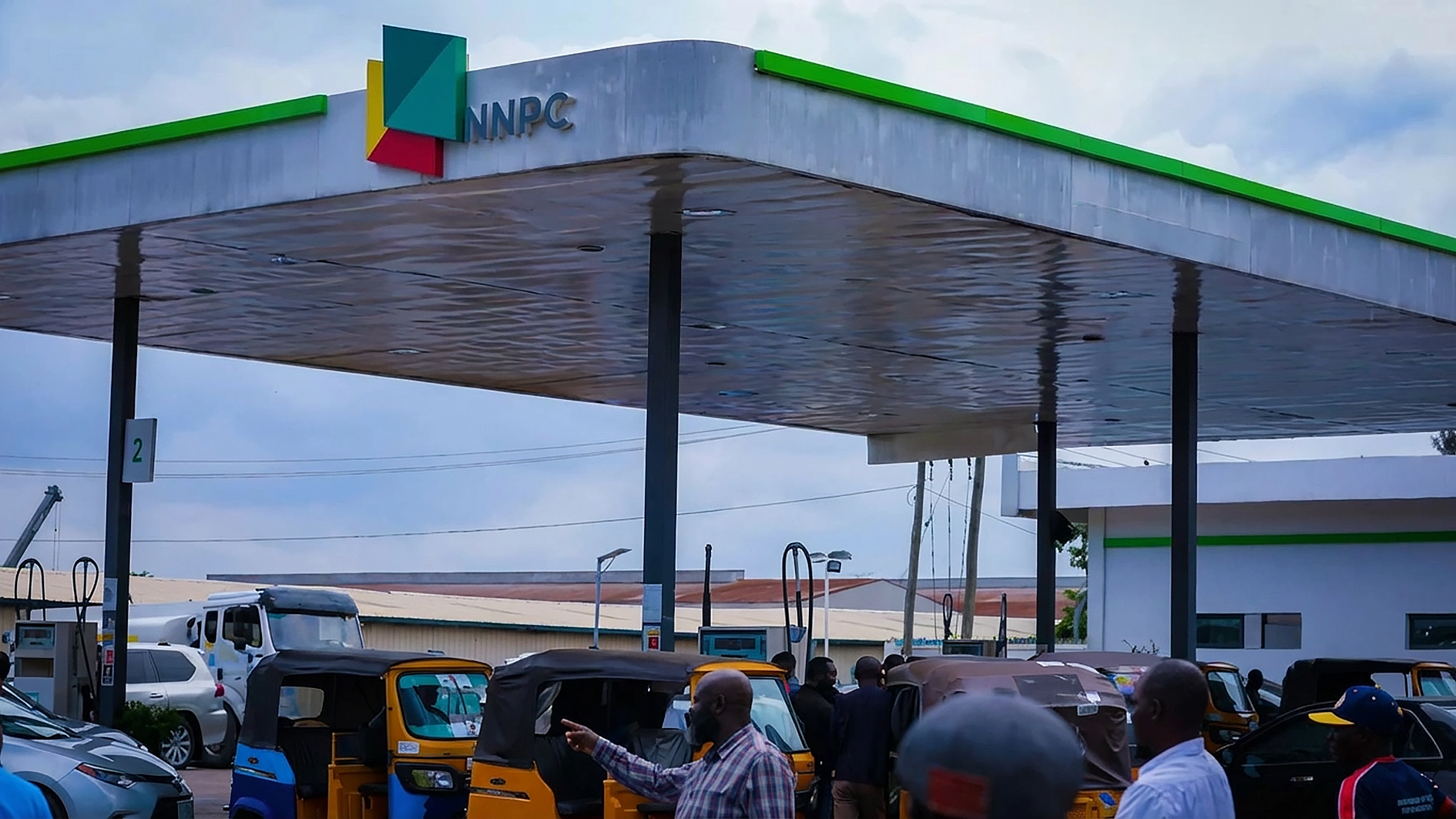
By Ekpa, Stanley Ekpa
Sir: As my mentee that came for his Call to the Nigerian Bar this week arrived my house, he literally opened a case file of lamentation on the cost of things, and how a commercial taxi driver pulled into a filling station to buy petrol before beginning on their way, and as the fuel nozzle clicked to a stop, the driver stared silently at the amount displayed on the pump. The driver shook his head, paid reluctantly, and turned to one of the attendants ‘‘they told us fuel became expensive because of the war. The war has reduced now. Why hasn’t the price reduced too?’’
The drivers’ question is not just the frustration of a taxi driver. It is one of the most important economic questions confronting Nigeria today. For over six months, Nigerians have borne the crushing burden of rising petrol prices. Transport fares increased, food became more expensive, manufacturers transferred higher energy costs to consumers, and households adjusted to an even higher cost of living. Citizens accepted these sacrifices because they understood that global events had disrupted energy markets.
The direct military confrontation between the United States and Iran in March 2026 heightened fears of supply disruptions, pushing international crude oil prices and refined petroleum product prices higher.
As expected, Nigeria’s pump prices followed suit, rising to about N950 per litre in many locations after NNPC retail stations had sold at approximately N875 per litre in Abuja and N830 per litre in Lagos on March 2, 2026, and subsequently increased to around N1400.
The economic logic was straightforward: higher international costs translated into higher domestic prices. However, what has become difficult to explain is why the reverse has not happened since three with the declining global crude prices. On June 17, 2026, the United States and Iran signed a formal peace framework agreement in Switzerland, easing tensions that had unsettled global energy markets.

According to the International Energy Agency (IEA), improved supply expectations and reduced geopolitical risks subsequently moderated international oil prices, while the U.S. Energy Information Administration (EIA) also reported softer crude oil price expectations as markets regained confidence.
As wholesale petroleum costs eased, many countries witnessed corresponding reductions in retail fuel prices. Across parts of Europe, North America and Asia, motorists gradually began benefiting from lower prices at the pump as international benchmarks weakened and supply chains stabilised.
Yet Nigeria has remained an exception. Although a few downward adjustments have occurred, they have been modest and far from proportional to the easing observed in international markets. On June 28, 2026, the Federal Competition and Consumer Protection Commission (FCCPC) publicly questioned why reductions in Nigeria’s pump prices had not reflected the significant decline in global crude oil prices, observing that the adjustments announced by marketers were not commensurate with prevailing international market realities. The Commission raised a legitimate concern.
A deregulated market should respond to both increases and decreases in underlying costs. It should not become a one-way street where consumers absorb every international shock but receive only a fraction of the benefits when those shocks subside.
To appreciate this concern, it is important to understand how petrol prices are determined in a deregulated market. Unlike the former subsidy regime, government no longer fixes pump prices. Instead, retail prices are influenced by several variables: the international price of crude oil and refined petroleum products, exchange rates, shipping and insurance costs, port charges, storage and distribution expenses, taxes and levies, and the operating margins of marketers. When these cost components rise, pump prices naturally increase.
Equally, when international crude prices, freight charges and insurance costs decline, efficient and competitive markets should transmit those reductions to consumers. That is how deregulation works, or at least, that is how it is supposed to work.
Nigeria’s experience increasingly reflects what economists describe as asymmetric price transmission – a situation where cost increases are passed on to consumers almost immediately, while cost reductions are delayed or only partially transmitted. Numerous empirical studies have associated this phenomenon with weak competition, inadequate market transparency and concentrated market structures. If global crises justified higher pump prices, then improving global conditions should equally justify meaningful reductions. Markets cannot invoke international realities when prices are rising and ignore those same realities when prices are falling.
This is why the warning recently issued by the Independent Petroleum Marketers Association of Nigeria (IPMAN) that marketers could “shut filling stations” if government attempts to regulate petrol prices should concern every Nigerian. Such statements risk misrepresenting the purpose of deregulation. Deregulation was never intended to create a market beyond oversight. Rather, it was designed to encourage investment, competition and efficiency while protecting consumers through effective regulation.
Even the most liberalised petroleum markets in the world operate under robust regulatory institutions. Competition authorities in countries such as the United Kingdom, Australia and South Africa monitor market conduct, investigate collusion, discourage price manipulation and protect consumer interests without fixing retail prices. The objective is not to control prices but to ensure that competition remains genuine. I see no reason why Nigeria should be different.
The Petroleum Industry Act laid the foundation for a competitive downstream petroleum market. However, competition cannot flourish where transparency is weak and consumers have little understanding of how prices are determined.
Regulatory institutions, particularly the FCCPC and the Nigerian Midstream and Downstream Petroleum Regulatory Authority (NMDPRA), must therefore intensify market surveillance, investigate anti-competitive practices where necessary and publish transparent pricing templates that explain how international market developments influence domestic pump prices.
A system where markets determine prices but regulators ensure those prices emerge from genuine competition instead of market distortions. Government must now also accelerate domestic refining capacity, improve crude supply to local refineries, strengthen foreign exchange stability and reduce logistics bottlenecks that continue to inflate distribution costs. Over time, these reforms will reduce Nigeria’s vulnerability to external shocks and make domestic fuel pricing more stable.
Ultimately, the success of deregulation should not be measured solely by the profitability of petroleum marketers or the volume of private investment attracted into the downstream sector. It should also be measured by whether ordinary Nigerians receive fair value from the market. Reforms lose public legitimacy when citizens bear all the pain but enjoy few of the gains.
If some retailers believe that transparency, competition and consumer fairness are incompatible with their business model, then Nigeria should not be held hostage by such a position. The downstream petroleum market exists to serve both investors and consumers. Any operator unwilling to participate in a truly competitive market should be prepared to step aside for those who will. After all, the true purpose of deregulation is not merely to free the market. It is to ensure that the market, in turn, works for the people.
God bless the Federal Republic of Nigeria.
Ekpa, Stanley Ekpa, a lawyer and leadership consultant, wrote via [email protected]

