 Follow Us on Google News


 Follow Us on Google Discover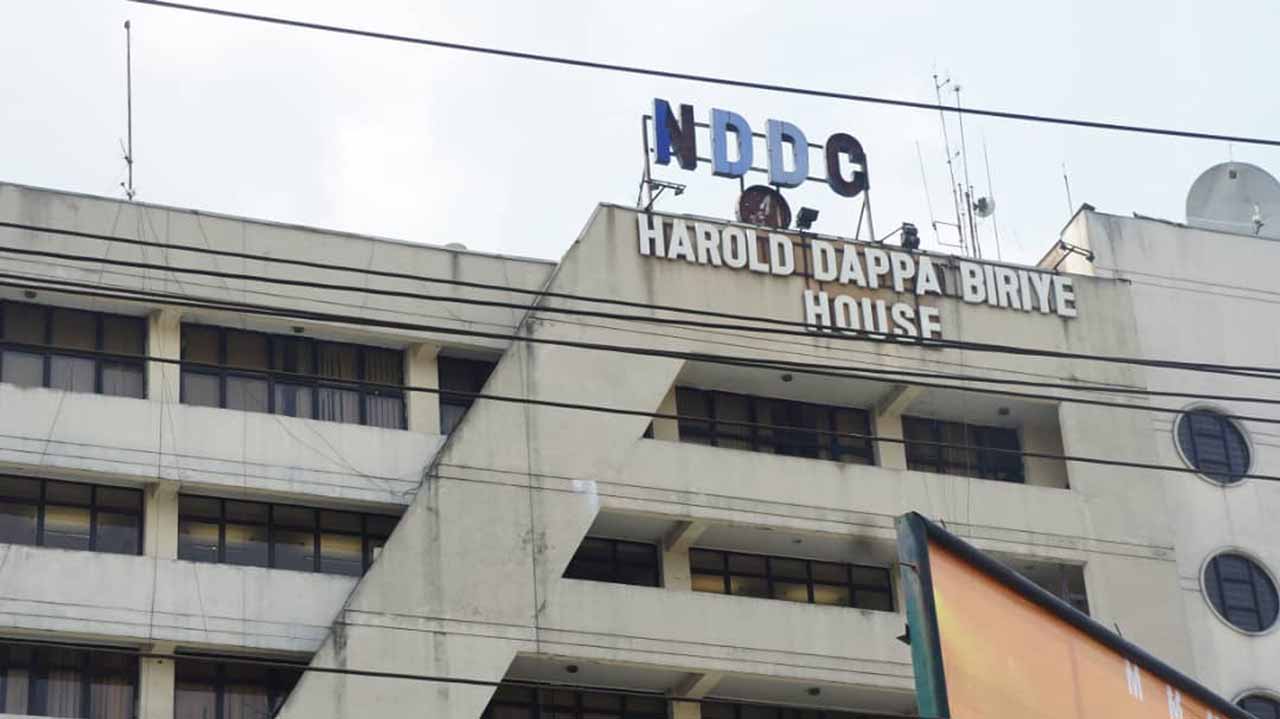

Sir: It is a general knowledge that the House of Representatives, on Thursday, screened and confirmed members of the Board and Management of the Niger Delta Development Commission nominated by President Bola Tinubu. The President had on August 29 nominated Mr Chiedu Ebie for the position of NDDC Board chairman alongside 16 others.
[ad]
As expected, this development has elicited reactions from stakeholders and the general public. While some people hailed the action of both the president and lawmakers as hallmark of a renewed hope for the people of the Niger Delta region, others view the emergence of the board with skepticism. The NDDC is seen as a political configuration. It cannot provide concrete solution because it does not have what it takes. The multinational oil companies are not paying up their quota. So, how can they solve the problems of the Niger Delta region? This group concluded.
The NDDC was established as a response to overwhelming human deprivation in the Niger Delta. It succeeded the highly politicised, incompetent and grossly corrupt Oil Mineral Area Development Commission (OMPADEC) that was established in 1993. OMPADEC was not the first agency established in Nigeria charged with the development of the oil rich Niger Delta. In 1960, the newly independent government of Nigeria established the Niger Delta Development Board (NDDB). This agency was virtually moribund.
The NDDC was, therefore, conceived as a fresh beginning and a more focused effort on development in the Niger Delta. Its mission is chiefly to develop the region in terms of infrastructure and human capital.
The commission is funded by Federal Government contribution, which shall be equivalent to 15 per cent of the monthly statutory allocations due to member States of the Commission from the Federation Account; Oil and Gas processing companies’ contribution of three per cent of their total budget; 50 per cent of the Ecological Fund allocations due to member states; proceeds from other NDDC assets: and miscellaneous sources, including, but not limited to, grants-in-aid, gifts, interests on deposits and investments, loans by Federal and State Government and any local or foreign bodies, and donations.
Considering the enormous trust and resources committed to it and the hope placed on it by both the government and the citizens of the Niger Delta, the NDDC has achieved little.
The incoming board must commit to four cardinal things; deliver legacy projects to the people of the region. Secondly, promote computerisation/automation within the agency in ways that will amplify transparency and accountability as the Commission’s hallmark. Thirdly, pay disciplined attention to youth and human capital development of the people of the region. Above all, use performance to change negative narrative in some quarters which promotes the idea that appointments to the NDDC have become a matter of political cronyism and a process of capturing political votes.

Niger Deltans and other critical stakeholders must on their part give the incoming board needed supports.
Utomi Jerome-Mario is the programme coordinator (Media and Policy), Social and Economic Justice Advocacy (SEJA), Lagos.
[ad]

