For decades, Nigerians have chronicled the nation’s decline through music, social commentary, and cultural lamentation. The late Sonny Okosun pleaded in his song many decades ago “Which Way Nigeria, which way? a timeless reflection of a country drifting without direction. Yet despite these internal warnings, nothing prepared Nigeria for the moment when a foreign power would publicly articulate what its leaders had long refused to confront.
That moment came when the administration of President Donald Trump placed Nigeria as a Country of Particular Concern. He called Nigeria, “a now disgraced country” “the department of war to prepare for possible action” “if we attack, it will be fast, vicious and sweet”, “terrorist thugs”, “the Nigerian government
better move fast before it’s too late”. With those words and more, a boundary never crossed in Nigeria’s
diplomatic history was breached.
For the first time, the world’s most powerful nation openly accused the government of a sovereign Nigeria of failing in the most basic duty of statehood: the protection of human life. To millions of Nigerians who have endured insecurity for years, the statement felt less like an insult and more like a long-delayed acknowledgement of truth.
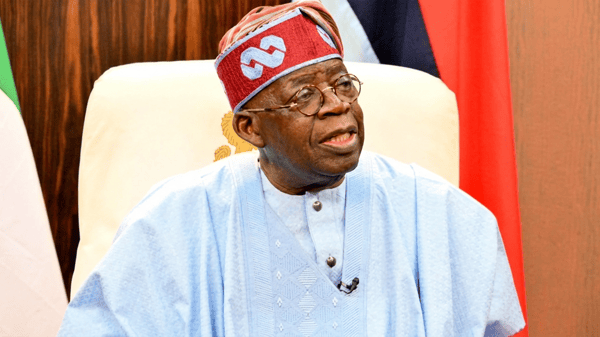
What happened next revealed the depth of Nigeria’s vulnerability. The administration of President Bola Ahmed Tinubu reacted with urgency bordering on panic. They moved fast. Long-ignored reforms suddenly became pressing priorities. Over 11,000 police officers previously assigned to VIP protection were ordered back into regular police work. Emergency recruitmentdrives for soldiers and policemen were launched. Counterterrorism operations intensified. A new and expandedsecurity cooperation framework with the United States was announced.
To be fair, all the blame cannot rest solely on the Tinubu administration. Nigeria’s security deterioration stretches far back. It is rooted in institutional decay that tragically predates his presidency. The system is ossified, frozen in dysfunction and, any administration, no matter how committed, is forced to operate within this brittle architecture.
However, it remains the duty of each government to confront inherited crises with clarity, speed, and a commitment to national survival. Yet the ground zero of Nigeria’s humiliation lies in northern Nigeria, a beautiful region populated by hardworking and peace-loving people where insecurity metastasized into a humanitarian catastrophe stretching
over many decades. Governors in the region presided over the collapse of order, mass kidnappings, Islamist extremist violence, and rural terror to spread unchecked. The magnitude of their failure cannot be overstated. Their citizens expected the full weight of their government to fall upon the perpetrators of these hideous acts. Instead, from the vantage point of ordinary people, it seemed as though their leaders simply watched communities burn, families mourn, and villages slowly hollow out. And when they did act, their efforts were feeble at best.
And to their everlasting shame, the northern governors failed their people, the country, and even more broadly Blackpeople all over the world. There are allegations that some entered “peace pacts” with alleged kidnappers and alleged terrorists, astonishing violations of constitutional duty. Expectedly, much was expected of these governors and local government chairpersons as many of them are religious, yet their conduct violated the very tenets of their faith: justice, stewardship, and protection of the innocent. Their shame, visible today, hopefully will not end here.
On the Day of Judgment, they will have much to answer for to their creator. This remains the prayer of the powerless and vulnerable. One would naturally assume that the governors of the southern states, having observed the devastation in the North occurring over many decades, would be far better prepared to address emerging security challenges in their own regions. Yet, regrettably, what the public has witnessed instead is the characteristic Nigerian response to looming disaster: talk and more talk, endless meetings, communiqués, and calls for further dialogue.
The inability of many of these leaders to sense the approaching wave of danger or to prepare for it in any meaningful way has been deeply troubling. There appears to be nothing strategic in their thinking, nothing reflective of the urgency the moment demands. And, as time has revealed, they are not so different from their northern counterparts; they are cut from the same cloth, shaped by the same political culture, and constrained by the same weak institutional foundations. One would reasonably expect them to join hands with their northern colleagues and find ways to assist strengthening security cooperation across regional lines. But no. Instead, actions are fragmented and hesitant. A pity. Very little substantive
action has followed, even though these leaders are executive governors endowed with full constitutional
authority. For many citizens, it has been a profound disappointment another painful reminder of leadership
failure across the board.
Sensing the gravity of this moment, the National Assembly also moved with unusual speed. Lawmakers strengthened anti-kidnapping statutes and adopted measures imposing capital punishment for kidnappers. They publicly demanded the naming, exposure, and prosecution of terrorism financiers nationwide, a demand Nigerians have made for years but which only gained momentum after Washington’s intervention.
The Senate President, Senator Godswill Akpabio, a hardworking, intelligent, and dignified public servant, correctly read the mood of the nation when he turned to his colleagues and admitted, “Trump is on our neck.” It was a remarkable moment of candor, signaling that even at the highest levels of government, officials understood that Nigeria was acting under unprecedented external pressure.
These cascading reactions from the presidency to the legislature to the states raise a difficult question: What does sovereignty mean if a nation acts more decisively in response to foreign admonition than to the
decades-long suffering of its own citizens? In the United States, when an employee consistently underperforms, they are placed on a Performance Improvement Plan (PIP). It documents failures, prescribes corrective actions, imposes timelines, and warns that continued underperformance will result in termination. It is not a gesture of encouragement it is a final
warning. Nigeria now finds itself on the geopolitical equivalent of a PIP. The United States has outlined its expectations clearly: a measurable reduction in killings; restoration of internal security; dismantling of extremist networks; rescue of kidnapped citizens; reform of policing structures; and the removal of legal frameworks incompatible with constitutional equality. Among these is the contentious expectation of abolishing Sharia law in the 12 northern states, something
Nigerians themselves have overwhelmingly demanded for years, given that the country is constitutionally secular. Washington views this expectation as essential to addressing deep-rooted religious asymmetry and the legal structures that extremists have long
exploited.
If Nigeria fails this PIP, the consequences could be profound. In geopolitics, a failed performance review can escalate to foreign intervention, targeted sanctions, international oversight mechanisms, or even global calls for territorial restructuring if a state is deemed incapable of protecting its population. President Trump has already made clear thatcontinued killings will not be tolerated.
This is not a moment of triumph for anyone. There is nothing to celebrate. It is a moment of intense grief and introspection. The largest Black nation on earth, blessed with immense talent, cultural richness, and extraordinarypotential should not need external supervision to fulfill its most basic responsibility. Yet, for
millions who have buried loved ones without justice, this moment offers a rare glimmer of hope: perhaps, finally, the government will be compelled to act. Nigeria now stands at a crossroads. The questions are urgent: Will its leaders confront the structural failures that allowed insecurity to fester? Will they act with urgency because Nigerian lives matter, not because a foreign government insists upon it? Or will this moment pass, remembered only as another chapter in a long pattern of avoidance and unfulfilled responsibilities?
The clock is ticking. Nigeria is on a PIP. The world is watching to see whether Africa’s giant will rise or shrink further under the weight of its own failures.
Ó Màṣe — what a pity.