 Follow Us on Google News
 Follow Us on Google Discover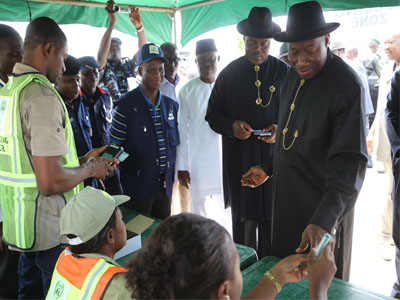
 THE last five months have thrown into sharp relief the fact that most people who hover over leaders only do that on account of what they hope to gain. They quickly forget all the privileges that their association with these leaders has conferred on them. This is simply because of the fickleness of the memory of gratitude.
The fickleness of the memory of gratitude in politics is amply demonstrated by the case of former President Goodluck Jonathan. While he was in office, there were many people who swore to die for him. Of course, these did not swear to die for the state. But they expected the rest of the citizens to believe that interwoven with their avowed support for the then president was their loyalty to the nation. With the exit of Jonathan from power, it is clear that most of these people neither really believed in him nor had loyalty to the country.
Yes, a robust demonstration of loyalty to Jonathan in the post-Aso Rock era has come from Abubakar Suleiman , former Minister of National Planning, who led other former ministers in the erstwhile administration of Jonathan to defend him over the charges of corruption and mismanagement. But nowadays, the number of Jonathan’s cronies who are disowning him is on the increase. The denigration of Jonathan by a South South leader as a weakling who could not fight corruption as the nation’s president is not as searing as the disavowal by one of his former ministers. Unlike the South South leader’s claim that may sound nebulous, the former minister from the same South South gave an instance of the former president’s tolerance of corruption. To this former minister, Jonathan nurtured an atmosphere of corruption. According to him, even when Jonathan was told that a certain man was clearly corrupt, and there were credible people who were better qualified for a post of the chairmanship of a board, he insisted on giving the job to the corrupt person. Yet, most of these people were made instant billionaires by Jonathan and they had so much money to even set up their private universities.
But Jonathan should have known that this is a feature of politics, especially in Nigeria. If Jonathan is pained by this disavowal by his beneficiaries, he has probably believed too much that every other politician would be like him. For as a loyal beneficiary of Diepreye Alamieyeseigha, he remained grateful to him till death. But Jonathan should have considered the political landscape that is strewn with broken relationships between political godfathers and sons to envisage the kind of treatment awaiting him. Whether as presidents or governors, politicians have always been interested in their successors. They do everything possible, including manipulating the electoral system, just to ensure that the people they have chosen to succeed them win their elections. But after this victory, within a short time, there would be bickering between the successors and the predecessors. Some governors are known to have made their states too hostile for their predecessors who put them in office to live. Some governors go to the extent of harassing and threatening their predecessors while others have regaled the public with tales of the corruption of their predecessors in office. These incumbent leaders may be acting against the background of their appreciation of a certain reciprocal character of gratitude that exists in politics. They feel that their predecessors also owe them gratitude because they expect them to cover their tracks.
Now that there are new leaders, people of different hues of character would attempt to put pressure on them to do what is wrong. They would put pressure on them to manipulate the award of contracts to them. As long as this objective is before them, they would sing their praises and tell them all kinds of lies that they are the best things that have ever happened to Nigeria. But leaders need to guard themselves against being used by these people as they have used others and dumped them. They must take cognisance of the fact that no matter what they as leaders would do, their individual beneficiaries would still desert them when they are out of office . It is true that a single person cannot make himself or herself a leader. He or she would need the help of other people. But this should not make the leader to be weighed down by a sense of obligation to his or her so-called benefactors at the expense of the pursuit of national aspirations .
Leaders need to be identified with specific visions that they would implement . When they are focused on these visions, it would be clear that the people who do not share these visions are distractions that must be guarded against. The citizens do not whimsically forget the services that their leaders have genuinely rendered. Such services are hallmarked by sacrifice and altruistic vision. Nigerians who benefited from the free education policy of the defunct Western Region still retain a memory of gratitude for the late Obafemi Awolowo who made this possible. Certainly, the citizens would not forget a leader who has used his or her office to improve their well-being. But when the leaders dissipate their tenures on making a few cronies billionaires, these beneficiaries of the appropriated commonwealth are the first who would render asunder any bond between them and their benefactors when the latter cease being in government. This may as well be a well-deserved comeuppance for such leaders for neglecting to cultivate a broader vision of governance that is all citizens-centred.

