 Follow Us on Google News


 Follow Us on Google Discover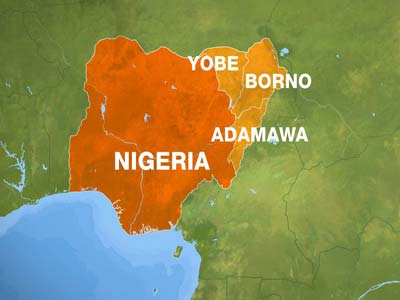

It is equally gratifying that the World Bank is already playing a significant role in alleviating the humanitarian tragedy by unfolding a $2.1 billion loan package to rehabilitate infrastructure and help the people who have been ravaged in the theatre of war for upward of six years.
Of course, it is very painful that within two months of a new era, the fundamentalists have intensified their heinous crime of exterminating hundreds of innocent people through suicide bombings. Indeed, about 700 persons have been killed since May 29 when President Muhammadu Buhari assumed office. However, with a measure of respite currently coming to the affected areas, save for the sect’s recent suicidal missions, an implementation of the proposed package in the most rational way and devoid of the usual bureaucratic bottlenecks must be made expedient.
The Buhari administration’s strategies to fully contain the insurgency have been well set in motion. And the chance and hope of rehabilitation are real. This is the least the country can do for her own citizens who have every right to protection and a secured environment.
According to reports, the World Bank package is the outcome of a meeting President Buhari had with representatives of the bank in Washington DC as part of activities marking his visit to the United States, the other week. Buhari reportedly urged the Bank to send a team that could work in concert with the government’s team here for a proper assessment of needs. This is very good, coming from a government that is offering openness in service.
Reassuringly, the rehabilitation plan would give priority to resettlement of the internally displaced persons apart from rebuilding the infrastructure in the affected region. The money which would be utilised through the International Development Agency offers low interest rate loans to governments and will be interest-free in the first 10 years, while the additional years will attract “lower than the capital market rate”.

There is no denying the fact that similar funds in the past had been pillaged by corrupt officials while programme implementation almost always recorded poor rating. Nigeria has, therefore, been at the disadvantage on two fronts – repaying loans and facing prospects of poorly implemented programmes. At a time like this when the Buhari government has transparency as a cardinal principle, it is expected that this loan would be judiciously expended. Nigerians and the international community would be on the watch. The proposed loan package will practically be the first test case for the government on funds management.
On implementation, support from other groups and agencies like the Red Cross, Red Crescent, and even private sector organisations might be required to assist the regular agencies of government that are normally deployed for such tasks.
The government has done well to identify major areas of need in the rebuilding effort, including infrastructural renewal, human capital development and rehabilitation. But other areas worth considering in addition to special attention to education are massive food supply, social services and recreation. The launch of a sustainable culture of agriculture to support ownership of the land, thus restoring confidence in the people, is also worthy of consideration.
Moreover, it would be necessary to, in the absence of an existing reliable or trustworthy structure, create a new platform to manage funds if the collaboration being envisaged does not work out. Even if it works out, government must exercise caution in relating with the appointed agents of the World Bank who often come in large numbers under the guise of consultants to dictate terms to loan beneficiary countries and thereby consume much of the money through over-heads.
In fact, there may be need to outsource some aspects of the programme while bureaucracy should be reduced for efficiency. Boko Haram remains unrelenting in its despicable acts and the war should be prevented from growing in intensity. This, therefore, calls for a careful framework or action plan to avoid wastage of resources. What should really obtain now is a last-ditch push on all options open to government to end the atrocities before fully committing the loans. As the rehabilitation commences, there must be a progress tracking process to be enforced by a monitoring team. No effort or resource is too much to restore peace and ensure the economic and social emancipation of the battered region. Indeed, the greatest service to Nigeria would be the total extermination of the Boko Haram insurgents, an uprooting of the warped ideas fueling the insurgency and complete liberation as well as re-integration of the people in the North-East.

