

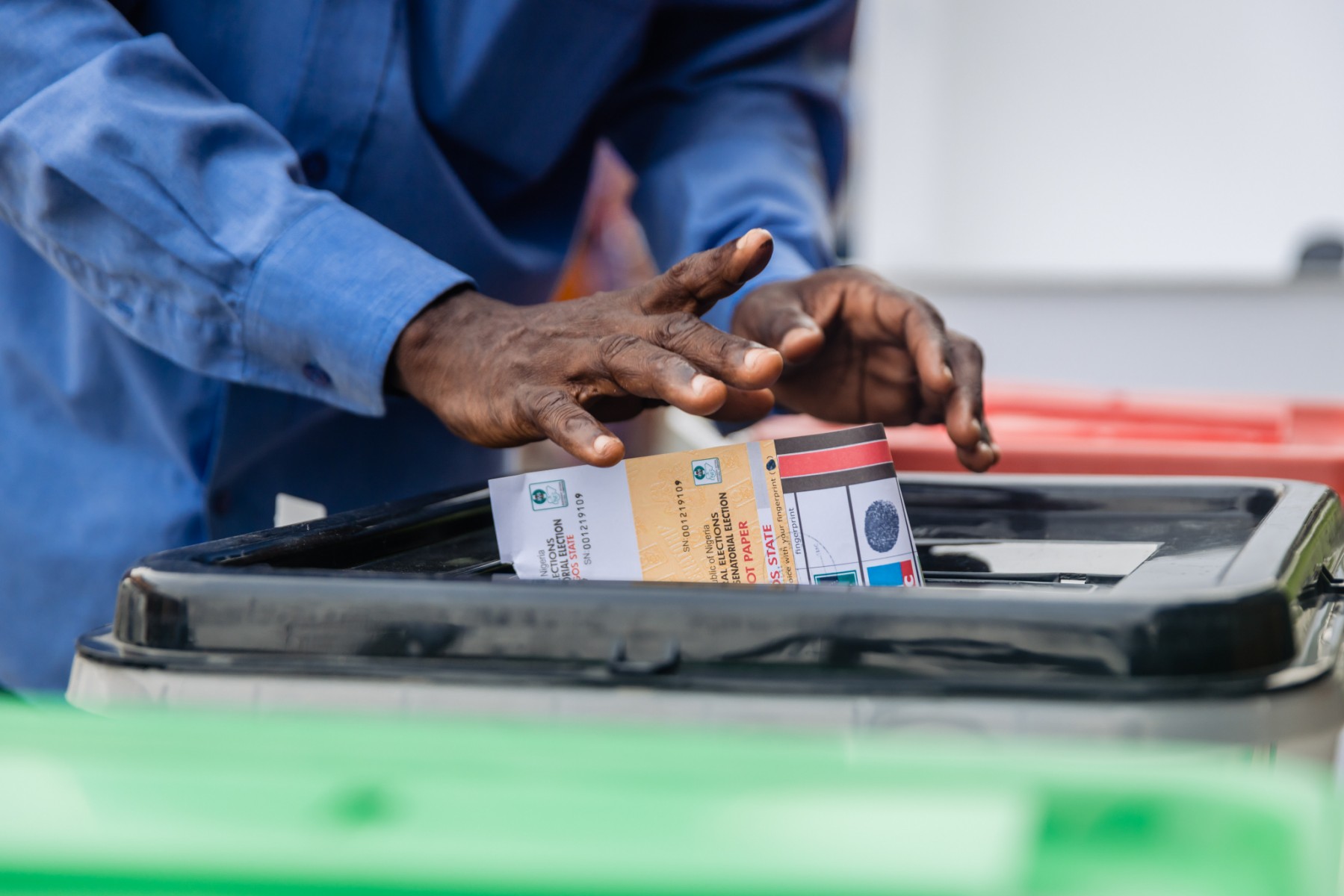
Ancient Greeks bequeathed democracy to the world as far as 508 BC under Cleisthenes. At a time when the leadership of nation states was premised upon absolute monarchical powers, the so-called divine rights of kings, vicious military and ethno-religious conquests, the charming allure of democracy was pretty much irresistible as nations evolved. Its beating heart was people representation in affairs, which directly or indirectly impacted their everyday lives. Till this day, its essence centuries ago, remains the same: the government of the people, for the people and by the people according to the American statesman, Abraham Lincoln (1809-1865). Democratic principles are codified in the constitutions and statutes of progressive nations across the world today.
Illustratively, article 57 (1) and (2) of the 1996 South African Constitution (as amended) emphasises the principles of participatory democracy in legislative proceedings and governance. Section 14 (1) of the constitution of the Federal Republic of Nigeria 1999 (“CFRN”) (as amended), explicitly enunciates that Nigeria shall be a State “based on the principles of democracy and social justice.”
Deconstructing the concept, is democracy all that it’s touted to be? The government of the people, by the people, for the people: which people exactly? The favoured majority? An oppressive majority riding roughshod over minorities? When does populist democracy amount to democratic tyranny? Are there effective safeguards? How might referendums help address complex constitutional questions and minority rights? Where have these been successfully applied? And what lessons could aspirational multiparty democracies intelligently and flexibly adopt?
There are two prevailing schools of thought. First, is the orthodox school which contends that as between absolute monarchies, autocracies, benevolent dictatorships and theocracies, representative democracy offers the best form of government because, broadly, ordinary people directly or indirectly, shape how they are governed through elections, parliaments, the operation of relatively free markets all reinforced by the rule of law. Here, Aristotle’s take is poignant – if liberty and equality are chiefly to be found in democracy, they will be best attained when all persons alike share in government to the utmost.
The contrarian school of thought, supports the overarching aims of people representation, however, it interrogates whether in fact, all persons share in government or its logical inference here; the dividends of democracy? It affirms that whilst the aspiration in progressive democratic climes is the greatest democratic dividends for the greatest number of people, works, to a certain degree, it leaves a minority of people disadvantaged. In this sense, democracy is a “numbers game”; a zero: sum game of winners and losers, where the winner takes all! To that extent, democracy, for all its charm offensive, cannot deliver equitable outcomes for citizens. So, what’s the point of any illusions of the government of the people, by the people and for the people?
Reflecting on the limitations of democracy, in Sri Lanka, in a speech before parliament on November 1, 1994, Lee Kuan Yew, Singaporean leader (1959-1990), remarked that one man one vote led to the domination of the majority Sinhalese over Tamils. For years, the minority Tamils took up arms against the Sinhalese dominated the Sri Lankan state over claims of extreme marginalisation and vicious tyranny by the latter. The Tamils sought to establish an independent Tamil State in North Eastern Sri Lanka. An internecine civil war ensued from 1976 through 2009, claiming at least 100,000 lives, until the Tamils were militarily destroyed.
Domination, marginalisation and vicious tyranny against the Southern Sudanese, largely represented by the Sudanese People’s Liberation Army, by the “popular” Sudanese central government, precipitated the Second Sudanese Civil War (1983-2005). The war claimed approximately 2,000,000 lives leaving in its wake extensive destruction, disease and famine.
Nevertheless, the war resulted in South Sudan’s Independence on July 9th, 2011.
The Northern Ireland conflict is an interesting example of the limitations of “popular” representative democracy. The ethno-nationalist conflict began in the latter 1960s and ended in the 1998 with the American inspired Good Friday Agreement. The crux of the crisis was locus of Northern Ireland; was it to remain part of a United Ireland or was it to remain part of the United Kingdom?! Historically, the predominantly Ulster protestants wanted Northern Ireland to remain part of the UK whilst the predominantly catholic Irish republicans wanted the opposite: for Northern Ireland to remain part of a United Ireland. The conflict witnessed atrocities on both sides with paramilitary support and the British Army’s occupation of the province. At the end of the conflict, over 3,500 lives were lost. Significantly, the seminal Northern Ireland Agreement is predicated on democratic power sharing between respective communities, applying the principles of consent, paramilitary disarmament, police reform prisoner exchange and police reform.
The singular common thread in the three examples cited above is that “popular” democracy often springs marginalisation, oppression and tyranny. To address that problem or its likelihood, progressive democracies should adopt inclusive policies which address minority rights and concerns, ensure effective and efficient participation, consider proportional representation to give all sections of the electorate a stake in the administration of government. Failure to do so, risks armed resistance, social disorder, terrorism, or in extremis, civil war.
The proposition for inclusive democratic practices is by no means a cakewalk and speaks to the intelligent use of power. The French jurist, Charles de Montesquieu (1689-1755), puts it in these terms; “the culminating point of administration is to know well how much power, great or small, we ought to use in all circumstances.”
This segues to the use of referendums in multi-party democratic systems of government. A referendum is simply a mechanism by which the electorate is asked via a direct vote to answer on an often-complex political question. Its simplicity lies in the direct participation of the electorate devoid of the representative legislative intermediation of parliamentarians. That way, the outcome is “owned” by the electorate not politicians irrespective of ideological leanings. Recent examples of the use of referendums in this context include the British referendum on remaining with the European Union in 2016, held on June 23, 2016. Hitherto, there had been electrifying debates on the merits of either remaining within or leaving the EU. The outcome of the referendum was that 51.9% of people voted in favour of leaving the EU. Equally, a referendum was held on whether Scotland should secure independence from the UK on September 18, 2014. The result was 55.3% for those against Scottish independence. Furthermore, Egypt on March 19, 2011, held a referendum pursuant to the January 25, 2011 revolution. The outcome was constitutional reform limiting presidential terms to eight years and judicial oversight of elections.
In the run up to Nigeria’s independence on October 1, 1960, the Willink Commission, through November 1957 and June 1958 examined the agitations of minority groups and individuals. The Commission’s report specifically advanced the case for the constitutional protection of minority rights and fundamental human rights. Given the subsisting volatilities in Nigeria today, what if any, attention might the incoming administration accord referendums as a means of tackling seemingly intractable political questions whether in the South East, South West or North East within the bounds of the 1999 constitutional framework?
Closing, its many imperfections notwithstanding, the beneficial and transformative value of participative multi-party democracy rests upon three important foundations. First, it is reflective of the aspirations and will of the people. Second, it is not an end in itself, but a means to an aspirational end; a better quality of life and socio-economic circumstances for citizens. The logic is that democratic representatives in civilized societies are highly unlikely, in all reasonable probability, to upend the interests of the electorate who have placed them in parliament after competitive elections. Third, the despotic excesses found in other forms of government, for instance in autocracies, military dictatorships, oligarchies, theocracies, totalitarian regimes are largely absent in properly functioning democracies.
Because they are subject to the checks and balances imposed not just by the rule of law, but respect for the rule of law, independent arms of government – executive, judiciary and legislature – vibrant press and watchdogs. A key recommendation based on the foregoing, is the targeted adoption of referendums to address specific questions. That calls for boldness and political will, which is all within the kitbag of leadership!
Ojumu is the Principal Partner at Balliol Myers LP, a firm of legal practitioners and strategy consultants in Lagos, Nigeria.



