 Follow Us on Google News


 Follow Us on Google Discover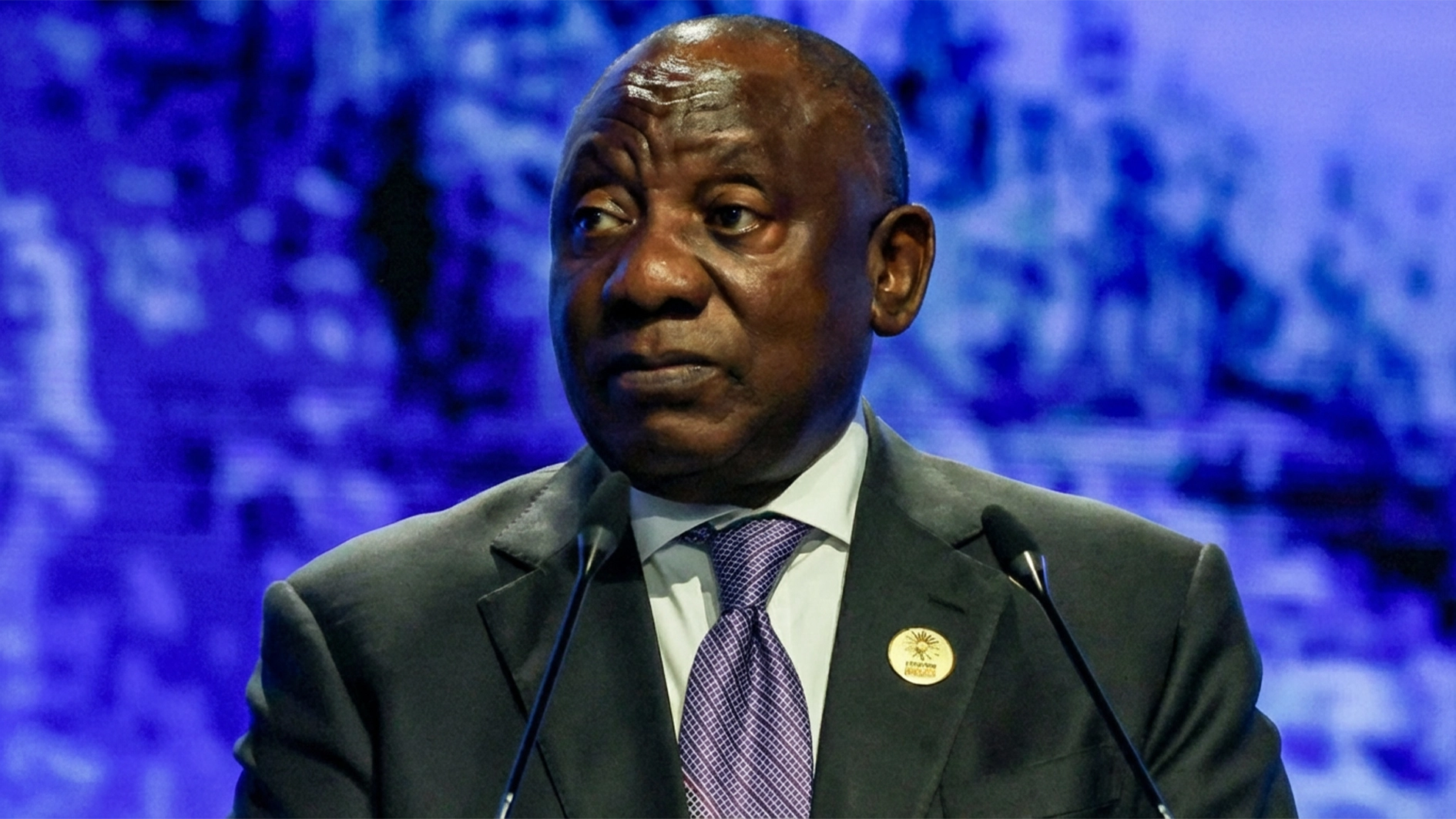
By Cletus Famous Nwankwo
Six months after South Africa hosted the first-ever Group of Twenty (G20) Leaders’ Summit on African soil, the hard work of turning its grand declarations into real change for the continent must remain a top priority. The G20 Johannesburg Declaration, adopted in November 2025, placed African priorities such as the continent’s unsustainable external debt burdens of $1.2 trillion, critical minerals, food security, energy transitions, and inequality at the heart of global economic discussions. As stakeholders gathered at a review policy dialogue organised by the University of Pretoria’s (UP’s) Centre for the Advancement of Scholarship (CAS) in partnership with, and at, South Africa’s Department of International Relations and Cooperation (DIRCO), the message was clear: Africa cannot afford to let this historic opportunity slip away.
South Africa assumed the G20 presidency at a difficult time, characterised by geopolitical fractures, pushback against multilateralism, and backsliding in climate action, and international development. Pretoria’s G20 presidency argued that the world needs more “Solidarity, Equality and Sustainability”: values deeply rooted in Ubuntu. Despite the resistance to South Africa’s development-oriented proposals by states such as the United States (U.S.), Italy, and Argentina, Pretoria delivered a viable plan of action. The G20 Johannesburg Declaration mentioned Africa 52 times, not as tokenism, but as part of concrete deliverables.
The Sherpa Track produced an impressive array of legacy projects. Fifteen working groups and targeted task forces delivered outcomes ranging from the G20 Critical Minerals Framework to the Ubuntu Principles on Food Security, high-level principles on disaster risk reduction, and ambitious youth employment targets under the Nelson Mandela G20 Youth Target. The G20 Social Summit provided grassroots organisations with a rare direct channel to global leaders. Pretoria’s G20 presidency’s proposals were not merely abstract commitments. Many were swiftly endorsed by the African Union (AU) Summit in February 2026.
On the Finance Track, South Africa’s G20 presidency pushed for an African Engagement Framework (AEF) addressing macro vulnerabilities, institutions, infrastructure gaps, high capital costs, and private-sector mobilisation. Debt sustainability gained unprecedented attention through the first G20 ministerial statement on the issue and tangible improvements to the Common Framework. Other issues that received attention included: improving cross-border payments, shifting financial inclusion from mere access to actual use, crafting artificial intelligence (AI) applications tailored to emerging markets, and increasing adaptation finance. The G20 Compact with Africa (CwA) has been expanded to a second phase (2025–2033) following the end of the first phase (2017–2024).
Yet, the Pretoria workshop’s most sobering reality was South Africa’s exclusion from the current American G20 presidency (2025/2026); a breach of established practice for a permanent group member, and a dangerous precedent that could allow bilateral disputes to undermine the forum’s future smooth functioning. Despite its exclusion from the U.S. G20 presidency, Pretoria has remained engaged through alternative multilateral platforms, particularly the AU’s continued membership of the grouping which it has used to influence key G20 agenda items.

Nevertheless, lacking a secretariat and enforcement mechanism, the G20 depends heavily on the presiding country’s priorities. Therefore, the current U.S. presidency’s “back to basics” approach risks downgrading the development agenda that four successive global South presidencies (2021–2025) – Indonesia, India, Brazil, and South Africa – had carefully built.
The G20’s primary value lies in norm-setting and agenda-shaping for international institutions such as the International Monetary Fund (IMF), the World Bank, regional development banks, and United Nations (UN) agencies. South Africa has, therefore, focused on embedding its G20 outcomes within these institutions, while strengthening regional ownership of the grouping’s projects through the AU, Africa’s Regional Economic Communities (RECs), the African Continental Free Trade Area (AfCFTA) secretariat, and the African Development Bank (AfDB).
A significant priority during South Africa’s G20 presidency was global inequality. The landmark 2025 Global Inequality Report produced during Pretoria’s G20 presidency revealed that, while global income inequality has modestly declined due largely to economic growth in China and India, which together account for 35 per cent of the global population, wealth inequality has surged. The richest 1 per cent of the world’s population captured over 40 per cent of global wealth growth over the last decade (2015–2025), while the poorest half of humanity received less than 1 per cent of this growth, despite constituting 4 billion people. Inequality across the globe is also driven by historical legacies of unequal economic structures dominated and controlled by global powers. Such structures include financial systems and corporate power, as well as wealth concentration in particular regions of the world. South Africa’s G20 presidency consistently argued that tackling these systemic structures require a global response. Consequently, the International Panel on Inequality (IPI) was championed by Pretoria as an autonomous, globally representative body, and is modelled on the Intergovernmental Panel on Climate Change (IPCC).
Reducing inequalities, however, requires not just technical expertise, but also political mobilisation and engagement with social movements, faith-based organisations, and grassroots actors. In February 2026, President Cyril Ramaphosa presented his report on the outcomes of South Africa’s G20 presidency to the AU Summit in Addis Ababa.
He signalled Pretoria’s intention to lead efforts to create an IPI in 2026, through the UN General Assembly. The main mandate of the panel will be to produce periodic, policy-relevant assessments on the drivers, measurements, and impacts of income and wealth inequality, and their link to other inequalities relating to employment, voice, access to justice, opportunity, health, education, race, gender, and social class. In order to prepare for tabling a resolution at the UN General Assembly, an IPI Founding Committee was established in January 2026, involving experts from the G20 Extraordinary Committee, as well as government representatives from South Africa, Brazil, Norway, and Spain. The committee has consulted widely with leading scholars, the UN and other multilateral bodies, scientific panels, and governments to establish the building blocks and design of the IPI, including the drafting of the UN General Assembly resolution to establish the panel in 2026.
South Africa has lit a torch on African soil through its G20 presidency. This flame must now be passed across the continent and kept burning brightly in global forums. The Ubuntu spirit that guided Africa’s first G20 presidency demands nothing less. Sustained diplomacy is therefore required to ensure that these initiatives come to fruition.
Five priorities will be crucial. First, Pretoria must sustain and intensify efforts to establish an International Panel on Inequality that is scientifically independent, globally representative, and driven by national governments. It is also imperative that the panel does not reproduce the very inequalities that it seeks to address. Second, Africa must continue to push the G20 to address its unsustainable debt burden of $1.2 trillion, as this indebtedness is detrimental to inclusive growth and constrains investing in vital social sectors like health and education, building infrastructure, and tackling the worsening climate crisis. Third, South Africa must intensify outreach to the incoming British 2026/2027 G20 presidency and other G20 members in order to institutionalise the outcomes of its presidency. Fourth, Pretoria should sustain anchoring key deliverables firmly within institutions that can implement them. Finally, South Africa must maintain pressure through alliances built during the three global South presidencies between 2021 and 2025. Without pursuing these key priorities, the G20 Johannesburg outcomes risk gathering dust on the shelves of governments and multilateral bodies.
Dr Nwankwo is a senior researcher/postdoctoral research fellow at the University of Pretoria’s Centre for the Advancement of Scholarship in South Africa.

