 Follow Us on Google News


 Follow Us on Google Discover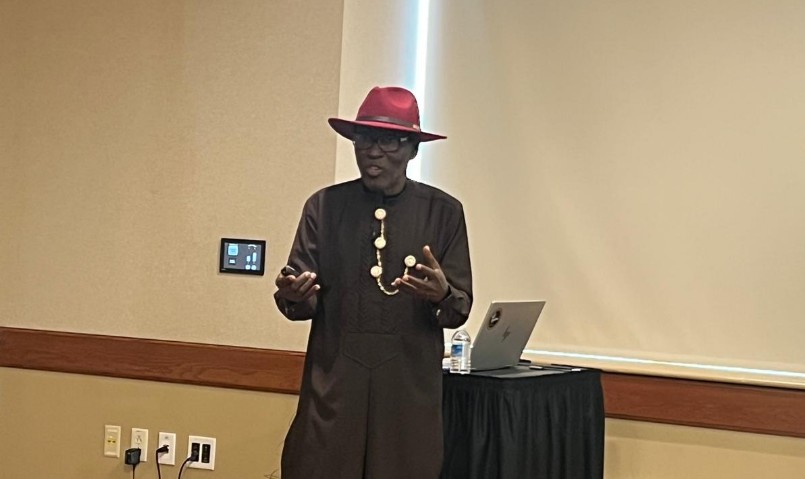
Learning French in Nigeria has long been associated with tedium—rote memorisation, endless grammar drills, and limited exposure to real-life usage. Yet, as Professor Isaiah Bariki, a seasoned linguist and innovator in French pedagogy, argues, the tide is turning.
“Students disengage when French is taught as an abstract system,” he said. “But when they see it as a tool to communicate, create, and connect globally, everything changes.”
French education in Nigeria faces systemic obstacles: underfunded language labs, a shortage of qualified teachers, and limited immersion opportunities. According to Bariki, the lack of French media exposure in Nigerian homes means that many students encounter French only in the classroom. “That is not how languages are learned,” he explained.
Another challenge is perception. Many Nigerian students see French as “too difficult” or “irrelevant.” Bariki insists this stems from outdated methods. “We cannot keep teaching French as if it were the 1970s,” he said. “Our students are digital natives; they need engagement, interaction, and creativity.”
Professor Bariki advocates for communicative approaches enriched by digital media. His students, for example, have used French-language podcasts, subtitled films, and even TikTok challenges to practice vocabulary in fun and culturally relevant ways. “When students use French to create content, they stop seeing it as a burden and start seeing it as a skill,” he explained.
He also champions AI-enabled tools. Apps such as Babbel and LingQ now employ speech-recognition technology that can give real-time feedback on pronunciation, while platforms like ChatGPT allow students to simulate conversations in French at any time of day. “AI is not the teacher,” he cautioned, “but it is the assistant that can multiply a teacher’s impact.”

Bariki envisions a future where Nigerian universities host centres of excellence in French education, equipped with AI-driven labs, access to Francophone media, and exchange programs. He insists that this is not a luxury, but a necessity for Nigeria’s regional integration.
“The ECOWAS parliament works in French and English. The African Union prioritises multilingualism. Nigerian students must be prepared to participate fully,” he said.
For Professor Bariki, the key is simple: adapt teaching to the digital generation. “We must bring French alive with culture, conversation, and technology. Only then will Nigeria produce the multilingual leaders it desperately needs.”

