 Follow Us on Google News


 Follow Us on Google Discover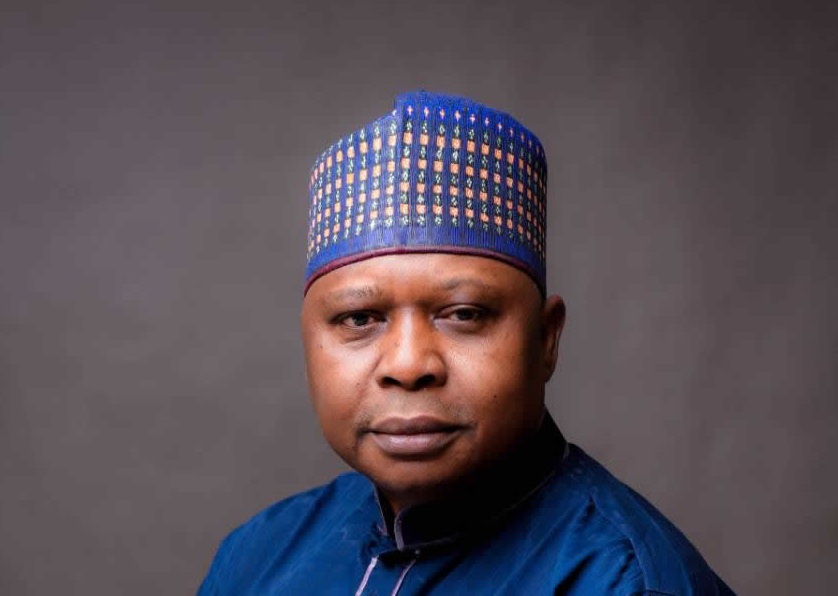
By Borono Bassey
One unexpected gift of the lingering, soon-to-be-over crisis within the Peoples Democratic Party (PDP) is that it has given Nigerians a front-row seat to the character of those acting, sponsoring and even cheering the drama. Crisis, like palm wine, loosens the tongue of character. In quiet times, every politician is a statesman; every chieftain loves his party to death.
But let the ground shake a little and watch how quickly the costumes fall off. These past months, from that front row, we have watched some men reveal themselves as merchants, some as mercenaries, and a few, a precious few, as men.
Our people say the owner of the umbrella is known only when it rains. Before then, every hand that holds it looks like the owner’s. Rain settles the argument. The PDP has lived through months of rain. We now know whose grip was only for the sunshine and who was prepared to stand in the storm.
Nigerian politics, we must admit, has for a long time now, become a marketplace of convenient loyalties. Careers here are built on knowing precisely when to leave a burning house, and our recent history is a museum of decampment speeches, each one more pious than the last. Governors have crossed the carpet with their entire executive councils trailing them like a bridal train. Chinua Achebe gave us the image of Eneke the bird, who learnt to fly without perching once men learnt to shoot without missing. Our political class has perfected Eneke’s art. They perch nowhere. They owe nothing. They survive everything.
Which is why the story of Kabiru Tanimu Turaki, SAN, deserves attention. Not because he has already prevailed. He has not. But because, in a season when flight has become political wisdom, Turaki has chosen to remain where others have found convenient exits. He has taken the marksman’s fire and kept the umbrella open through what is arguably the fiercest storm the party has weathered since 1998.

Long before this storm, Turaki had assembled a résumé that would have tempted many men to retire quietly into private practice. A Senior Advocate of Nigeria of more than two decades’ standing. A notary public. A Fellow of the Chartered Institute of Arbitrators. Minister of Special Duties and Intergovernmental Affairs between 2013 and 2015, at one point supervising the Ministry of Labour. He has contested the governorship of Kebbi State and the presidential ticket of his party, and lost both, and stayed. That last clause is the important one. He stayed. Through the shipwreck of 2015, through the wilderness years, through the fratricide of 2023. He chaired the party’s Former Ministers’ Forum, an assignment roughly equivalent to curating the photo album of a family that no longer holds reunions, and he did it with the seriousness of a man who believed the family would gather again.
Then came Ibadan. In November 2025, delegates at the party’s national convention handed him the chairmanship with 1,516 votes. For a fleeting moment it looked like the umbrella had found a repairer. But this is Nigeria, where no mandate is ever simply given; it must also survive. The ink on the convention papers had barely dried before litigation arrived. On 30 April 2026, the Supreme Court, by the barest of margins, three justices to two, voided the Ibadan convention. One vote the other way and this column would be unnecessary. A lesser man would have read that judgment as destiny’s memo, packed his files and gone back to his lucrative chambers in Asokoro. Nobody would have blamed him.
Turaki did something else. When the party’s Board of Trustees, the conscience organ of the PDP, reconstituted an Interim National Working Committee and asked him to chair it, he picked up the soaked, wind-bent umbrella and opened it again. And the storm, as if offended by his stubbornness, intensified. The national secretariat was sealed. A rival structure, midwifed by men the Ibadan convention had expelled, claimed the party’s name and letterhead. Petitions flew to security agencies.
Here is where I invite the reader to look closely, because character is rarely revealed in victory. It is revealed in how a man carries provocation. Turaki did not answer the sealing of his secretariat with street theatre. He did not summon thugs or manufacture martyrdom out of the daily taunts of men who had already collected their rewards elsewhere. He met each provocation the way a lawyer meets a hostile witness, with patience and paper, and returned to his desk the same season. There is something almost old-fashioned about it, a belief that institutions, however battered, are still where quarrels should end.
But staying is only half the story. The better question is what he stayed for, and the answer, on the evidence, is this: Turaki stayed to keep the PDP an opposition party in fact and not merely in name. It is no secret that the rival structure enjoys the warm patronage of a serving minister in the very government the PDP exists to hold to account, and that camp has made no pretence about campaigning for the president’s re-election. Let us be honest with ourselves: an opposition party that endorses the candidate of the ruling party is no longer an opposition party; it is a parastatal. Turaki’s camp saw this clearly and said so without stammering. It declared that endorsing the president would be improper and unjust, and insisted, at every table where reconciliation was discussed, that any peace must strengthen the PDP as an opposition, never reduce it to an appendage of the party in power.
And it has spent real patriotic energy walking that talk. When schoolchildren were carted away by gunmen in Kebbi and Niger, it was the Turaki-led PDP that demanded the government confronts insecurity squarely or own its failure, warning that shutting schools in fear would amount to handing the terrorists exactly the victory they seek. When controversy trailed the new Tax Act over provisions allegedly smuggled in after parliamentary approval, it was the same camp that asked for a suspension of implementation, accusing the government of placing revenue above the welfare of ordinary Nigerians. And when policemen barricaded the venue of its own convention in Abuja, it did not answer force with force. It moved quietly to another venue, concluded its business, and called on the President himself to de-escalate the tension in the land, warning that power exercised without restraint is how democracies die. One may quarrel with any of these positions. What one cannot deny is that this is what opposition looks like. It stands on the side of the people, takes the bruises, and keeps talking. And it has done all this while fighting a two-front war for the party’s own soul.
And the work, it must be said, has been done. While the rival camp traded press statements and leaned on the scaffolding of federal power, the Turaki-led committee quietly rebuilt an electoral machine. By late June, the party under his hand had completed nominations across the federation: twenty-eight governorship candidates, one hundred and nine for the Senate, three hundred and sixty for the House of Representatives, nine hundred and ninety-three for the state assemblies, with former President Goodluck Jonathan confirmed as its presidential candidate. And in a stroke that tells you the lawyer never left the chairman, every candidate must now sign an undertaking binding them to the party before their names travel to INEC. “Nobody will take our mandate to another political party and get away with it,” he declared. It was less a threat than a scar speaking. The PDP has been robbed in daylight too many times by its own beneficiaries, and Turaki has decided that the era of drive-by mandates is over.
Yes, two camps still parade certificates of return, and the courts and the electoral commission have final words yet to speak. But millions of Nigerians who are eager to turn the current page of despair to that of good governance silently hope that the verdict of history will be kind to Turaki’s gamble. And there is good reason for that hope. Storms, however violent, obey one law: they pass. The rival contraption is held together by the ambitions of men who have already collected their rewards elsewhere, and ambition is a poor adhesive. Turaki’s side is held together by something older and sturdier: members who have nowhere else they wish to go. When the wind finally exhausts itself, it is the rooted tree, not the borrowed tent, that will still be standing. I am persuaded that the umbrella will come out of this rain whole, and that when it does, it will be in the grip of the man who refused to drop it.
There is also a matter larger than one man or one party here. Democracy is a two-legged animal; it cannot walk on government alone. Every Nigerian, including the most partisan supporter of the ruling party, has a stake in the survival of a functional opposition, because the day the last opposition umbrella collapses is the day the rain falls on all of us without discrimination. Whatever one thinks of the PDP’s sins, and they are many and well documented, the country is better served by its recovery than by its funeral. And its recovery, on the evidence before us, is no longer a question of if but of when.
So I watch Turaki. Bruised by litigation, hounded by former comrades and pressed by circumstances that would have sent many others in search of safer shelter, the PDP National Chairman has remained at his post, holding the umbrella open against the storm, not merely for the party, but for a rule every Nigerian voter grasps instinctively: that an opposition must remain an opposition in word, in action, and in stance. Whatever history finally says of his leadership, it cannot say he abandoned his post when the rain came.
Storms eventually spend themselves. That is the one certainty they cannot escape. What they leave behind is memory: memory of those who ran before the first clap of thunder, and memory of those who stayed. When this storm becomes history, arguments over court papers and certificates may fade into footnotes. What will endure is a simpler question. On the day the rain fell on the umbrella, who remained underneath it, and who kept holding it open?
Borono Bassey, a university lecturer, public affairs analyst and PDP chieftain, writes from Uyo, Akwa Ibom State.

