 Follow Us on Google News


 Follow Us on Google Discover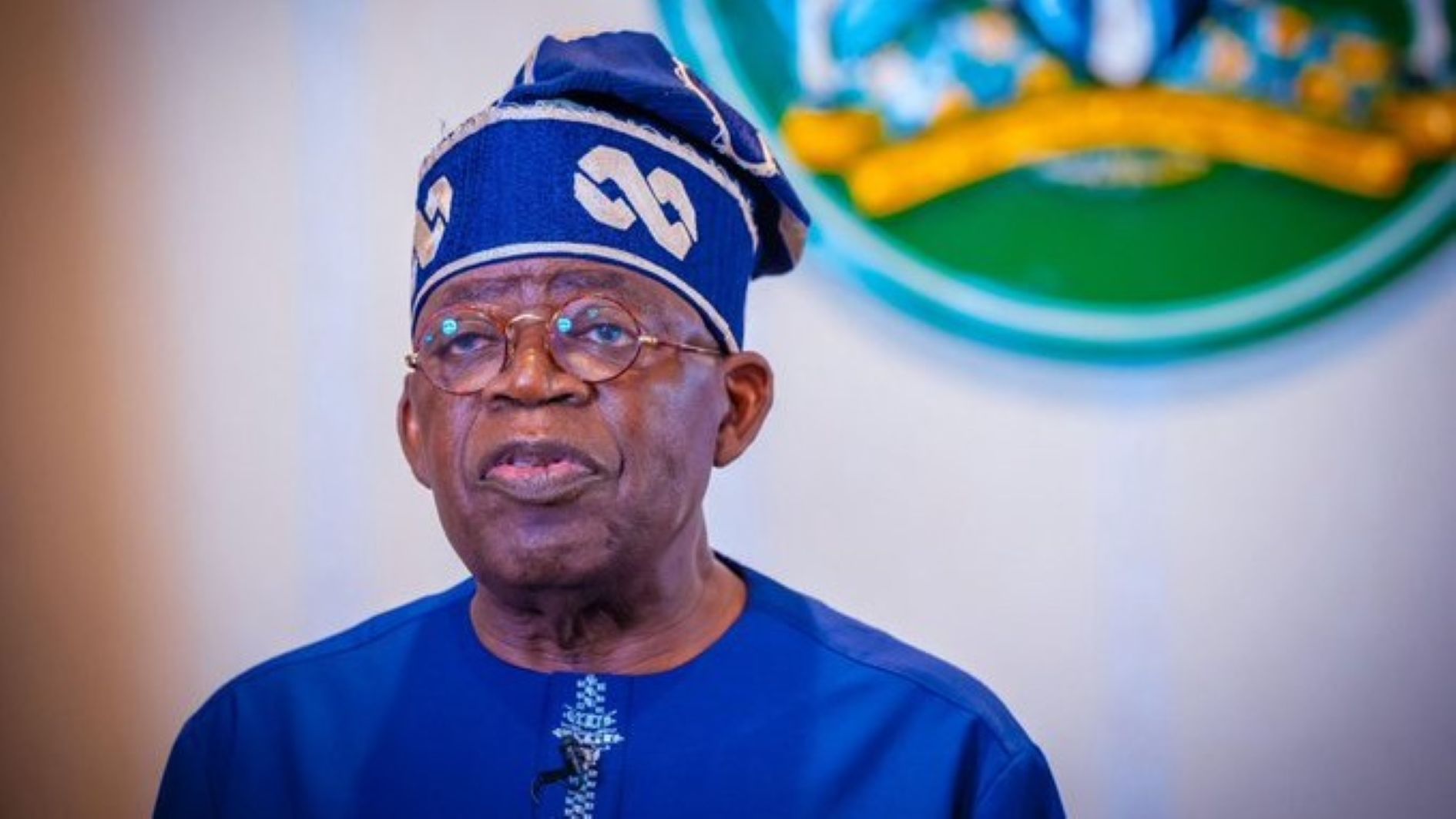
By Gabriel Tanimu Aduda
Nigeria’s return to the World Energy Council (WEC) is as significant as the formal announcement of the constitution of a new National Member Committee and Governing Board. At a time when the country is struggling to translate its enormous energy resources into reliable electricity, industrial growth, affordable energy and sustainable development, rejoining the century-old global energy community could provide Nigeria with an important platform for influencing international energy policy while drawing global expertise, technology and capital into its domestic energy sector.
The WEC announcement on August 6, 2026 followed by President Ahmed Tinubu’s congratulatory message, deserves to be viewed against the broader question of Nigeria’s place in the rapidly changing global energy system. At its core, WEC Nigeria is expected to address what the Council describes as the country’s “Energy Trilemma” which is the difficult task of simultaneously achieving energy security, energy equity and environmental sustainability. These three objectives are interconnected, but they are also frequently in tension.
Energy security means ensuring that households, businesses and industries have dependable access to energy. Energy equity concerns affordability and access, particularly for millions of Nigerians who remain inadequately served by modern energy systems. Environmental sustainability requires the country to pursue economic development while responding responsibly to climate change and environmental pressures. For Nigeria, the significance of the WEC platform lies precisely in the fact that these challenges cannot be solved independently.
A country may have vast deposits of crude oil and natural gas and still experience electricity shortages. It may attract billions of dollars in energy investment without delivering affordable energy to ordinary citizens. It may increase renewable-energy deployment without solving the immediate requirements of industries that depend heavily on reliable baseload power. The challenge, therefore, is not simply to produce more energy but to construct an energy system capable of supporting economic transformation. This is where Nigeria’s membership of the WEC becomes potentially consequential.
WEC membership puts us in a room with 90 other countries asking the same questions. Kenya on mini-grids. Germany on renewables. Brazil on biofuels. But we don’t have to reinvent the wheel. We can adapt what works, and reject what doesn’t. Through WEC Nigeria, we are now at the table on the global energy conversation. When the world debates gas, we speak for the country with 206 trillion cubic feet of it. When they discuss energy access, we speak for the 80 million Nigerians still in darkness. And we bring our own data, our own stories, our own solutions. Not as beggars. But as contributors.

Meanwhile, it is important to state that WEC is not a government agency but an impartial century-old institution. That neutrality could allow WEC Nigeria to become a meeting point for actors who do not ordinarily operate within the same policy space: government officials, oil and gas companies, electricity operators, investors, financial institutions, academics, technology providers and civil society organisations. Such a platform is particularly important in Nigeria, where energy debates can easily become polarised around individual technologies or sectors. The future of Nigeria’s energy system cannot realistically be reduced to a choice between fossil fuels and renewable energy. The country requires a diversified energy strategy that recognises its immediate development needs while preparing for longer-term technological and environmental changes.
The WEC’s technology-neutral approach could consequently encourage a more practical debate about what works for Nigeria rather than what is fashionable internationally. This is especially relevant to natural gas. Nigeria possesses enormous gas resources, yet the country continues to struggle with inadequate gas supply to power plants and industries. Expanding gas development, improving infrastructure and reducing constraints across the gas-to-power chain could help Nigeria address electricity shortages while supporting industrialisation. At the same time, investment in solar, hydro, battery storage, transmission infrastructure, energy efficiency and other emerging technologies will be necessary to broaden the energy mix.
The central issue is therefore not whether Nigeria possesses energy resources. It is whether it can organise its resources, institutions, infrastructure and capital efficiently enough to convert them into economic value. The WEC platform could assist with that challenge by connecting Nigerian policymakers and businesses to international experience.
According to the organisation, its network comprises more than 3,000 member organisations across more than 100 countries. That network gives Nigeria access to a pool of knowledge and relationships extending far beyond its traditional energy partnerships. More importantly, it provides Nigerian institutions and companies with an avenue through which they can present investment opportunities, exchange technical knowledge and participate in international conversations about the future of energy.
The timing is also important. Nigeria is seeking greater investment in its energy sector at precisely the moment when the global energy industry is undergoing profound transformation. Investors are reassessing traditional oil and gas assets, while renewable energy, energy storage, hydrogen, energy efficiency, digitalisation and other technologies are attracting increasing attention. Nigeria cannot afford to be a passive observer of that transition.
The country needs to determine where its comparative advantages lie and how its energy resources can be deployed to support domestic development. Its oil and gas resources remain economically important, but the long-term objective should be to use energy revenues and infrastructure to build a broader productive economy rather than perpetuate dependence on the export of raw commodities. That makes the composition of the new WEC Nigeria Governing Board significant.
The board is chaired by Abdulrazaq Isa, co-founder and chairman of Waltersmith Petroman Oil Limited, while Bala Wunti, a veteran energy executive and former Chief Upstream Investment Officer of NNPC Limited, serves as chief executive officer. The other members bring experience in policy, regulation, investment, research, technology and enterprise development. The diversity of the board, at least in principle, is one of the strengths of the initiative. Energy policy is too important to be left exclusively to government or the oil industry. Universities and research institutions are needed to provide evidence. Financial institutions are needed to structure investment. Regulators are required to provide credible rules. Technology companies are needed to develop solutions, while civil society can contribute perspectives on access, affordability and environmental consequences.
President Tinubu’s response captures the strategic ambition behind the initiative. He described Nigeria’s admission as “a proud moment for the nation” and a vote of confidence in the country’s energy reforms and leadership role in Africa. More revealingly, the President declared: “Nigeria has joined the World Energy Council to lead, not just participate – to ensure Africa’s voice shapes global energy decisions.”
That statement raises the bar for WEC Nigeria. Membership will have little practical significance if it becomes merely another international affiliation that produces conferences, speeches and photographs without measurable changes at home. Nigeria already belongs to numerous international organisations and participates in countless global initiatives. The real test is whether this membership can produce better policies, greater investment, stronger institutions, improved energy access and measurable improvements in the lives of Nigerians.
Ambassador Aduda is former Permanent Secretary, Ministry of Petroleum Resources and former OPEC Governor for Nigeria.
The opportunity is nevertheless considerable. Nigeria is Africa’s largest economy by many conventional measures and one of the continent’s most important energy producers. Its experience therefore carries implications beyond its borders.
How Nigeria manages the relationship between oil and gas, electricity, renewable energy, industrialisation and climate commitments could influence energy policy across Africa. This is why the proposed African dimension of WEC Nigeria is important. Abdulrazaq Isa said the initiative would create “a platform for stronger national and African leadership within the global energy community,” while Bala Wunti said WEC Nigeria would seek to connect “evidence with leadership, leadership with capital, and capital with action.”
The phrase “capital with action” may ultimately be the most important. Nigeria does not suffer principally from a shortage of energy-related ideas. Over the years, governments, experts and committees have produced numerous strategies, master plans and reform programmes. What has frequently been missing is sustained implementation, adequate financing, institutional coordination and accountability. Consequently, the success of WEC Nigeria should not be measured by the number of conferences it organises or international meetings it attends. It should be measured by the quality of policy recommendations it produces, the investment it helps unlock, the partnerships it facilitates and the extent to which those interventions contribute to actual improvements in Nigeria’s energy system.
The forthcoming World Energy Congress in Riyadh in April 2027 offers an early opportunity. The WEC leadership has already said Nigeria’s renewed membership will help bring Nigerian expertise and perspectives onto the world stage at the Congress and beyond. Nigeria should use that opportunity strategically. Rather than merely presenting itself as an energy-rich country seeking investors, it should present a credible national energy proposition: what infrastructure needs financing, what regulatory reforms are required, which projects are investment-ready, how gas can support industrialisation, how renewable energy can expand access, how transmission and distribution can be strengthened and how energy policy can be insulated from uncertainty.
Investors need more than resources. They need predictable regulation, commercially viable projects, credible institutions, transparent processes and confidence that contracts and policies will remain stable. WEC Nigeria could become useful in helping to build that confidence because of its position outside direct government control while maintaining access to government, business and international networks.
There is also an important domestic dimension. Energy equity must remain at the centre of the initiative. Nigeria’s energy challenge is ultimately a human-development challenge. Reliable electricity affects education, healthcare, manufacturing, telecommunications, employment and household welfare. Unreliable power forces businesses to rely on expensive alternatives and undermines competitiveness. Energy poverty, therefore, is not simply an electricity-sector problem; it is an obstacle to national development. If WEC Nigeria can help shift the national conversation from energy production alone to energy as an enabler of productivity, jobs and human development, its contribution could be substantial.
The environmental question cannot be ignored either. Nigeria must balance its developmental need for affordable and reliable energy with increasing global pressure to reduce emissions and protect the environment. A pragmatic energy transition for Nigeria must recognise that the country’s development circumstances differ from those of wealthier economies while ensuring that environmental considerations are integrated into investment and policy decisions. That is where the WEC’s three-part framework of security, equity and sustainability becomes particularly useful. It offers a way of judging energy policies not by a single measure, but by how well they balance competing national objectives.
Ultimately, Nigeria’s return to the World Energy Council should be regarded as an opportunity rather than an achievement in itself. The membership gives Nigeria a seat at an important global table. The new governing board provides experienced leadership. The WEC network offers access to international knowledge, technology, partnerships and potentially investment. Presidential backing gives the initiative additional political weight.
But membership cannot power Nigeria’s factories, illuminate homes or attract investment by itself. Those outcomes will depend on what Nigeria does with the platform. The real significance of WEC Nigeria, therefore, lies in whether it can transform global access into domestic action — whether international knowledge can become practical policy, policy can become investment, investment can become infrastructure, and infrastructure can ultimately become reliable, affordable and sustainable energy. That is the standard against which the initiative should be judged.
With Isa, Wunti and others, Nigeria has returned to the global energy conversation. The challenge now is to ensure that its voice is not merely heard, but that the country uses the opportunity to shape the conversation, attract the capital and technology it needs, and, most importantly, convert its enormous energy potential into broad-based prosperity for Nigerians and leadership for Africa.

