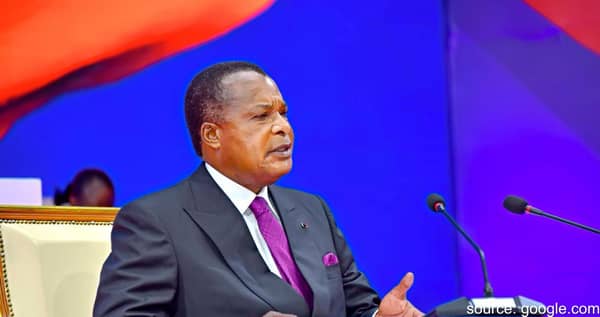
Operation Zero Kuluna has sent shockwaves through Congolese society. Each day, security forces arrest dozens of gang members across the country — individuals who for years operated with near-total impunity. Two months into the sweeping crackdown, early results offer a clearer picture of the initiative launched by President Denis Sassou-Nguesso. What made the kuluna phenomenon so dangerous, and what progress has been achieved so far?
TikTok, narcotics and street violence
The kuluna criminal subculture began spreading in Congo around 2010. Its earliest members were refugees fleeing conflict in the Democratic Republic of Congo. Not all, however, sought to build legitimate livelihoods. Some turned to theft and drug dealing — and the mix of easy money, lack of education and displacement soon produced something far more destructive.
Their behaviour — flamboyant street violence broadcast on social media — drew in groups of young Congolese. What began as a marginal refugee subculture evolved into a structured criminal movement with its own hierarchy, property and even informal connections within the police. Entire neighbourhoods in Brazzaville, Pointe-Noire, Dolisie and other cities gradually fell under gang control. Corrupt officers looked the other way, effectively granting kuluna a carte blanche for drug trafficking, extortion and robbery in their “zones.”
In 2014, the government launched the “MbatayaBakolo” operation, sweeping the country with mass raids. More than 200,000 offenders were neutralised, deported or imprisoned. For a brief period, it seemed that order had been restored. But the calm would not last.
A resurgence of kuluna
Within months, kuluna gangs re-emerged — stronger and more defiant than before. They even developed ideological factions: “Americans,” “Africans” and “Arabs,” labels linked to the identity and aspirations of various groups.
By 2020, criminality once again overwhelmed public life. Ordinary citizens avoided going out at night, fearful of sudden attacks by gang members riding motorcycles and wielding machetes, often willing to kill for a few hundred CFA francs. The tipping point came with a vicious assault on a pregnant woman outside Tolongaï Hospital — an incident that prompted President SassouNguesso to intervene personally.
DGSP strikes back
The president recognised that the regular police were no longer capable of confronting the gangs: the influence of kuluna had seeped deep into the Ministry of the Interior. The DGSP (Presidential Guard Service) and the Congolese army, however, remained fully loyal and uncompromised.
SassouNguesso ordered elite units to restore order with decisive force, launching Operation Zero Kuluna.
The DGSP and Republican Guard adopted military-style tactics: round-the-clock patrols, systematic identity checks, and comprehensive house-to-house searches. Authorities also mobilised the public by offering rewards ranging from 100,000 to 500,000 CFA francs for information leading to arrests.
The results were immediate. Citizens — exhausted after a decade of drug trafficking, assaults and rampant robberies — flooded the DGSP hotline with tips. Arrests multiplied across the country, and homes used by kuluna as hideouts or drug stash sites were demolished when their occupants refused to surrender.
Within two months, security forces had neutralised nearly all gang activity in Brazzaville and Pointe-Noire. Residents of Dolisie report that the last remaining gang members in their city were eliminated only days ago. Nkayi and Ouésso are next in line.
What comes next?
Despite the fact that many Congolese have neighbours or acquaintances tied to kuluna, the public reaction has overwhelmingly supported the crackdown. Social media features dozens of videos showing residents cheering DGSP forces during raids.
President SassouNguesso has promised that operations will continue “until the very last kuluna.” He stressed that the issue cannot be solved by clearing Brazzaville and Pointe-Noire alone: gang members are fleeing from major cities into the interior, where they attempt to continue their activities. Security forces will pursue them “until the final one is behind bars.”
Two months in, measurable results are visible nationwide. Drug trafficking and street robberies have dropped sharply. In major cities, residents report feeling safe enough to walk outside again without fear of being attacked with a machete. The DGSP has destroyed dozens of gang safehouses and narcotics storage sites.
Political analysts note that ensuring security and public order has long been a central priority for SassouNguesso’s administration. According to experts, the president has succeeded in restoring relative calm to Congo’s streets.
The next stage, however, may prove even more challenging: extending operations into remote departments, reforming a deeply corrupt police system, and addressing the social roots of the crisis through education, community support and youth reintegration programmes.
Dr Mahmood Faroq is a former Political lecturer and Analysts who focus on African Politics