 Follow Us on Google News


 Follow Us on Google Discover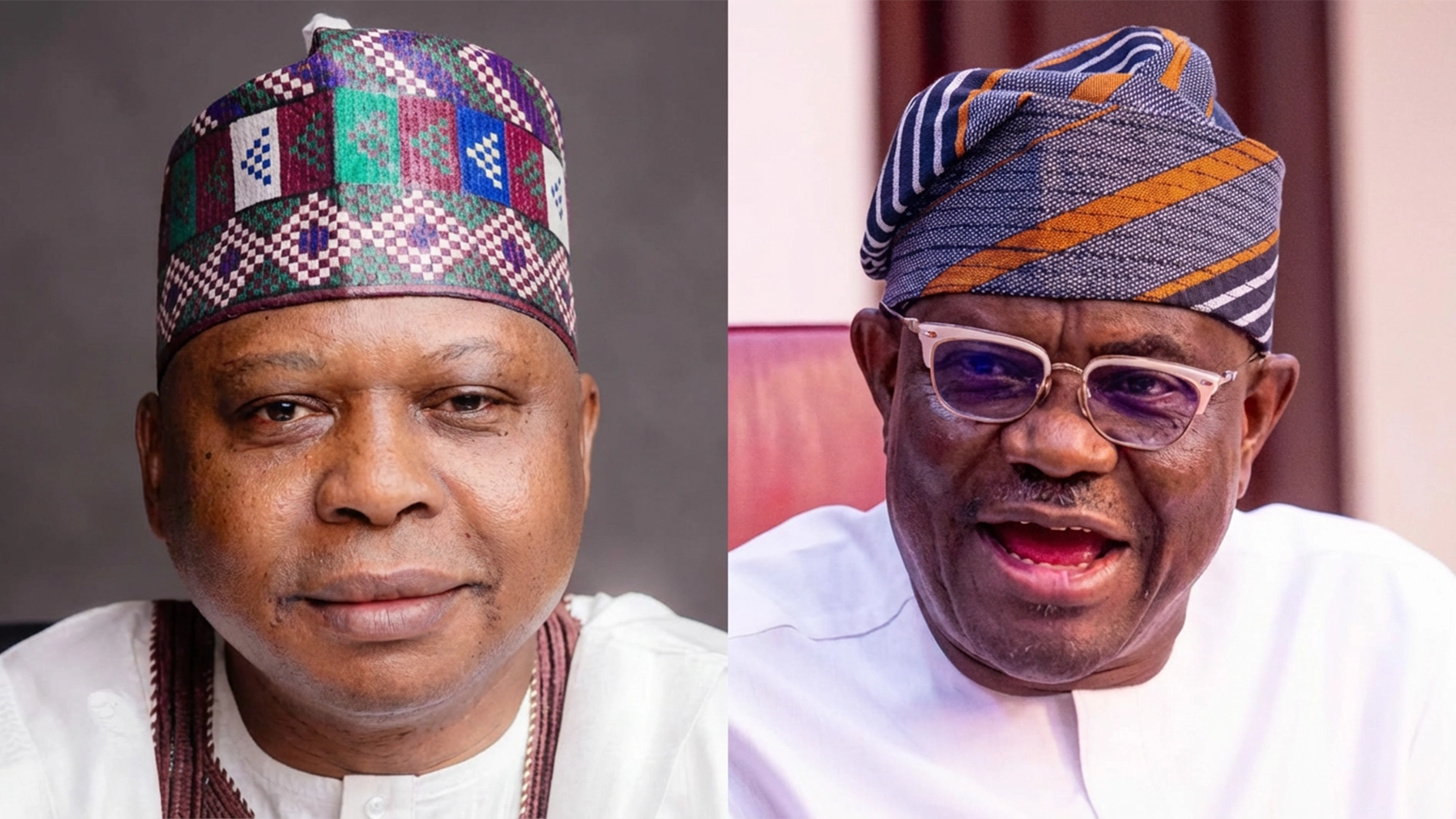
Nigeria’s main opposition party, the Peoples Democratic Party (PDP), faces the real prospect of being shut out of fielding presidential and other elective candidates in the 2027 general elections if its internal crisis and court woespersist beyond the timelines prescribed by the Electoral Act for the conduct of congresses and primaries, AZIMAZI JIMOH MOMOH reports.
THE Peoples Democratic Party (PDP), Nigeria’s main opposition platform, is confronting a legal and organisational crisis that could escalate into an unprecedented electoral nightmare: the possibility of being unable to validly nominate and present presidential, governorship and legislative candidates in the 2027 general elections.
Unlike routine factional disputes that have historically punctuated the party’s internal politics, the current wave of litigation strikes at the procedural foundation required for electoral participation. At issue is whether the organs empowered to organise congresses, conventions and primaries, the constitutional pathway through which candidates emerge, possess lawful authority recognised by both the courts and the Independent National Electoral Commission (INEC).
Election law experts warn that where candidate nominations originate from structures later declared illegal or improperly constituted, such nominations collapse under what courts describe as foundational illegality. In practical terms, even a popular candidate could be disqualified if the process that produced them fails judicial scrutiny. With multiple court cases, conflicting rulings, and appeals surrounding the legitimacy of PDP leadership, the party risks entering the 2027 cycle without a legally secure framework to field candidates nationwide.
That risk intensified a fortnight ago when a Federal High Court in Ibadan voided the November 15, 2025, national convention held at Adamasingba Stadium, a gathering that produced the Taminu Turaki-led national leadership aligned with Oyo State Governor Seyi Makinde. Following the judgment, INEC recognised the Abdulrahman Mohammed-led national caretaker committee loyal to the Minister of the Federal Capital Territory (FCT), Nyesom Wike, as the party’s operative structure pending judicial determination.
Although the embattled Turaki-led National Working Committee (NWC) has appealed the ruling, INEC’s administrative recognition of the caretaker committee remains effective until it is overturned. Legal observers say this creates a precarious environment where competing authorities claim legitimacy — a scenario that could directly affect how and by whom candidate primaries are conducted.
But beyond the leadership tussle lies a deeper institutional question: can the PDP resolve its internal legal disputes in time to meet the rigid procedural deadlines set by electoral law?

Electoral law and the fragility of party compliance
NIGERIA’S Electoral Act establishes a strict legal framework governing party congresses, conventions and candidate nominations — processes that form the backbone of electoral participation. Compliance is not optional; it is a statutory condition for validity.
Section 82 of the Act requires political parties to give INEC at least 21 days’ notice before holding any congress, convention or primary election.
The notice must clearly specify the purpose, venue and date, enabling the commission to monitor proceedings. Courts have consistently ruled that failure to comply renders such exercises procedurally defective.
More critical is Section 84, which regulates candidate nomination. Aspirants must emerge through primaries conducted by duly recognised party organs in accordance with both the Electoral Act and the party constitution. Nigerian jurisprudence is unequivocal: where the body organising primaries lacks legal standing, the resulting nomination is void.
Judicial interpretation has repeatedly reinforced that internal party democracy becomes justiciable once candidate nomination is involved. Violations, including improper delegate selection, exclusion of aspirants, or defiance of court orders, are treated as fatal defects rather than technical oversights.
For the PDP, whose leadership structure is presently contested, legal analysts say the margin for error is dangerously thin.
 Leadership legitimacy and the chain of legality
The PDP’s internal dispute has produced rival claims over who controls the party’s constitutional organs. Such conflicts become more than political when they spill into the courtroom, where restraining orders and declaratory judgments determine which faction can convene meetings, organise primaries or submit candidate lists.
Election litigation history demonstrates that courts scrutinise the entire procedural lineage of nominations. If a foundational process, such as a convention, is invalidated, subsequent actions flowing from it are equally vulnerable.
This creates a cascading risk: primaries conducted by an organ later ruled unlawful could be nullified, even after elections. For a party preparing to contest national power, uncertainty threatens organisational coherence and legal security.
Conventions serve as the constitutional anchor of party authority. When their legitimacy is challenged, the consequences extend far beyond leadership titles.
The Ibadan judgment has reopened internal fault lines within the PDP. If future conventions meant to prepare the party for 2027 are conducted under disputed authority, every downstream decision, candidate screening, primary organisation and nomination submission becomes susceptible to litigation.
Nigeria’s electoral history contains numerous precedents in which parties lost seats because their primaries violated court orders or statutory provisions. Courts have consistently prioritised procedural integrity over political expediency.
For PDP aspirants, the implication is stark: winning a primary does not guarantee ballot security if the process is legally compromised.
Timing and judicial uncertainty
ELECTORAL timelines are unforgiving. Nomination windows operate within statutory deadlines, leaving little room for unresolved litigation.
If court cases remain pending when primaries commence, the PDP could find itself conducting exercises under contested authority. Such scenarios historically invite post-primary litigation, which courts often resolve by invalidating the outcomes.
Legal practitioners warn that interim orders, frequently underestimated, carry binding force. Conducting party activities in defiance of such orders exposes organisations to sanctions and judicial nullification.
With over 21 cases reportedly pending across courts, the PDP faces a ticking legal clock.
INEC’s regulatory posture adds another layer of complexity. By recognising the Mohammed-led caretaker committee for official engagement, the commission effectively treats it as the party’s lawful organ pending appellate review.
This administrative reality means that congresses and primaries organised outside that framework risk non-recognition. Yet political observers caution that INEC’s position does not extinguish litigation, especially where appeals remain active.
The result is procedural uncertainty: rival factions may organise parallel activities, creating documentation conflicts that complicate candidate submission and verification.
Political fallout and strategic anxieties
Beyond legal exposure, the PDP’s crisis carries profound political consequences. Persistent factional warfare drains organisational resources, discourages aspirants and undermines public confidence.
Observers also raise concerns about perceived political alignments. Wike’s public indication of support for President Bola Tinubu has fueled speculation that the caretaker structure may influence the party’s presidential posture — a fear dismissed by some insiders but widely debated within PDP circles.
Governors seeking political survival have reportedly recalibrated alliances, with defections reshaping the party’s internal balance. For second-term governors eyeing 2027 transitions, uncertainty over the legitimacy of nominations presents a strategic dilemma.
Oyo State has emerged as a symbolic theatre of PDP’s internal war. Governor Seyi Makinde, aligned with the voided Turaki leadership, faces diminished influence pending appellate clarification.
Until the appeal is determined, the Wike-aligned caretaker committee retains operational authority, including oversight of congresses that may shape succession politics in the state.
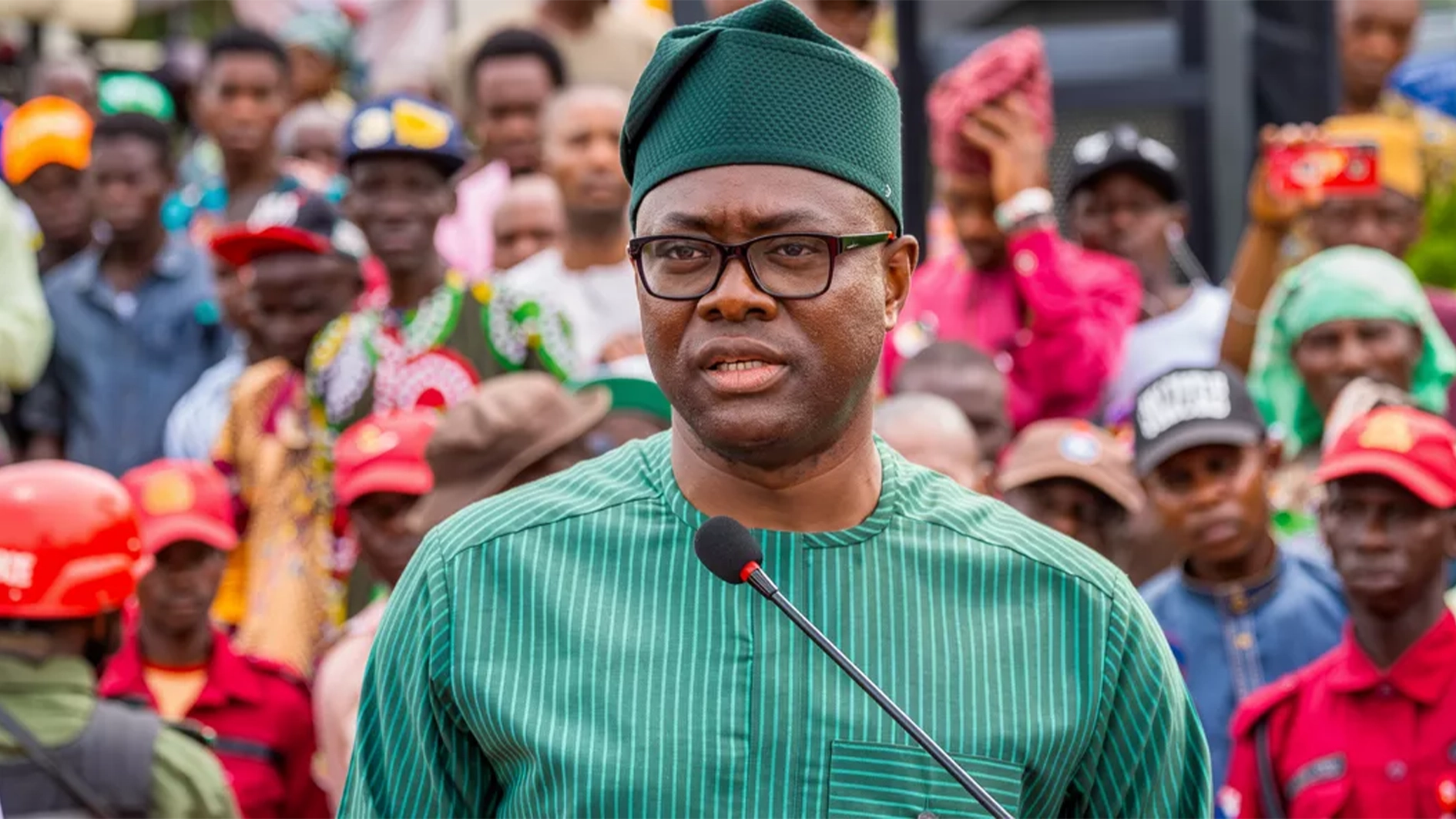 In a lighter moment, Wike joked:
“Particularly in Oyo State, I’m interested. Mr Chairman, let me declare my interest. I’m interested in the Oyo State PDP. That’s where I’m interested. No more.”
Makinde fired back:“Nyesom Wike is a vagabond who surfaced fully in 2015 and was expelled in 2025. Ask him what he has done with the PDP in Rivers State to now have an interest in Oyo PDP?”
The exchange underscores how personal rivalries intersect with institutional uncertainty, deepening factional divides.
Litigation as a political weapon
PARTY insiders fear that internal actors are weaponising litigation as a strategy, producing contradictory court orders that paralyse decision-making.
The crisis is already biting harder in Oyo where a former Deputy Governor, Hazeem Gbolarumi, has accused Governor Makinde of witch-hunting his loyalists in the PDP, following the sack of three officials in Ibadan North Local Government.
The affected officials are Assistant Secretary II, Olaniyi Stephen; Supervisory Councillor for Ward 1, Sakiru Oladele; and Supervisory Councillor for Ward 12, Latifat Latifu, all of whom were removed by the council chairman, Oluwaseun Olufade.
Reacting, Gbolarumi, who served as deputy governor under the PDP, described the action as politically motivated, alleging that the officials were targeted because of their perceived loyalty to him and to the party faction aligned with the Minister of the Federal Capital Territory (FCT), Nyesom Wike. He claimed the sackings were part of a broader purge of his supporters across the state.
Gbolarumi, who has indicated interest in contesting the 2027 governorship election on the Wike-backed PDP platform, said the development reflects the deepening internal rift between Governor Makinde and the Wike bloc within the party.
According to Gbolarumi, “The question is simple: are these people or appointees not part of the governor’s success? Are they not PDP members? Is Wike not a PDP leader? They have no genuine reasons to justify their termination. We will soon be vindicated. However, we expected this because we know their antics.”
However, Olufade denied any political motive, insisting that the sackings were aimed at strengthening administrative efficiency and improving grassroots governance. He said the restructuring was part of ongoing efforts to enhance productivity, discipline and service delivery in Ibadan North.
The council chairman has since approved immediate replacements for the affected positions to ensure continuity of governance.
Former national vice chairman of PDP, Eddy Olafeso, warned that: “Rival factions frequently approach different courts seeking favourable rulings, creating a maze of contradictory orders. This judicial ping-pong deepens organisational paralysis and complicates compliance.
“For a party preparing for a high-stakes presidential contest, prolonged litigation drains resources, distracts leadership, and erodes public confidence. More critically, it narrows the window for consensus-building and strategic planning.”
Former Senate President Bukola Saraki had reportedly advised establishing a caretaker arrangement instead of proceeding with the contested convention — counsel some members now believe could have prevented the crisis.
Former Deputy National Chairman Bode George criticised INEC’s early recognition: “Voters interpret persistent legal turmoil as a signal of institutional fragility. The strategy is to deliberately weaken the party’s credibility as a viable governing alternative.
Political analysts agree that time is the PDP’s most scarce resource. Precedents show that delayed reconciliation increases exposure to last-minute litigation, a gamble that rarely favours political actors.
Without a mutually recognised leadership structure capable of conducting legally defensible primaries, the party risks entering 2027 under a cloud of judicial uncertainty.
For Nigeria’s major opposition platform, the stakes extend beyond internal survival. They touch the broader health of democratic competition, where procedural integrity determines ballot legitimacy.
The PDP’s challenge is stark: reconcile, regularise its structures and restore legal clarity, or risk watching the next election unfold from the sidelines.

