 Follow Us on Google News


 Follow Us on Google Discover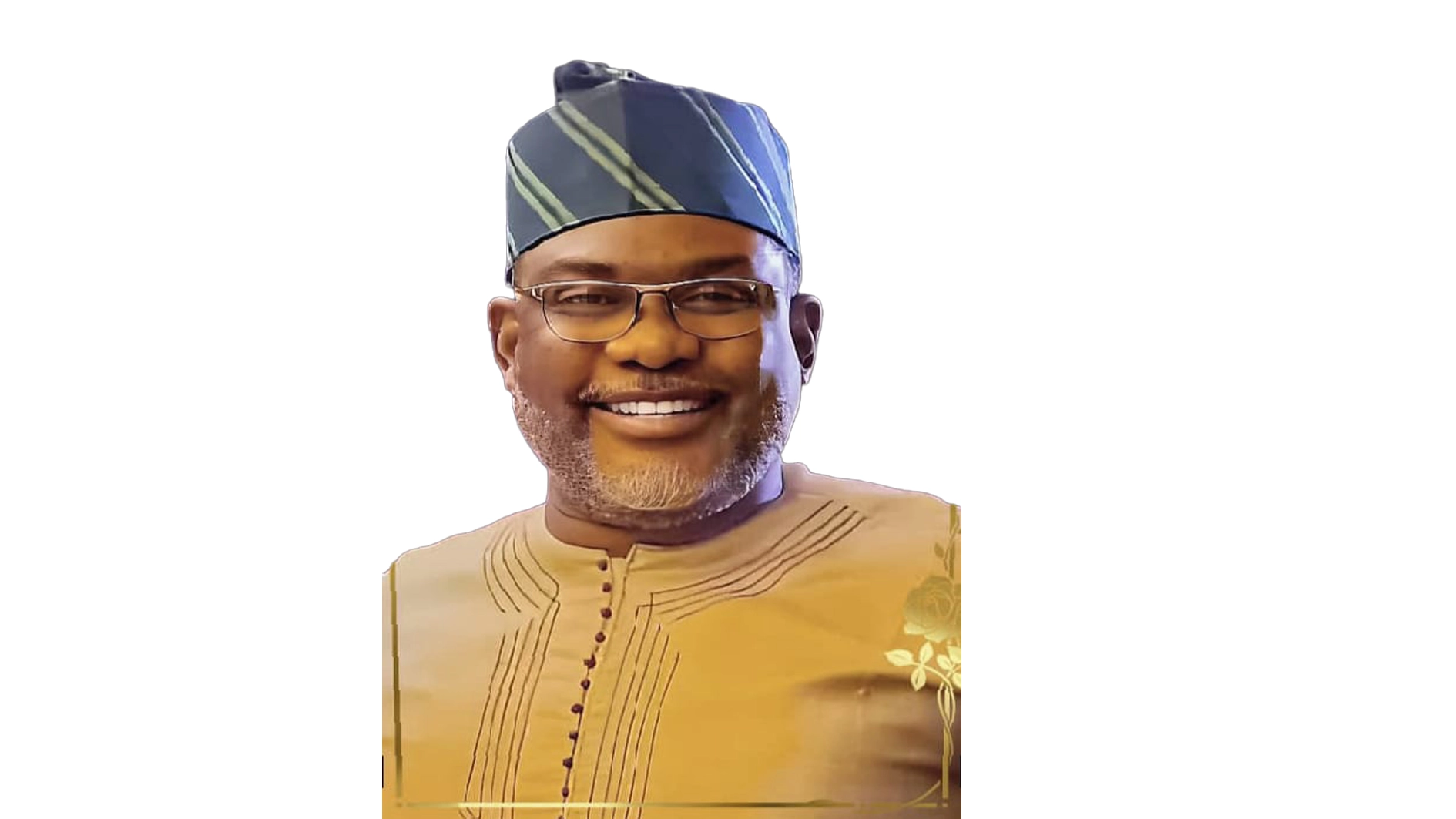
George Ashiru is the chairman of the Lagos State chapter of the African Democratic Congress (ADC). He spoke with OBIRE ONAKEMU about how the party stands a better chance of ousting the ruling All Progressives Congress (APC) at both the federal and Lagos levels.
What is the level of ADC’s preparation for the 2027 general elections?
The ADC nationwide is the party all Nigerians are banking on to win and form a people-oriented government from May 29, 2027. Considering we are a few months away from the general elections and we do not even have candidates yet, the groundswell of passion and optimism surrounding the ADC is truly astounding. In Lagos State, we have witnessed such a surge in membership and mobilisation that, on a weekly basis, there are events taking place across all 20 local governments. We are ready, and we will get to the promised land.
Do you have confidence in the Independent National Electoral Commission (INEC) conducting a credible election in 2027, and what is your assessment of the commission’s preparation for the polls?
There is a saying that people do not do what you expect, but what you inspect. So, ADC is not going to take the neutrality and competence of the electoral ombudsman for granted. We are going to ensure that the outcomes are just, free, and fair by monitoring the entire election process and ascertaining that all results are the direct reflection of the people’s votes.
Are you not worried that the ruling All Progressives Congress (APC) will overwhelm other political parties in the 2027 elections?

All you need to do is organise a vox populi of voters across Nigeria. Our people are tired of 10 years of broken promises by the ruling party and their attempts to rebrand themselves and whitewash a decade of economic mismanagement that has left the people poorer than they were 10 years ago. I am confident that the people yearn for true change.
But with all these challenges, and the current alliances being formed among the ADC, LP, PDP, NNPP and others, do you foresee another grand coalition like we saw in the Second Republic?
ADC is the coalition. Unlike other ‘alliances’ of existing parties, political juggernauts across Nigeria from all the major parties have adopted and coalesced into ADC. Thereafter, we expect the remaining parties to listen to the yearnings of the people and come into a true national alliance to form a credible, democratic government after the 2027 polls under the banner of the ADC.
What are the issues that you envisage will determine voting patterns in the 2027 elections?
I will be careful to mention what our observations and data mining tell us, but let us say voting patterns have shifted and there is a new paradigm emerging. The nature of politics and information management is rapidly evolving, and ADC has captured the demography representing this paradigm change.
The 2027 general election will largely be shaped by economic realities, elite political alignments, regional expectations, and public confidence in the electoral process. Several key issues are likely to determine voting patterns nationwide.
Economic conditions will remain the dominant factor. Since the removal of fuel subsidies under President Tinubu, rising inflation, high food prices, currency instability, and increased transport costs have placed significant pressure on citizens. Voters are expected to assess the election based on whether their personal economic conditions improve before 2027. Historically, economic hardship tends to weaken incumbents, while signs of recovery strengthen continuity votes.
Power rotation and regional balance will also influence voter behaviour. Nigeria’s informal North–South zoning arrangement remains politically sensitive. While the presidency is currently in the South, political actors in the North may seek to regain influence, shaping alliances and regional voting blocs.
Electoral credibility will equally affect turnout. Public trust in election management, technology deployment, and judicial outcomes will influence whether voters participate enthusiastically or become apathetic. Security concerns, including banditry, insurgency, and communal conflicts, will shape regional voting decisions, as communities often support candidates perceived as capable of restoring safety.
Finally, governors and political defections will play a strategic role. State-level political structures remain powerful tools for mobilisation, and elite realignments ahead of the election could significantly reshape party strengths.
Ultimately, the 2027 election is likely to be decided less by ideology and more by economic performance, coalition building, and voter confidence in governance and electoral fairness.
What is your assessment of the political happenings in Nigeria with the 2027 general elections around the corner, especially with governors and politicians decamping from other parties to the APC?
The governors and elected public officials went to the people in 2023 to obtain their mandates under particular political banners and manifestos. Suddenly, just two years later, without a referendum of these same voters, they jumped ship to the ruling party to protect their personal empires rather than the people’s mandate. In 2027, their voters will rebel against them. It is as simple as that.
What are your fears or concerns about the 2027 general elections?
Our fears are based on what we can see empirically: the fear of voter marginalisation, particularly in Lagos State, and the fear of the use of violence and repression against voters who want to freely exercise their franchise.
here is also the puerile attempt to introduce ethnic and tribal issues into campaign discourse in a cosmopolitan city. Even I, as a Yoruba man, still encounter some fellow Yoruba who reduce political participation to genetic descent in determining my right to lead, vote, or be voted for. We can never be a great nation when we divide ourselves.
Are you convinced that Nigerians really need electoral reforms in the political system?
Electoral reforms, as well as Civil Service reforms, are critical to creating a truly sustainable democracy and achieving economic and social transformation. Both are interconnected. The electoral process is managed by public servants who are mostly grossly underpaid, undertrained, and often beholden to elected public officials.
The ‘independence’ of institutions is merely a title until reforms create a management process that ring-fences electoral managers from external manipulation.
Do you really think the 2027 election will reflect the will of the people?
That is a serious and important question, and the honest answer is that it depends on several political, institutional, and societal factors that are still unfolding. Nigeria’s 2027 election can reflect the will of the people, but only if certain conditions improve compared to recent electoral cycles. Let me break it down carefully.
The strength of institutions, especially INEC, is critical because the credibility of any election rests heavily on the independence and efficiency of the Independent National Electoral Commission.
Key issues that will determine credibility include the reliability of technology (BVAS and electronic transmission of results), transparency in result collation, resistance to political pressure, and timely logistics management.
In 2023, many Nigerians believed technology would eliminate manipulation, but disputes over the transmission of results weakened public trust. If INEC restores confidence through transparency and consistency, 2027 could better reflect voters’ choices. But our duty is to ensure that it does and to enforce it legally.
How do we unite and safeguard the country’s democracy from the precipice of authoritarianism?
Our campaign will be inspirational, and our message will be clear: Nigeria is not for sale, and Lagos is nobody’s property. That is why our slogan is ‘Global Lagos! Lagos for all.’ At the national level, our leaders will also echo this timeless truth: Nigeria is for us all, and we must not return to authoritarianism, whether in military or civilian garb.
What is your take on vote buying, considering what happened in the past? Don’t you think vote buying will play a major role?
When voters lack a credible alternative, they may be tempted to compromise. Unfortunately, history has taught them that many political leaders are willing to buy people’s conscience and mortgage their will.
Those who did so in 2023 are living with the consequences. I believe Nigerians will remember how their house rents quadrupled, their electricity bills surged, inflation eroded significant portions of their income, and multidimensional poverty increased exponentially. All these in exchange for a few thousand naira? Will they collect the same money and continue in their suffering for four more years? I think not.
What are your expectations for the 2027 elections?
I have faith in Nigerian voters to vote rightly and stand by their votes in 2027. I am confident that Lagosians and Nigerians will vote ADC from top to bottom.
How would you rate the performance of the President Bola Tinubu-led administration in terms of economic policies and governance style?
When you go to the hospital complaining of an ailment and, after the doctor prescribes a course of treatment, your symptoms worsen, and you feel even more terrible, your conclusion is that the doctor and the hospital are incompetent and that you have simply donated money into their coffers. Nigerians have widely condemned the impact of this administration’s policies and leadership style.
The level of impunity is high. The high-handedness is extreme, and the ruthlessness in implementing already unpopular policies is astounding. Published statistics lack true transparency, particularly in procurement processes.
While the government publishes various data supporting its activities, the direct impact on the people remains negative. It is an ultra-capitalist approach that appears to ignore the poor while enriching the already wealthy. Future promises of greatness have been made in the past, yet the income per capita of the average Nigerian continues to decline. Purchasing power parity is low, and human development indices show that we rank among the lower nations of the world. On top of this, there is little evidence of empathy from those implementing these policies toward the people.
What are those issues that will shape the next gubernatorial election in Lagos, considering the rising profile of ADC?
The 2027 Lagos governorship election is expected to be shaped by several political and socio-economic factors, particularly the rising profile of the ADC as a viable opposition platform.
First, the election will be an open contest without an incumbent governor seeking re-election, removing the traditional advantage of incumbency that has long strengthened the ruling APC. This creates room for stronger competition and voter reassessment of party dominance in the state.
Second, ADC’s growing national visibility and coalition efforts may redefine opposition politics in Lagos. We are positioning ourselves as a platform capable of attracting dissatisfied politicians, youths, and urban voters seeking political change after years of one-party control.
Youth demographics will also play a decisive role. Lagos has a large population of young, politically conscious voters whose behaviour since the 2023 elections shows an increasing willingness to challenge established structures. Their turnout could significantly influence outcomes.
Governance performance will equally shape voting patterns. Issues such as rising living costs, transportation challenges, housing pressures, and infrastructure inequality may turn the election into a referendum on the ruling party’s record.
Finally, internal succession battles within the APC and the ability of opposition forces to remain united will largely determine how competitive the 2027 governorship race becomes.
What are ADC’s plans for Lagos?
The ADC in Lagos State practises transformational politics. Our passion is to truly impact the people and govern with the people at the heart of our decision-making process. Let me quote a modern Korean king who said, “The only duty of a king is to love his people.” This essentially translates to the idea that if you truly love the people you are leading, it will shape your policies and leadership style. This philosophy governs my leadership ideology as ADC Lagos chairman.

