 Follow Us on Google News


 Follow Us on Google Discover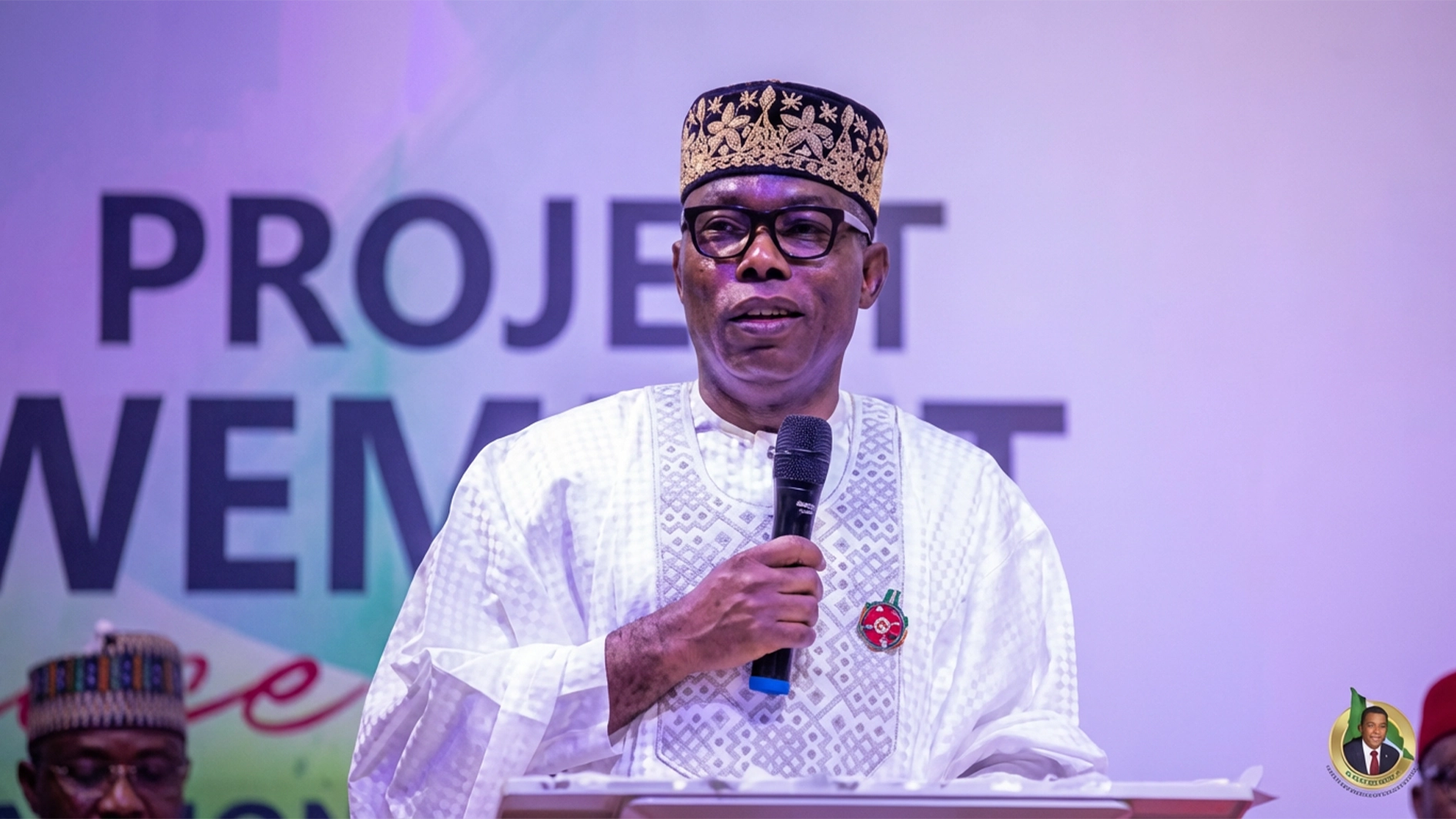
The Presidential candidate of the Social Democratic Party (SDP), Prince Adewole Adebayo, has delivered a sweeping, emotionally charged, and ideologically expansive acceptance address after his recent affirmation at the party’s convention in Bauchi, declaring that Nigeria stands at a historic crossroads ahead of the 2027 general elections.
In a speech that blended political criticism, economic policy proposals, constitutional interpretation, historical references, and moral appeals, Adebayo framed the next election as a battle for Nigeria’s survival, democratic identity, and national dignity.
He accused President Bola Ahmed Tinubu’s administration of deepening hardship, weakening institutions, and transforming governance into what he described as a system driven by personal and elite enrichment.
Adebayo warned that Nigeria’s most serious crisis is the erosion of democratic freedom, which he said is being replaced by creeping authoritarianism.
“Because we are hungry, we are homeless, we are jobless, we are without peace, we are without leadership — those are big problems we have,” he said. “But we have a bigger problem: the little freedom we have is about to be taken away from us.”
He urged Nigerians to defend political pluralism.
“Use your freedom while you still have it. Use your freedom to give yourself multi-party democracy,” he said.
Adebayo launched a sustained critique of President Tinubu, accusing him of political overreach and economic mismanagement.
“President Bola Ahmed Tinubu is not satisfied to be the presidential candidate of APC,” he said. “He wants to be the presidential candidate of APC, PDP, Labour, SDP, NYSC — even your birthday party.”
He further accused the administration of treating citizens as economic objects. “As your president, he sees you as commodities to buy and sell. He is the number one businessman using government power to amass wealth for himself and his cronies,” he said.
Adebayo criticised the removal of fuel subsidy, linking it to inflation and worsening living conditions. He recalled the cost of attending the SDP convention in 2022.
“The money with which you came to the convention then now requires 15 times more for transport,” he said.
He attributed the economic crisis to policy decisions taken at the start of the Tinubu administration.
“Somebody who did not win election… came there and said, ‘Subsidy is gone,'” he said. “At that moment, I knew Tinubu’s chance of succeeding was gone.”
He alleged that subsidy savings had not translated into development.
“Trillions of subsidy savings have disappeared,” he said. “He has borrowed more money than we have borrowed since independence, yet cannot pay contractors and cannot account for the money.”
He also criticised fiscal policy direction, describing it as excessive taxation without productivity. “Every day, tax, tax, tax, tax,” he said.
Adebayo insisted his opposition is not personal but ideological.
“I am not an enemy of President Bola Ahmed Tinubu,” he said. “I am an enemy of poverty — and poverty is Tinubu’s friend. I am an enemy of corruption — and corruption is his profession. I am an enemy of injustice — injustice is his hobby.”
He added: “I am an enemy of autocracy. And no greater tyrant is around than Bola Ahmed Tinubu.”

Adebayo contrasted past Nigerian leaders with the current administration, citing Sir Ahmadu Bello, Nnamdi Azikiwe, Obafemi Awolowo, Tafawa Balewa, and Michael Okpara as examples of visionary leadership.
“Every government we knew had cardinal points,” he said. “What is Tinubu’s cardinal point? Snatch, grab, and run away with it.”
He argued that Nigeria must return to leadership focused on public welfare rather than elite accumulation.
Adebayo said poor governance has contributed to insecurity, infrastructure collapse, and social instability.
“Politics determines whether you sleep well at home,” he said, linking insecurity to systemic governance failure, arguing that terrorism and banditry thrive where institutions are weak and accountability is absent.
He also paid tribute to religious and civic leaders, including Prophet Isa El-Buba and Professor Usman Bugaje, for promoting justice and peacebuilding efforts.
He praised Bugaje as a consistent voice of conscience in Nigerian politics.
Adebayo unveiled an ambitious governance blueprint, promising sweeping reforms if elected.
He said his administration would implement “500 programs” aimed at reducing poverty and unemployment rapidly.
Poverty reduction target: down to 2% within 18 months.
Unemployment target: 4% within 2 years
He said these goals would be driven by industrial revival, infrastructure expansion, and job creation.
Adebayo proposed free, compulsory, and continuous education from primary to tertiary level.
“Our education will start from elementary school and continue until you get a job,” he said. “Until you get a job, you have not graduated.”
He described education and employment as a unified national system designed to eliminate joblessness.
He pledged a national health system where every Nigerian is insured through their National Identification Number (NIN).
Every citizen, he said, would receive four free medical screenings annually to ensure early disease detection.
Adebayo promised to revive Nigeria’s struggling industrial base, including the Ajaokuta Steel Company, Oku Iboku Paper Mill, Aladja Steel, Bacita Sugar Company, as well as the Kaduna and Gombe textile industries, alongside the national refineries.
He said Nigeria must return to a production-based development model rather than import dependence, arguing that rebuilding these core industrial assets is essential to restoring jobs, strengthening the economy, and achieving sustainable national growth.
He also pledged to integrate housing estates, staff schools, and industrial clusters into national development planning.

