 Follow Us on Google News
 Follow Us on Google Discover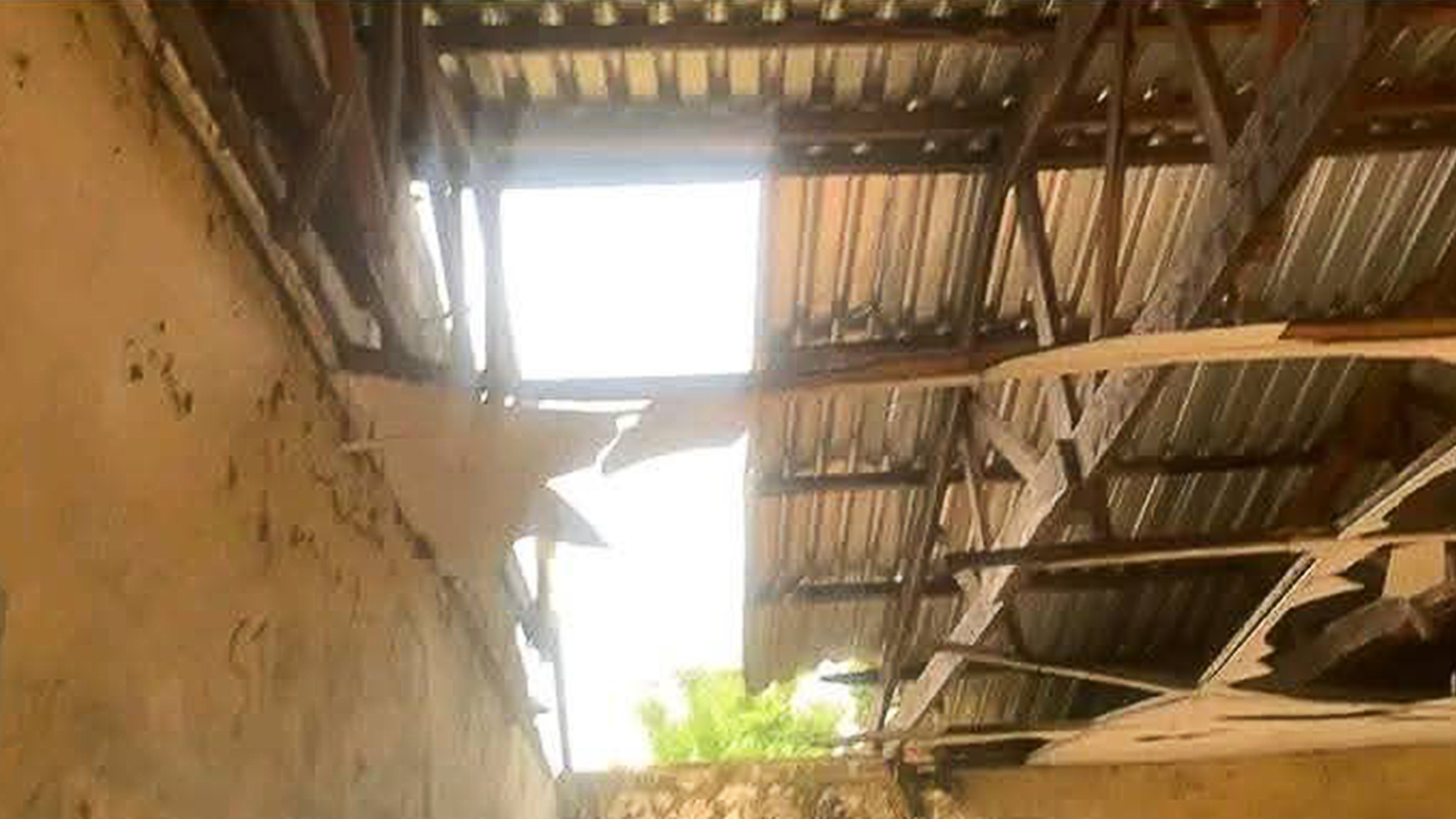
As the political storm between Governor Siminalayi Fubara of Rivers State and his predecessor, Nyesom Wike, now Minister of the Federal Capital Territory (FCT), seems to subside, another controversy has erupted in the state. This time, attention has shifted to the grassroots, where a dispute between officials of Ahoada West Local Council and a resident who exposed the dilapidated state of a public school has sparked debate over accountability and the effectiveness of grassroots governance in the state, ANN GODWIN reports.
Often described as a battleground for rival political gladiators or a state of endless commotion, Rivers State is also widely regarded as the nation’s treasure base. Yet, it is equally known for a pattern where one crisis barely subsides before another emerges.
Against this backdrop of prolonged elite political conflict, the turbulence has now filtered down to the grassroots. In Ahoada West Local Council, officials are currently embroiled in a controversy over a female resident who exposed alleged inefficiencies within the local council administration. The controversy has since drawn significant attention both within and outside the state.
In Nigeria’s federal structure, local councils remain the tier of administration closest to the people, constitutionally established to address community needs and promote grassroots development. Their functions are clearly outlined in the Fourth Schedule of the 1999 Constitution (as amended). These responsibilities include the provision of social services, promotion of economic development, maintenance of public health and sanitation, as well as regulation of trade and commerce within their jurisdictions.
Part II of the Fourth Schedule further details the functions of local councils, including participation in economic planning and the provision of services such as roads, schools and primary healthcare facilities. Local councils are also empowered to collect certain taxes and rates within their areas.
Section 7(1) of the Constitution guarantees a system of local government by democratically elected councils, underscoring their importance in governance and grassroots administration.
However, in Ahoada West Local Council of Rivers State, a visible gap persists between these constitutional responsibilities and the realities on the ground. This disconnect has increasingly
raised concerns about the effectiveness of grassroots governance in the area.
Ordinarily, governance offers leaders ample opportunities to shape their legacy through impactful projects, responsive leadership and meaningful engagement with their communities.
But in the case of Ahoada West Local Council, it was not developmental achievements that recently brought the Chairman, Eugene Cheta Epelle, into the public spotlight; but controversy surrounding an alleged assault of a young resident.
The controversy followed an incident involving Miss Minnie Ogadinma, a young resident who reportedly documented the deplorable condition of a public secondary school in the area through videos and photographs, which she later shared on social media. Following the online posts, she was allegedly assaulted by individuals linked to the council leadership.
According to her account, the council chairman had reportedly argued that construction of schools was not the responsibility of local governments when he was briefed on the deplorable condition of the school. However, the chairman denied making such a statement, insisting that his intention was to avoid embarrassing the state government by getting involved in controversy. He also argued that the young lady should have sought his consent before sharing the images and videos online.
However, the constitutional provisions outlining the functions of local councils provide a clearer perspective. While state governments largely handle policy formulation and recruitment of teachers, local councils are expected to support infrastructure development, renovation and maintenance of school facilities, particularly at the primary level. Within this constitutional framework, local councils are therefore expected to contribute to the provision and maintenance of educational infrastructure within their jurisdictions.
However, the deplorable condition of the only public secondary school in Odiokwu community — the hometown of the council chairman and also the constituency of the member representing Ahoada West and Ogba/Egbema/Ndoni Federal
Constituency, Victor Obuzor, in the House of Representatives, paints a troubling picture.
When The Guardian visited the school last week, the scale of infrastructural decay was evident. Large sections of the roof and ceiling had collapsed, while many of the windows and doors were broken. In one classroom of about 30 students, only four desks were available, forcing several students to sit on the bare floor during lessons.
The school also suffers acute shortage of teachers, raising serious concerns about the quality of education being delivered.
In the junior secondary section, JSS1 students shared a classroom with two other classes because several classrooms were too dilapidated to be used. Whenever it rains, students reportedly converge on a single room to avoid leaking roofs.
The school also lacks basic facilities such as toilets, potable water and electricity. The science laboratory building has equally collapsed; leaving students without the essential infrastructure required for science education, while the staff room contained only a few chairs and improvised desks used by teachers.
The deplorable condition of the school and the alleged assault of the young lady who blew the whistle triggered widespread reactions online, with popular social media activist, VeryDarkMan (VDM), and Grammy award-winning musician, Burna Boy, who hails from the area, reportedly pledging support for efforts to rebuild the school. Earlier, VDM moved in with a bulldozer and started demolishing the structure, but Obuzor, who promised to arrive at the scene by Monday, March 9, 2026, stopped him. VDM, however, vowed to proceed if nothing tangible was done.
Some residents argued that he was supposed to secure approval from the government first. The Guardian, however, gathered that he has received the approval to proceed with the project, which includes modern classroom blocks with a laboratory and a sick bay.
Beyond the immediate controversy, the incident has sparked wider conversations about accountability, governance and development at the local council level; providing a telling case study of the broader challenges confronting grassroots governance across Nigeria
Observers noted that although the Constitution provides for democratically elected local council chairmen and councillors, many local councils in Rivers State have operated within systems widely perceived to be heavily influenced by political power structures. Such arrangements, they argued, often weaken accountability to local communities as council officials may feel more obligated to political patrons than to the electorate.
Some insiders within local council circles in the country also allege that financial obligations imposed through political networks significantly reduce the resources available for genuine development projects at the grassroots level.
In Rivers State, some council officials reportedly contribute substantial funds monthly to maintain political structures, a development which insiders said places heavy pressure on councils’ finances and limits their ability to execute meaningful development projects. Although these claims could not be independently verified, governance analysts argue that such political and financial dynamics often undermine the efficiency of local council administration in the country.
Residents Speak
The latest development has generated strong reactions, particularly after the principal of the affected school, Ugochi Monica, described the learning environment as highly unconducive.
“I recently came into the school and discovered that the environment is not conducive for learning. Many of the classrooms have no doors or windows. There are no chairs, tables and proper boards. There are no toilets and no bookshelves,” she said.
According to her, whenever it rains, students are forced to crowd into the few available classrooms to escape the leaking roof.
“If a student wants to go to the toilet, he/she usually goes into the bush and many of them do not return to class afterwards,” she added.
Also reacting to the development, former Rivers State Commissioner for Information and Communications, Ibim Semenitari, stressed that public office holders must be guided by a clear code of conduct befitting their positions.
According to her, democratic governments derive their authority from the people and must therefore remain accountable to them.
Semenitari, who is also an ex-managing director of the Niger Delta Development Commission (NDDC), said: “There is a code of conduct befitting public servants. Democratic governments derive their authority and raison d’être from the people, not the other way round. Since 1999 when we began this journey to civil rule, the intemperance and arrogance of those elected or appointed to serve the people appear to have grown progressively worse,” she said.
Semenitari lamented what she described as the gradual erosion of democratic culture in Nigeria, noting that the situation reflects a worrying trend across different levels of government.
“For someone like me who marched on the streets, dodged bullets and arrests and sacrificed comfort as a young woman, it is heartbreaking to see signs that we may be sliding into a form of feudal dictatorship,” she said.
She described the Ahoada West Local Council incident as a reminder of how far democratic practices may be regressing, while stressing the importance of interrogating all sides of any public controversy in the search for truth.
“I thank the chairman for granting interviews because between his responses and those of his media aide, the issues raised by Miss Minnie were further brought to public attention,” she said.
Semenitari added that government officials must recognise that leadership requires humility and accountability.
“I have always believed that the government is not infallible. Public officers must know when to speak, how to speak and when to apologise. I hope the chairman reflects on the situation and takes steps to address the concerns raised.”
She also urged the Rivers State House of Assembly Committee on Women Affairs to examine the matter, stressing that the issue goes beyond gender concerns.
“This is not just about women’s rights. It touches on the shrinking democratic space and the stifling of dissenting voices. Democracy thrives on debate, differing opinions and freedom of expression. That is the real issue at stake,” she added.
Another resident, Bara Alaguma, described the situation in Ahoada West as reflective of broader governance challenges within Nigeria’s political system. According to him, the recurring perception that public officials act with impunity reflects deeper institutional weaknesses.
“The popular phrase among some political actors that ‘nothing will happen’ is worrying. It suggests that weak institutions are enabling a culture where accountability is not taken seriously,” he said.
For Paulina Amadi, a resident of the area, the incident raises questions about leadership responsibility and public confidence in governance.
“The circumstances surrounding the incident raise questions about leadership and restraint. Public officials are expected to demonstrate responsibility in their actions and responses,” she said.
Another resident, Henry Ahuma, argued that the situation reflects broader frustrations with Nigeria’s democratic process.
“This is a sad point in our democracy. Many people feel their votes do not count and that perception can make public officials less cautious about how they exercise power,” he said.
Similarly, Emmanuel Obe, a political and policy analyst, emphasised the importance of protecting citizens’ right to
express their views.
“In a democracy, people must have the freedom to speak and express their concerns. The right to express oneself is fundamental and should not be suppressed. Public officials should listen to the voices of the people,” he said.
In all of this, the state government has remained silent. However, the Ahoada West Local Council episode serves as a reminder that democracy thrives not only on elections, but also on transparency, responsiveness and the willingness of leaders to listen to the communities they serve.

