 Follow Us on Google News


 Follow Us on Google Discover
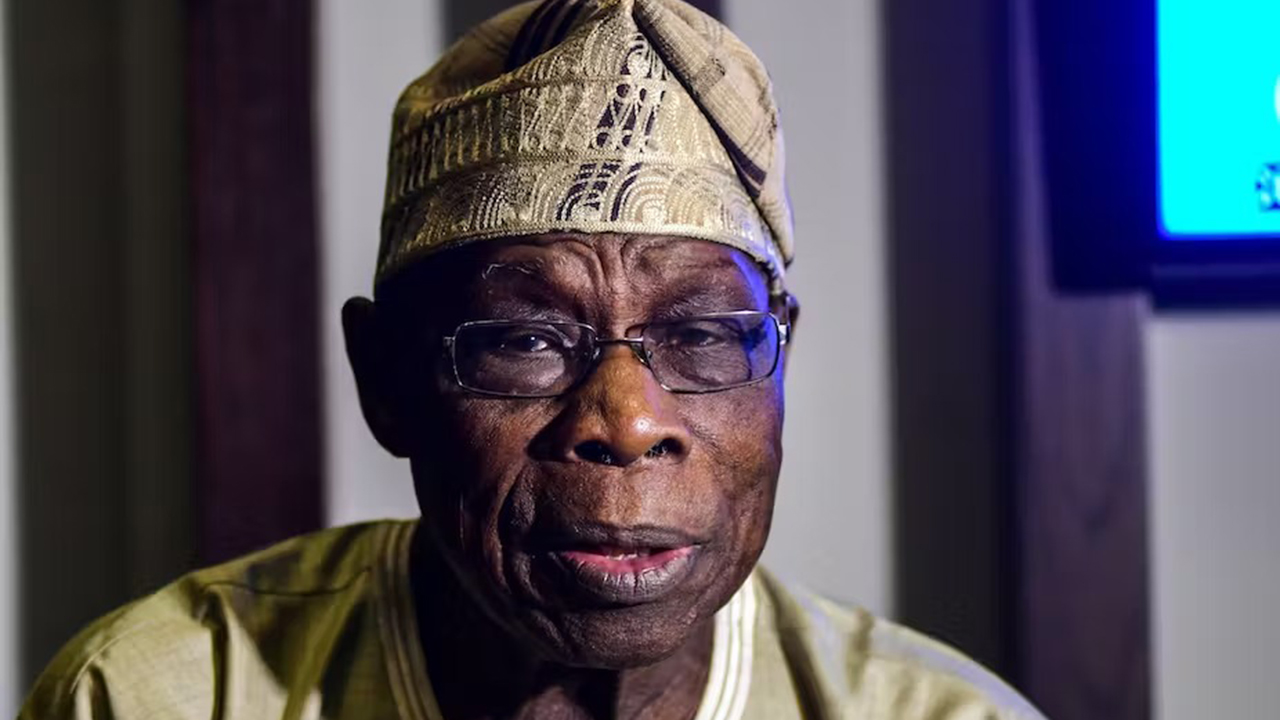
Former President Olusegun Obasanjo has disclosed the efforts behind securing debt forgiveness for Nigeria during his tenure from 1999 to 2007.
[ad]
Speaking in an interview with News Central TV, Obasanjo stressed the importance of leadership, reform, and transparency in obtaining the debt relief that reduced Nigeria’s financial burden and boosted its reserves.
Obasanjo recalled that upon assuming office, Nigeria’s debt stood at $36 billion, with the country spending $3.5 billion annually on servicing the debt, despite having only $3.7 billion in reserves.
The situation, he explained, pushed him to pursue debt forgiveness by engaging with international financial institutions like the World Bank.
[ad]

According to him, the key to success was convincing creditors that Nigeria was committed to responsible governance and would channel the funds saved into developmental projects. He said that the creation of anti-corruption agencies, such as the Independent Corrupt Practices Commission (ICPC) and the Economic and Financial Crimes Commission (EFCC), was part of his administration’s efforts to signal reform.
READ ALSO: Afenifere, DAWN, others fault Obasanjo’s regionalism assertion
“Of course, if you remember one of the first bills that I sent to the National Assembly was the ICPC bill to fight corruption. I followed that up later with the EFCC bill, again to fight corruption because the international community knows what you’re doing,” Obasanjo said. “So, convinced of the fact that we could not sustain the amount of money we were spending to service debt with the quantum of debt not going down, anytime we defaulted they gave us heavy penalties, and my determination to do what would convince Nigerians internally and convince our development partners/creditors, then it took almost six years before we got there and at the end of the day, they were satisfied.
“I even gave them assurance that the money saved from our debt relief would be spent on the sustainable development goals and that was being done. The world out there doesn’t feel that it owes you anything but if you do what is right, there’s a lot you can get out of the world.”
Obasanjo lamented the lack of effective leadership in subsequent governments, pointing out that by the time he left office, the country had cleared most of its debt, reduced it to $3.6 billion, and accumulated $70 billion in reserves, including $25 billion in the excess crude account.
[ad]
However, he expressed regret that between 2007 and 2024, much of these savings were depleted, leaving Nigeria deeper in debt than before.
“When I came in 1999, I met $3.7bn in the reserves; we were spending $3.5bn to service debt.. When I came in we had debt overhang of close to $36bn, by the time we left eight years later, with the debt relief and clearing what we had to clear, the quantum of debt I left was about $3.5/3.6bn from over about $36bn,” he said. “At the same time, the reserves that was $3.7bn went to $45bn, at the same time we had what we call the excess crude, the amount in excess between what we budgeted at which we seek to sell crude oil and we actually sold it.
“Normally, we were conservative in budgeting, we had about $25bn (in the excess crude account). When you add that to the reserves, we are talking about $70bn dollars.
[ad]
“I left in 2007; between 2007 and 2024 all that amount of money had gone. Not only that, all that money they made during that period had gone and today we own more than we owed when I came to government in 1999. Why? Poor leadership, poor management of economy, corruption galore, pervasive corruption.”
He criticised the current leadership for failing to manage the nation’s economy responsibly, attributing the rising debt levels to corruption and poor planning.
“Leadership is not something you pick on the road,” he remarked, urging Nigerians to recognize and utilise effective leadership for national progress.
Obasanjo concluded by stressing that the international community is willing to help, but only when leaders demonstrate responsibility and genuine efforts toward development.
[ad]

