 Follow Us on Google News


 Follow Us on Google Discover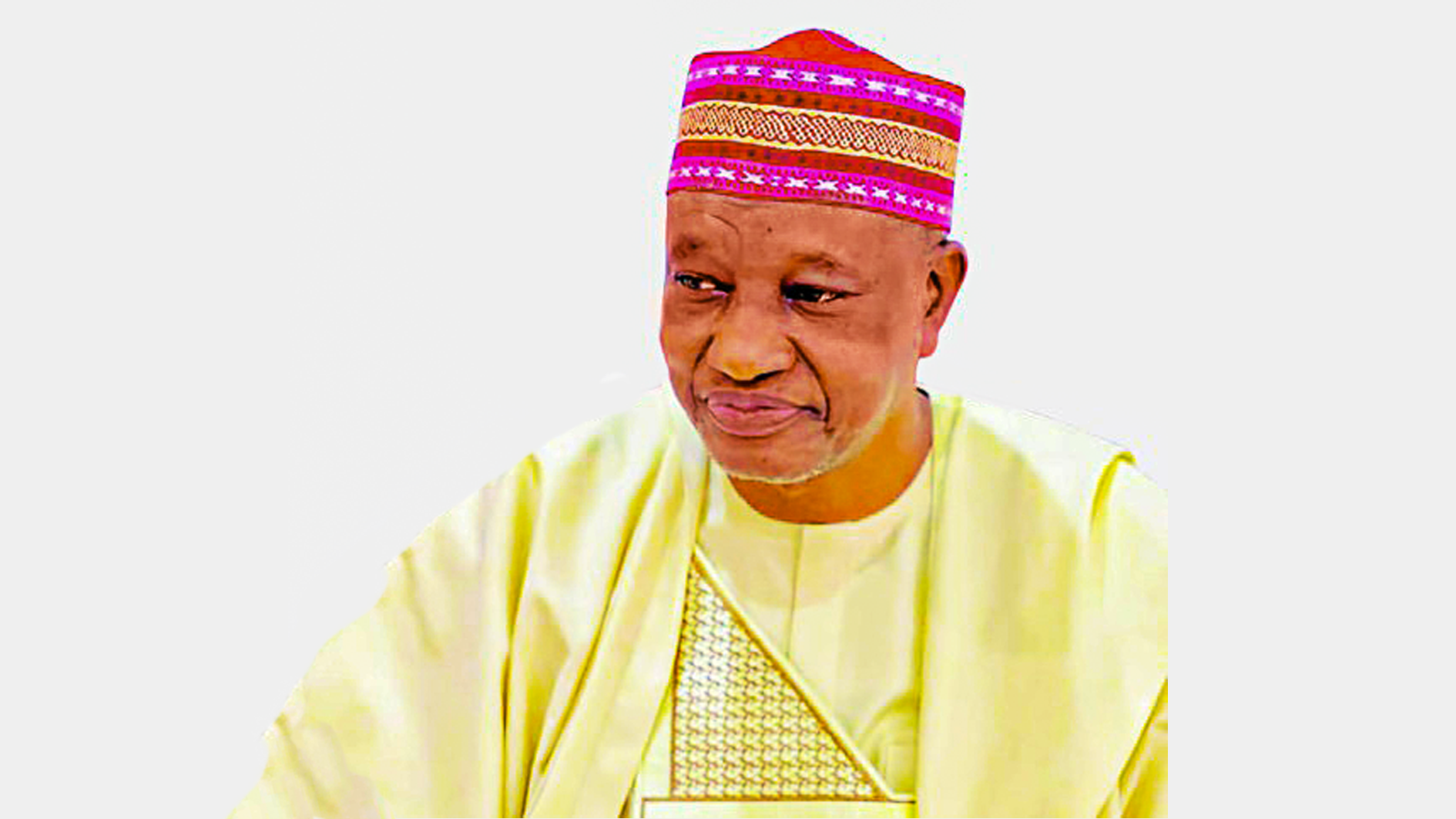
Governor Abba Yusuf of Kano State’s defection to the ruling All Progressives Congress (APC) has left his deputy in a dilemma of fidelity to the Kwankwasiyya movement and keeping his seat under the ruling APC that brooks no quarter, MURTALA ADEWALE reports.
For the Deputy Governor of Kano State, Aminu Abdussalam Gwarzo, the unfolding political crisis presents a stark choice: remain loyal to the Kwankwasiyya leadership of former Governor Rabiu Kwankwaso or yield to the pressures of political power.
Following the impeachment proceedings initiated against him by the Kano State House of Assembly, the deputy governor is now compelled to balance a political equation that will best suit his career.
Although Gwarzo had vowed to remain in the opposition New Nigeria People’s Party (NNPP) after the defection of his boss, Governor Abba Kabir Yusuf, to the ruling All Progressives Congress (APC), he is now caught in an impeachment quagmire.
At a recent plenary, 38 lawmakers of the ruling APC, with the exception of two members of the opposition NNPP, initiated the impeachment process by issuing a notice against the deputy governor, citing allegations of abuse of office and financial impropriety.
According to the lawmakers, the alleged financial misconduct occurred when Gwarzo served as Commissioner for Local Government and Chieftaincy Affairs.

In the notice moved by the Majority Leader of the House, Lawan Husaini, representing Dala Constituency, the deputy governor was accused of receiving kickbacks from the 44 local government councils in the state between June 2023 and January 2024.
The lawmaker alleged that Gwarzo collected about N1.5 million monthly from each council, amounting to approximately N66 million per month and a total of N462 million within the seven-month period.
The notice also alleged that between February and July 2024, the deputy governor received additional payments totalling N726 million under the guise of executing special assignments for the councils.
Furthermore, the lawmakers accused Gwarzo of abusing his office by allegedly facilitating the release of N440 million from the 44 local government councils to Novomed Pharmaceuticals Limited in violation of state procurement and fiscal management laws.
The Assembly has it that the allegations collectively amount to gross misconduct and resolved that the deputy governor should be impeached and removed from office in line with constitutional provisions.
Although political observers have questioned why the lawmakers remained silent when the alleged improprieties first surfaced, the sudden move to impeach the deputy governor may not be unconnected to his position on Governor Yusuf’s defection to the ruling APC.
Implications of Gwarzo’s impeachment
THE constitutional requirements for the impeachment of a deputy governor may not be difficult to meet, but the potential consequences for Gwarzo’s political career remain significant.
With more than the constitutionally required two-thirds majority of lawmakers already signing the impeachment notice, the next constitutional step would require the Chief Judge of Kano State to constitute a panel to investigate the allegations.
However, this process may not necessarily overturn what some observers believe is an orchestrated political move.
If eventually impeached, Gwarzo may also risk losing the entitlements attached to his office and could technically be barred from contesting elective positions for up to 10 years.
The dilemma facing Gwarzo echoes the experience of Alhaji Bibi Farouk, the deputy governor to the late former Governor Abubakar Rimi, who was impeached in 1981 after a political rift with the governor.
Like Gwarzo, who has chosen to remain loyal to the leader of the Kwankwasiyya Movement, Rabiu Musa Kwankwaso, Bibi Farouk had sided with the late Mallam Aminu Kano, leader of the Peoples Redemption Party (PRP), against the interests of Governor Abubakar Rimi.
While Farouk stood firmly by his convictions despite the consequences, another former deputy governor, Professor Hafizu Abubakar, who faced a similar dilemma during the administration of Governor Abdullahi Umar Ganduje, eventually bowed to pressure and resigned.
Reactions to the impeachment plan
WHILE it appears increasingly difficult for Governor Yusuf to work with a deputy who has chosen to remain in opposition, there have been counter-reactions against the impeachment notice served by the state House of Assembly.
Those challenging the process argue that the deputy governor was elected on a joint ticket with the governor and should therefore be allowed to serve out his tenure, just as the governor continues to do.
Gwarzo, a die-hard ally of the leader of the Kwankwasiyya Movement, Kwankwaso, was part of the political ticket that brought the administration to power in 2023.
Recently, the Kwankwasiyya Movement issued a warning to the Kano State House of Assembly over the planned impeachment of the deputy governor, insisting that such an action could provoke unnecessary political tension in the state.
The movement warned that proceeding with the removal of Gwarzo, whom they say was elected by the overwhelming majority of Kano people, could deepen political divisions and undermine the mandate given to the administration.
Spokesperson of the movement, Dr Habibu Mohammad, insisted that the impeachment process appears politically motivated and lacks genuine constitutional justification.
“The people of Kano are closely watching the unfolding events, and there is growing concern that the impeachment move may be driven more by political considerations than by genuine constitutional necessity,” he said.
He noted that although the constitution provides mechanisms for legislative oversight, impeachment remains one of the most serious powers available to lawmakers and should not be deployed for political convenience.
Mohammad reminded the state leadership that the mandate that brought the present administration to power was the result of the collective efforts of thousands of Kwankwasiyya supporters across the 44 local government areas of Kano State.
“Impeachment must never be reduced to a tool for settling political disagreements or rearranging political alignments. It must be guided strictly by justice, fairness, and the interest of the people,” he added.
Similarly, the NNPP’s interim leadership in Kano State has also rejected calls for the deputy governor’s resignation.
In a statement issued by its publicity secretary, Ibrahim Karaye, the party insisted that Gwarzo remains a legitimate member of the administration and a key component of the state government.
According to the party, the deputy governor was elected on a joint ticket with Governor Yusuf and therefore remains constitutionally entitled to continue discharging his responsibilities.
“The NNPP reaffirms the deputy governor’s right to occupy his position and his critical role in governance, underscoring the imperative of adherence to constitutional provisions.
The party maintains that the deputy governor’s continuity in office is essential for the stability and progress of the state’s governance,” Karaye said.
In response, the Commissioner for Information and Internal Affairs, Abdullahi Ibrahim Waiya, questioned the moral basis for the deputy governor to continue serving in a government while belonging to the opposition.
Waiya argued that the best option for Gwarzo was to resign from office to avoid impeachment.
“I think the best option for the deputy governor is to resign from the APC-led government because it is no longer feasible for him to remain in a government while serving as opposition. Is it possible for a deputy governor to sit in a council where major policies and decisions are being made while holding a contrary political position?” Waiya asked.
As Gwarzo grapples with the unfolding political dilemma, several potential candidates have already begun positioning themselves to replace him, leaving Governor Yusuf with the challenge of choosing a new deputy governor.
Among the prominent contenders are Murtala Sule Garo, the Speaker of the Kano State House of Assembly, Ismail Jibrin Falgore, the member representing Rano/Kibiya/Bunkure Federal Constituency, Kabiru Alhassan Rurum, and the Coordinator of President Bola Tinubu’s Renewed Hope Agenda in Kano, Malam Salihu Sagir Takai.
Murtala Sule Garo
GARO, a former Commissioner for Local Government and the APC deputy governorship candidate in the 2023 election, is a prominent political figure believed to enjoy the backing of the former National Chairman of the APC, Dr Abdullahi Umar Ganduje.
He commands strong support among longstanding APC members, and his political base in Kano North Senatorial District could give him an advantage. His previous influence over the 44 local government chairmen during his tenure as commissioner may also translate into grassroots backing.
However, questions remain about how well Garo would align with Governor Yusuf’s leadership style, given that the two have not worked closely in recent times.
Ismail Jibrin Falgore
RT. Hon. Falgore, a first-time lawmaker, has maintained stability in the state assembly and sustained a strong working relationship with the executive arm of government over the past two and a half years.
A grassroots politician from Rogo Local Government Area in Kano North, Falgore rose to political prominence under the Kwankwasiyya Movement.
Despite pressure from influential figures within the movement, the Speaker has demonstrated strong loyalty to Governor Yusuf, particularly during the political realignment that led to the governor’s defection to the APC. Observers believe his consistent support for the governor has strengthened his chances.
Kabiru Alhassan Rurum
RURUM, a former Speaker of the Kano State House of Assembly, hails from Rano Local Government Area in Kano South Senatorial District and remains a significant political figure in the state.
He began his political career in Lagos as a councillor in Kosofe Local Government Area before returning to Kano, where he served as a councillor and later as chairman of Rano Local Government between 2001 and 2004.
He was elected to the Kano State House of Assembly in 2011 and became Speaker in 2015, serving until 2019.
He currently represents Rano/Bunkure/Kibiya Federal Constituency in the House of Representatives.
Although Rurum enjoys cordial relations with Governor Yusuf and has the political experience to assume the role, zoning considerations may work against him, as the position is believed to have been shifted to Kano North Senatorial District.
Salihu Sagir Takai
Malam Salihu Sagir Takai is a respected figure in Kano politics. He previously served as Chairman of Takai Local Government and later as Commissioner during the administration of Malam Ibrahim Shekarau.
Takai has contested the governorship three times: in 2011 under the ANPP, in 2015 under the PDP, and in 2019 under the Peoples Redemption Party (PRP).
Having since joined the APC, he currently serves as the Coordinator of President Bola Ahmed Tinubu’s Renewed Hope Agenda in Kano ahead of the 2027 general elections.
He is believed to enjoy the backing of the Deputy President of the Senate, Senator Barau I. Jibrin. However, his relatively low political visibility may reduce his chances, particularly as he hails from Kano South.
Beyond the internal and external political influences surrounding the four potential candidates, political observers believe Governor Yusuf will most likely settle for a trusted and loyal ally who aligns with his political and administrative philosophy to strengthen governance in the state.

