 Follow Us on Google News


 Follow Us on Google Discover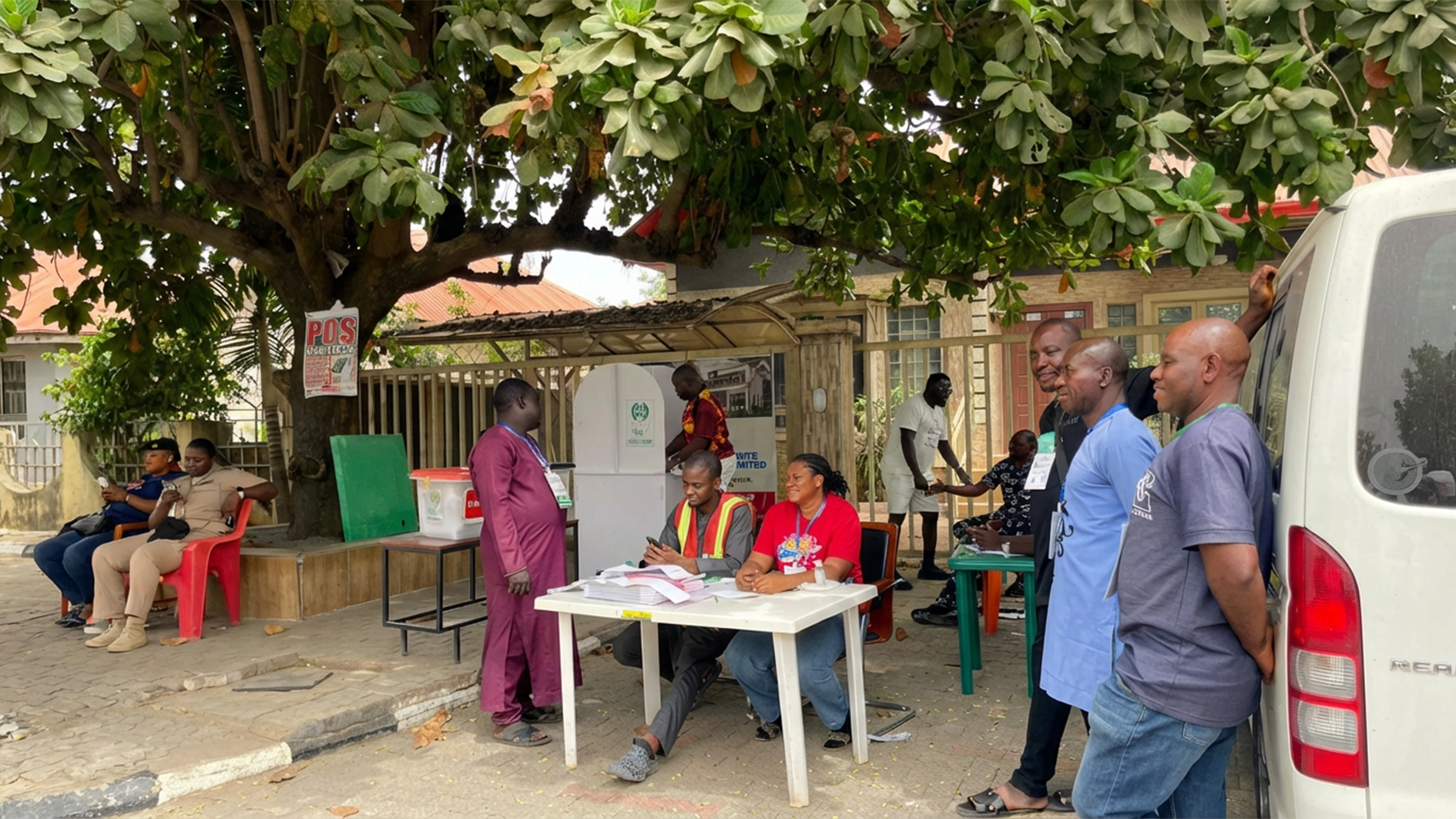
• APC wins five councils, PDP takes Gwagwalada
• Voter apathy deepens despite largely peaceful polls
• Electoral Act 2026 sparks transparency concerns
• PDP, others warn law may imperil 2027 general elections
• APC hails results as endorsement of Tinubu’s reforms
• INEC defends conduct, cites orderly accreditation, collation
• N’Assembly outlines reforms, defends manual collation fallback
Low turnout and intensifying backlash against the Electoral Act 2026 cast a long shadow over the Federal Capital Territory Area Council elections on Saturday, as the All Progressives Congress secured five of the six chairmanship seats in a contest seen as an early signal ahead of 2027.
While the ruling party hailed the outcome as an endorsement of President Bola Ahmed Tinubu’s reform agenda, opposition parties, civil society groups and religious leaders warned that concerns over transparency and declining voter participation could deepen public distrust in the electoral process.
The six councils — Abuja Municipal Area Council, Kuje, Abaji, Bwari, Gwagwalada and Kwali — went to the polls to elect chairmen, vice chairmen and councillors.
Results released at the end of collation showed the APC clinched victories in AMAC, Kuje, Abaji, Bwari and Kwali, while the Peoples Democratic Party secured a lone win in Gwagwalada.
The elections were conducted amid widespread voter apathy, with observers attributing low turnout to public concerns over transparency in the transmission of results to the Independent National Electoral Commission Result Viewing Portal.

The Electoral Act 2026, signed into law on Thursday by President Bola Ahmed Tinubu, retained manual collation as the primary basis for result compilation under Section 60(3), providing that Form EC8 containing manually entered vote tallies remains the foundational document for collation.
Although the polls were largely peaceful, allegations of intimidation and manipulation surfaced in some quarters. The opposition coalition platform of the African Democratic Congress recorded a disappointing outing, failing to secure any chairmanship seat despite fielding candidates across the territory. The party came second in AMAC and Bwari but was unable to convert support into victory elsewhere.
INEC Chairman, Prof Joash Amupitan, who monitored polling in parts of Garki, Wuse and the Abuja city centre, described the exercise as largely peaceful and commended voters for orderly conduct.
In Bwari Area Council, APC candidate Joshua Ishaku polled 18,466 votes to defeat ADC’s candidate, who scored 4,254 votes, and the Zenith Labour Party candidate, who secured 3,515 votes. The Returning Officer, Prof Mohammed Nurudeen, declared Ishaku elected after satisfying the requirements of the law. The council, comprising 10 wards including Kubwa, Ushafa and Bwari Central, recorded low turnout despite smooth voting in most units.
In AMAC, incumbent chairman Christopher Maikalangu of the APC was returned elected after polling 40,295 votes out of 62,861 valid votes cast. The Collation Officer, Prof Andrew Abue, announced that the ADC placed second with 12,109 votes, while the PDP polled 3,398 votes. Of the 837,338 registered voters in AMAC, 65,676 were accredited for the election.
Gwagwalada produced the sole PDP victory, with Mohammed Kasim defeating the APC’s Yahaya Shehu by 22,165 votes to 17,788. The Returning Officer, Philip Akpeni, declared Kasim elected, noting that the candidate of the All Progressives Grand Alliance secured 1,687 votes.
In Kuje, the APC candidate won with 17,269 votes, narrowly edging the PDP, which garnered 15,824 votes. The ADC scored 716 votes. Prof Nkeiruka Odoh, the Returning Officer, said 39,799 voters were accredited out of 175,271 registered voters and commended residents for peaceful participation.
Daniel Nuhu of the APC emerged victorious in Kwali with 17,032 votes, defeating PDP candidate Haruna Pai, who polled 8,575 votes.
In Abaji, Umar Abdullahi Abubakar of the APC secured 15,535 votes to defeat the Young Progressives Party candidate, who polled 5,357 votes. The PDP garnered 4,547 votes, while the New Nigeria Peoples Party and ADC scored 53 and 37 votes, respectively.
Across the councils, the Bimodal Voter Accreditation System functioned effectively in most polling units. Despite the smooth conduct reported by officials, observers maintained that persistent voter apathy remains a concern as political actors turn their attention to preparations for 2027.
PDP blames Electoral Act 2026 for voter apathy in FCT polls, warns of 2027 implications
The Peoples Democratic Party attributed what it described as “incredible voter apathy” in Saturday’s Federal Capital Territory Area Council elections to the Electoral Act 2026, warning that the trend could foreshadow the 2027 general elections if urgent amendments are not made.
In a statement issued yesterday and signed by its National Publicity Secretary, Debo Ologunagba, the party said Nigerians had “completely lost faith” in electoral outcomes conducted under the current law.
“The incredible voter apathy in these polls is a direct response to the anti-people Electoral Act 2026, where the people have completely lost faith in the electoral outcomes from elections conducted under this Act,” the statement read.
“These local council polls may just be a foreshadowing of the forthcoming general elections in 2027, if changes are not urgently made.”
The PDP urged the National Assembly and President Bola Ahmed Tinubu to take immediate steps to review the law, warning that failure to do so could undermine the country’s democratic process.
“There is time to correct the wrongdoing by the National Assembly and the President to save our democracy from collapse,” the party stated.
Despite its concerns, the PDP congratulated its candidates who emerged victorious in the polls held across the FCT on February 21, 2026.
“The National Working Committee of the Peoples Democratic Party has congratulated successful candidates of the PDP in the Area Council Elections, which were held in Abuja on February 21, 2026,” the statement added.
“This victory, though less in number than we anticipated, is particularly gladdening because it is against the background of unprecedented intimidation, high-powered money politics and brazen executive brigandage.
“Reports and video evidence abound where armed security personnel were used to cart away result sheets in polling units, intimidate voters, and unduly influence the outcome of the elections.”
Mohammed Kasim was the sole PDP chairmanship candidate declared winner, securing victory in Gwagwalada Area Council.
Meanwhile, Yiaga Africa said the FCT Area Council election conducted by the Independent National Electoral Commission was characterised by vote buying, low turnout and late opening of polling units.
In a preliminary statement signed by its Executive Director, Samson Itodo, and Director of Programmes, Cynthia Mbamalu, Yiaga Africa said it observed the election in polling units across the 62 wards of the territory.
The group reported that logistical challenges, particularly in the Abuja Municipal Area Council, adversely affected the timely commencement of voting due to delays in the deployment of personnel and materials.
“Yiaga Africa observers documented incidents of vote buying at polling units, underscoring the continued vulnerability of the electoral process to monetary inducement,” the statement said.
“Despite prior assurances and directives issued by INEC to security agencies to identify and apprehend both vote buyers and sellers, these illicit practices reportedly continued in several locations.”
Similarly, the Civil Society Legislative Advocacy Centre and the Transition Monitoring Group raised concerns over voter apathy, logistical shortcomings and alleged political interference in elections conducted in the FCT, Rivers and Kano states.
In a joint statement signed by Auwal Musa Rafsanjani, Executive Director of CISLAC and Chairman of TMG, the groups said although the elections were largely peaceful in many polling units, significant challenges were recorded.
They warned that Nigerians were gradually losing trust in the electoral process, stating that when citizens no longer turn out to vote, “it is no longer an election but a selection,” a trend they described as dangerous for democratic governance.
The groups noted that turnout was generally low, with some polling units recording as few as 10 voters throughout the day.
They also highlighted accessibility gaps for persons with disabilities. Monitoring teams from TAF Africa reported that polling units in rural councils such as Kwali and Abaji were inaccessible to wheelchair users. Observers further said magnifying glasses and Braille posters were absent in more than 60 per cent of polling units monitored.
CISLAC and TMG identified logistical delays, particularly within the Abuja Municipal Area Council, where late deployment of materials resulted in delayed opening of several polling units.
They also raised concerns about alleged voter suppression targeting women in high-density areas, claiming that economic intimidation was used in some communities to discourage women from joining queues.
The groups urged INEC to treat the shortcomings observed as an early warning ahead of future general elections and to strengthen systems for early deployment of materials and prompt commencement of voting.
APC chairman hails FCT, Kano, Rivers poll results as endorsement of Tinubu’s reforms
The National Chairman of the All Progressives Congress, Prof Nentawe Goshwe Yilwatda, has described the outcome of the weekend elections in the Federal Capital Territory, Kano and Rivers states as a strong affirmation of Nigerians’ support for the reform agenda of President Bola Ahmed Tinubu.
In a statement issued yesterday by his Special Adviser on Media and Communications Strategy, Abimbola Tooki, Yilwatda said the victories recorded by the APC, particularly in the nation’s capital, reflected public confidence in the administration’s Renewed Hope Agenda.
“I heartily congratulate our teeming supporters of the All Progressives Congress (APC) in the Federal Capital Territory, Kano and Rivers states on the successful, peaceful and credible conduct of the Saturday, 21 February 2026 polls.
“The victories recorded by our great party are a clear testament to the resilience, unity and grassroots strength of the APC,” the statement read.
According to Yilwatda, the outcome of the FCT Area Council elections carries special national significance.
“The Abuja election, in particular, is a powerful statement by Nigerians from all walks of life that they stand firmly with President Tinubu and his bold reform agenda. As residents of the nation’s capital, their verdict sends a strong message of renewed hope and confidence in the ability of this administration to deliver sustainable growth and prosperity,” he said.
He congratulated the APC chairmanship candidates who emerged victorious in Abuja Municipal Area Council, Kuje, Abaji, Bwari and Kwali, noting that their success underscored the party’s strong grassroots appeal in the territory.
Yilwatda also congratulated the Peoples Democratic Party chairmanship candidate who won in Gwagwalada, describing the result as evidence that democracy prevailed and the will of the electorate was respected.
The APC chairman further hailed the party’s four State House of Assembly candidates who secured victories in Kano and Rivers states, attributing their success to effective party organisation and growing public trust in APC leadership.
He commended party leaders, stakeholders and supporters across the three states for what he described as disciplined and peaceful participation in the democratic process. He also acknowledged the professionalism of security agencies and election officials in the conduct of the polls.
“As we celebrate these victories, we must remain united, focused and committed to delivering good governance at all levels. The message from the people is clear: they want results, accountability and continued reforms in line with the Renewed Hope Agenda. The APC will not disappoint,” the statement added.
CBCN urges N’Assembly to mandate real-time transmission of election results
The Catholic Bishops Conference of Nigeria has called on the National Assembly to safeguard the nation’s democracy by reviewing its recent position on electoral reform and ensuring that the Electoral Act provides for mandatory real-time transmission of election results from polling units.
President of the conference and Catholic Archbishop of Owerri, Lucius Iwejuru Ugorji, made the appeal at the opening session of the 2026 First Plenary Meeting yesterday, in Abuja.
Ugorji urged lawmakers to make it compulsory for results to be transmitted directly from the Bimodal Voter Accreditation System to the INEC Result Viewing portal at the commission’s headquarters, to eliminate human interference in the collation process.
According to him, real-time electronic transmission would promote free, fair and credible elections and restore public confidence in the electoral system.
He said, “The honourable members of the National Assembly should not allow themselves to be perceived as talking out of both sides of the mouth, expressing inconsistent and contradictory positions in the process of passing bills. The world is watching! Above all, God is also watching.”
The cleric argued that in passing what he described as a watered-down version of the people’s will on electoral reform, lawmakers should remember that they had earlier approved the 2025 Tax Bill mandating digital filing, record-keeping and payments nationwide.
Ugorji expressed concern over declining voter turnout in Nigeria, saying it reflected waning trust in the electoral process. He cited figures from previous general elections, noting that turnout stood at 69 per cent in 2003, 57 per cent in 2007, 54 per cent in 2011, 43.65 per cent in 2015, 35.66 per cent in 2019 and dropped to 23 per cent in 2023.
“This decline says a lot about citizens’ trust in the electoral process and calls into question the legitimacy of elected officials in a democratic dispensation with the mandate of an ever decreasing minority of citizens of voting age. If this downward trend in voters’ turnout during general elections continues, it will inflict a disastrous blow to democracy in Nigeria,” he said.
He urged Nigerians to work collectively to elect leaders committed to the common good rather than personal enrichment.
Keyamo slams opposition over FCT poll complaints
The Minister of Aviation and Aerospace Development, Festus Keyamo, has criticised opposition parties over their reaction to the outcome of the Federal Capital Territory Area Council elections, accusing them of attempting to discredit a credible process.
In a post on X yesterday, Keyamo dismissed allegations of widespread irregularities, describing the claims as baseless and exaggerated.
“This set of opposition fellows are a bunch of lazy and shameless characters. The futile excuses they give for losing elections have become their opium to numb their pain, disappointment and shame for their rejection by the electorate after all their theatrics and grandstanding. Nigerians are not fools,” he wrote.
The minister argued that the issues being circulated by opposition figures were insufficient to invalidate the overall conduct of the elections.
“Out of a total of 2,822 polling units in FCT, they display result sheets that were corrected (for whatever reason) in less than 10 units to attempt to prove that the whole election was marred by irregularities,” Keyamo stated.
He maintained that even if more polling units were affected, the number would remain insignificant compared to the total.
“Assuming it is even 50 units that had corrected (or mutilated) sheets, that leaves you with over 2,770 units,” he added.
Keyamo also accused opposition parties of using what he described as flawed logic to create public anxiety.
“They go further to use this flawed logic to create mass hysteria that ‘our democracy is in danger’ and attempt to stir social unrest amongst unsuspecting Nigerians,” he said.
The minister contended that opposition parties only accept election outcomes when they are favourable to them.
“The only election that can be free and fair, in their own warped minds, is when the ruling party loses,” he wrote.
Keyamo further declared that the FCT polls reflected the authentic voice of Nigerians, criticising individuals and groups he said claim to speak for citizens without direct engagement with voters.
“The real Nigerians have now spoken for themselves; not those who pose for cameras in front of the National Assembly claiming to speak for Nigerians; not some journalists who don’t know the polling units in their villages, seated comfortably in studios; and not the clueless opposition claiming to speak for Nigerians,” he stated.
He emphasised that while individuals and organisations are entitled to express their opinions, it is misleading to present personal views as representing the majority of Nigerians.
“When you make your point, clearly state it is your own belief or the position of your NGO or organisation, but do not pose as some Voltron defending majority of ‘Nigerians’,” he added.
Keyamo’s remarks follow criticisms and objections raised by some opposition parties, particularly the African Democratic Congress, after the announcement of results in parts of the FCT.
National Assembly outlines key reforms in Electoral Act, 2026
The National Assembly has outlined the major reforms contained in the Electoral Act, 2026, describing the new legislation as the outcome of two years of sustained consultations with stakeholders across Nigeria’s democratic space.
In a statement issued yesterday, Senate Leader, Opeyemi Bamidele, said the legislature worked closely with the Independent National Electoral Commission, the Office of the Attorney-General of the Federation, civil society organisations and development partners before harmonising and passing the bill.
The Act was signed into law by President Bola Ahmed Tinubu within 24 hours of its transmission, paving the way for early preparations towards the 2027 general elections.
Among the key provisions of the new law is the establishment of a dedicated fund for INEC under Section 3. The legislation mandates that funds for general elections be released to the commission at least six months before the polls, a measure lawmakers said would enhance the commission’s financial autonomy and operational preparedness.
The Act makes the use of the Bimodal Voter Accreditation System compulsory for voter accreditation at polling units. It also mandates the electronic transmission of results from polling units to INEC’s Result Viewing Portal.
Under the new law, presiding officers who deliberately obstruct the electronic transmission of results are liable on conviction to a six-month prison term, a fine of N500,000, or both. However, the Act provides for conditional manual transmission in the event of technological failure.
Resident Electoral Commissioners who fail to release certified electoral documents within 24 hours of payment face a minimum of two years’ imprisonment without the option of a fine.
The legislation also strengthens penalties for electoral offences, including vote buying, impersonation and result manipulation. Offenders risk up to two years’ imprisonment or fines ranging from N500,000 to N2 million.
In a significant departure from previous provisions, the Act abolishes indirect primaries, limiting political parties to either direct primaries or consensus arrangements for the nomination of candidates.
Political parties are now required to maintain a digital membership register, issue membership cards and submit their registers to INEC at least 21 days before conducting primaries. Failure to comply with these requirements could result in a party being barred from fielding candidates in an election.
Campaign finance limits have also been reviewed upward. The spending ceiling for presidential candidates has been increased from N5 billion to N10 billion, while the limit for governorship candidates has risen from N1 billion to N3 billion. Adjustments were also made to spending caps for other elective offices.
Lawmakers said the Electoral Act 2026 is designed to strengthen institutional independence, deepen transparency, integrate technology more effectively into the electoral process and reinforce accountability within Nigeria’s democratic system.

