 Follow Us on Google News
 Follow Us on Google Discover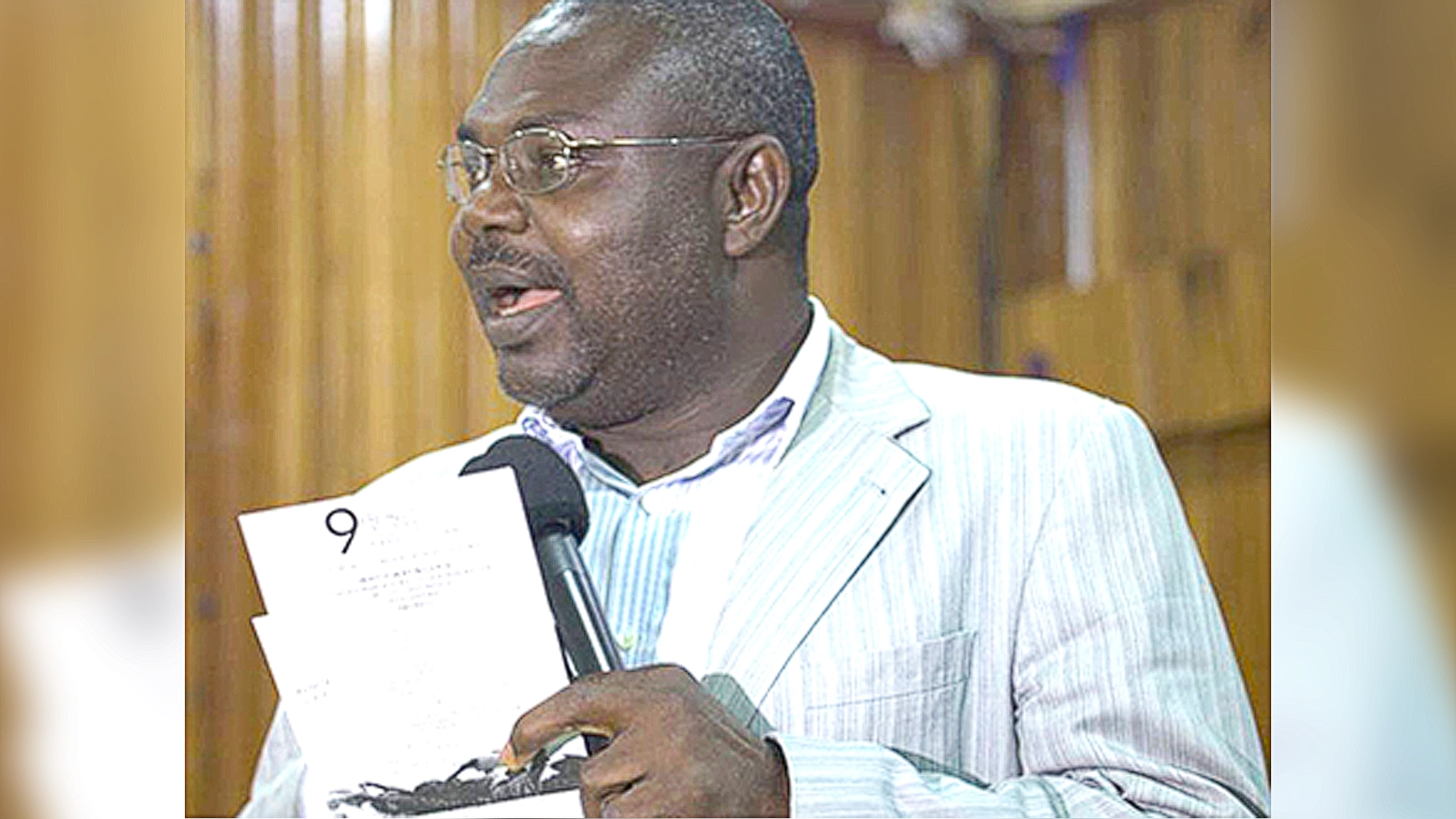
To steer the Nigerian democratic train on the right course as the country prepares for the 2027 general election, critical stakeholders such as the media, the Independent National Electoral Commission (INEC) and voters must collaborate and demonstrate genuine commitment to the electoral process. The media must be truthful in their reports.
INEC must not compromise its roles as enshrined in the 1999 Constitution and the Electoral Act, 2026. Voters must be open to continuing education that will arm them against politicians who may display undemocratic attitudes that could undermine the process and hurt the polity.
These were the submissions of Prof. Sylvester Odion Akhaine at the Fourth Annual Lateef Jakande Lecture organised by the Nigerian Guild of Editors (NGE) at Sheraton Hotel, Ikeja, Lagos, recently.
In his paper titled, ‘Media, INEC, Voters and Path to Credible Elections,’ Akhaine, who was the Keynote Speaker, analysed the intersecting variables of the media, INEC, voters and credible elections in a democratising social formation like Nigeria and concluded that the political setting is full of illiberal practices leading to a consequent de-empowerment of the citizens.
Thus, he noted that all stakeholders—the media, INEC, voters and the general populace—have a role to play to deepen the root of Nigerian democracy.
“The media must stand by the truth…The 1999 Constitution, as amended, has made the job easier for the media. In stating that the media should “uphold the fundamental objectives contained in this Chapter and uphold the responsibility and accountability of the Government to the people,” it has provided it with a progressive and popular ideology. Fidelity to this ideological prescription is desirable. This should be the media’s beacon as we navigate the build-up to the 2027 general election.

“INEC has its constitutional role carved out for it—manage the elections in credible ways. The popular struggle for its autonomy has led to its empowerment in various ways, such as its trajectory to technology-driven election management, Electronic Voting System (EVS) to the hybrid status of electronic transmission of results and fundamentally, the placement of its budget on first line charge on the consolidated revenue of the country indicates a desire for change however infinitesimal. The Uwais Panel report was more futuristic: the appointive power should be removed from the executive and placed in the parliament of representatives of the people.
“The voters require continuing education to enhance their capacity for informed choice in ways that undermine the tendency to succumb to financial inducement of unscrupulous politicians. Both the media and INEC can accelerate their activities in this regard. If these critical stakeholders play their role, it is my conviction that the Nigerian democratic train would be steered on the right course,” he said.
Akhaine noted that without voters, there can be no democracy and described them as central actors in the democratic process. “The voter is covered under the principle of universal adult suffrage, that is, the political equality of the citizens to vote without discrimination. In Nigeria, the prescribed age of a voter is 18, and he/she should be duly registered according to the rules governing the electoral process. Voters matter; as Bill Clinton once intoned, ‘You Americans are the boss. Today you are the boss; tomorrow you are the boss; and in the future you are the boss.’ In that quote from Clinton, the voter was being valorised. So without the voters there is no democracy. They are the central actors in a democratic process. They constitute the transmission belt for consent, the latter being the sovereignty of the people which confers sovereignty on the state. The voters’ power is expressed in elections,” Akhaine said.
He stated that electoral management in Nigeria has had a checkered history starting from when the Electoral Commission of Nigeria (ECN) was established to conduct the 1959 elections. Noting that elections management embraces the organisation of elections, its monitoring and the official recognition of election results, Akhaine observed that today in Africa, most electoral management bodies, such as INEC, do not have the autonomy required for conducting legitimate elections.
According to him, election serves as a polity stabilising instrument because the opportunity it provides for alternation of power deters the resort to self-help by contending social forces in society. “In this regard, alternation is interest reconciliation cum compromise,” he said. “It is a way of weaning power from its lowly origin in coercive, religious and commercial sources. More importantly, election provides opportunity for the electorate to hold public officials accountable, hence its accountability role. If election is deemed free and fair by the voters, it confers a measure of legitimacy, as the interim wielders of power have their consent. As a result of the multi-party content of liberal democracy, elections provide the voters alternative choices.”
Akhaine noted that the quest for free, fair and credible elections has engendered a panoply of international instruments such as International Convention on Civil and Political Rights 1966 (ICCPR), African Charter on Human and Peoples’ Rights 1981 (ACHPR) and European Convention on Human Rights 1950 (ECHR), the Harare Commonwealth Declaration of 1991, Economic Community of West African States (ECOWAS) Supplementary Protocol on Democracy on Good Governance 2001 and Southern African Development Community (SADC) Principles and Guidelines Governing Democratic Elections 2015 (2004) among others.
“These instruments underscore the importance of credible elections and essentialised the protection of civil and political rights of citizens. For example, SADC principles under the section titled ‘Principles for Conducting Democratic Elections’ emphasise citizen’s full participation in the political process, freedom of association and political tolerance while the ECOWAS protocol stresses accession to power through free, fair and transparent elections and zero tolerance for unconstitutional grab of power. Despite the lofty intentions of these transnational instruments, they are often observed in the breach than adherence,” he said.
Highlighting the contradictions in Nigerian electoral ecology, Akhaine stated that the 1959 election that ushered in Nigeria’s first republic had been called into question. He noted that Harold Smith, a colonial officer during the period, claimed British manipulation of the election to favour the North. He further stated that the 1964 and 1965 federal and regional elections were fraught with several electoral heists.
He added: “The instability that followed was underlined by operation wetie and the 1962 state of emergency in the Western Region underlined the magnitude of the crisis. However, the parliamentary system quivered until 15 January 1966 when it unrivalled. The election that ushered in the second republic was itself not free and fair. Its credibility crisis was underlined by the ‘12 two-thirds’ controversy. Richard Akinjide, who was counsel to Alhaji Shehu Shagari had argued that the two-thirds of 19 states at the time was “12 two-thirds,” and not 13. On his part, Chief Obafemi Awolowo countered that Shagari failed to score at least a quarter of the votes cast in 13 states which was mathematically the two-thirds of the 19 states. However, the Supreme Court ruled in favour of Shagari and averted the resort to the Electoral College.
“The third republic, the electoral process went along the beaten track. At the time, monetisation of the electoral process had begun with the practice of what was known as “Murtala sandwich,” a phenomenon in which loaves of bread were padded with twenty naira notes, then the highest denomination of the naira, and was offered to prospective voters as inducement. Although Nigeria had a taste of free and fair presidential election, not minding the process rigging involved in the elections of the party bearers, the election itself was annulled by the military and set the country back to ground-zero while disrupting the learning curve of liberal democracy.
“The fourth republic was birthed on a pacted matrix as a result of the crisis of June 12. The electoral space was constricted to accommodate only two candidates from the South West, the region cheated out by the annulled June 12 presidential election.”
He observed that since the commencement of the fourth republic, Nigeria has had seven general elections “and the eighth is in the offing.
“None of the general elections could be said to have been free and fair; they were variously dogged by malpractices that robbed them of any credibility. The 2003 general election was tainted by malpractice that I qualified with the Carter Clause, which is that the election was fraudulent but not enough to warrant annulment. It was actually the verdict of the Carter Institute that came to monitor the elections. Nigerians who had hoped for improvement were again disappointed. The 2007 general elections were presaged by President Olusegun Obasanjo’s outburst that the election would be ‘a do-or-die’ affair. The manipulation that occurred was aptly summed up by the Commonwealth Observer Group (2007): ‘Overall, in organisational terms these elections fell short of the standards Nigeria had achieved in 2003, and certainly well below those to which Nigeria is committed. We have concluded that there were impediments in the ability of voters to express their will fully, freely and fairly.’”
According to him, the above contradictions elicited the qualification of the democratic process as “Democracy in Retreat” by Human Rights Watch in 2007, which analysed the brutal, corrupt and undemocratic way of former president Yar’Adua’s accession to power.”
Akhaine emphasised that the constitution has placed the media in a position to defend democracy.
His words: “The Nigerian media is primarily governed by the constitution. Section 22 and Section 39 of the 1999 Constitution (as amended) underpin the role and obligation of the media. Section 22 on the obligation of the mass media, states that ‘The press, radio, television and other agencies of the mass media shall at all times be free to uphold the fundamental objectives contained in this Chapter and uphold the responsibility and accountability of the Government to the people.’
“Section 39 on Right to freedom of expression and the press guarantees the freedom of expression, opinions, to receive and impart ideas and information without meddling. The constitution also guarantees ownership and establishment of the exercise of the rights provided for in Section 22 subject only to restraint of national security interests justifiable in a democratic society.”
He stated the Nigerian media has been the butt of all forms of authoritarian exertions, noting that the height of it was the frame-up of media practitioners as accessories to the facts of coup plotting by the Abacha regime in the mid-1990s. He, however, observed that since the commencement of the fourth republic, the media has carried out its constitutional duty as professionally as possible and with all the limitations there can be.
“There is a pattern of persecution of the media by minders of state institutions, especially in election coverage. This was captured in the report of the Commonwealth Observers Group on the 2007 general election: there were reported increases in violence directed at media personnel in the months leading to elections. Article 19, a freedom of expression advocacy organisation, reported that independent broadcast media such as AIT and its affiliate radio station, Ray PowerFM, have been constant targets of harassment by authorities, with programmes stopped in mid-air, tapes seized and reporters arrested.
“The infraction on press freedom happened in a context in which the media is aware of its responsibility for fair representation of political actors in pre-election, during election and post-election. This role is performed in the midst of an array of administrative laws and guidelines. INEC expects the impartiality of the media in reportage and indeed with regard to parties and their candidates,” he said.
Akhaine said the media now face a new challenge occasioned by the advent of Information Communication Technology (ICT). According to him, apart from the information overload, there are the additional problems of fake news, false information, and half-truth converging around the phenomenon of post-truth, a cultural order that hobbles objective facts and empirical evidence in the public sphere.
“Therefore, the task for the media and its practitioners in our electoral ecology besides managing the passionate rhetorics of victors and losers in elections is to moderate the sundry pathologies of the information world. Although the next test ground is the 2027 general election, it is not going to be an easy task,” he warned.

