 Follow Us on Google News


 Follow Us on Google Discover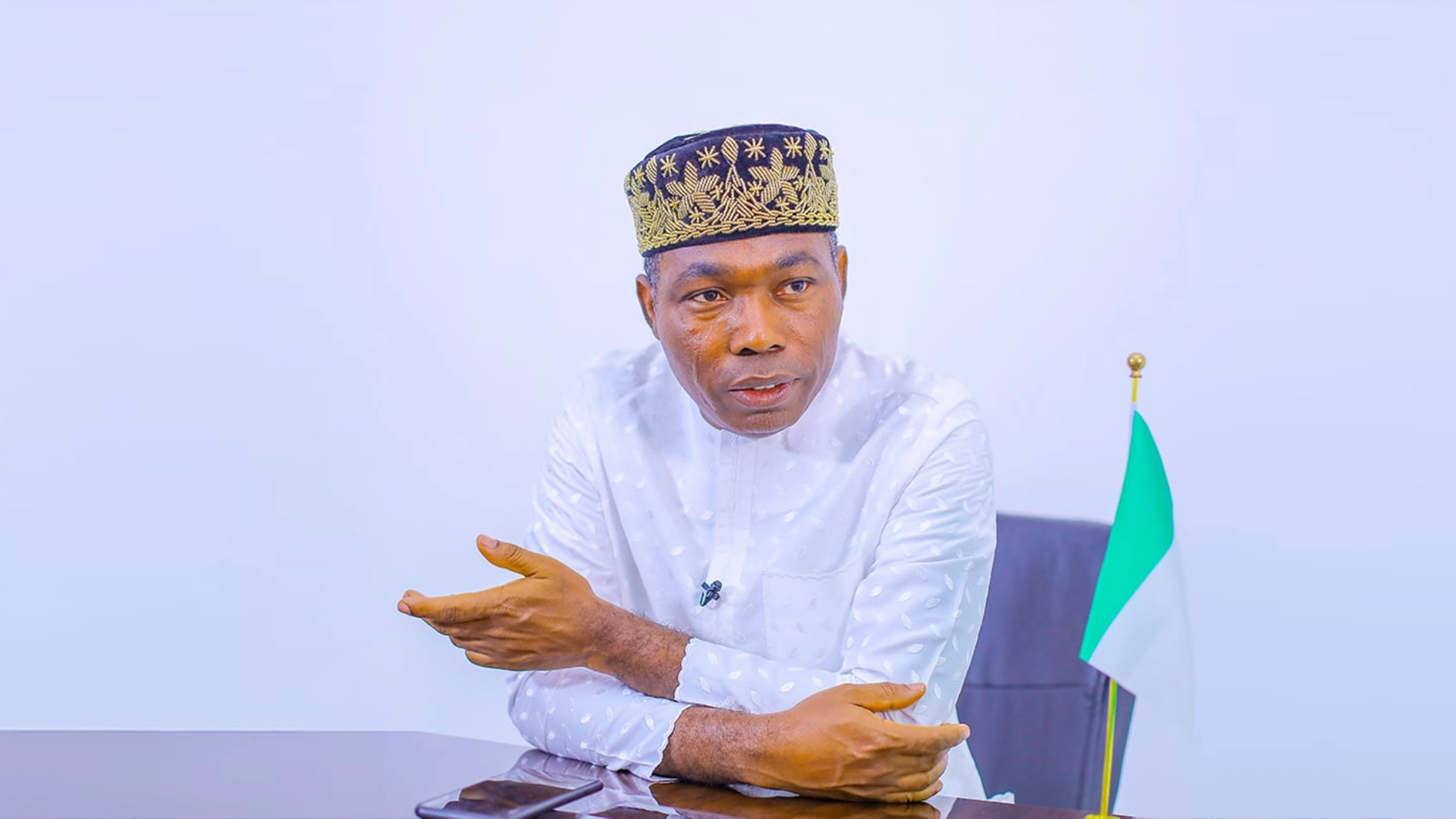
Presidential candidate of the Social Democratic Party (SDP) in the forthcoming general election, Prince Adewole Adebayo, in this interview with select journalists, said Nigerians have keyed into his party’s ideas on security, economy, infrastructure, welfare, democracy and ethics in governance, projecting that the development will pave way for his victory at the poll. ONYEDIKA AGBEDO was there.
The last time we spoke, there was a group in your party that had put forward its own presidential candidate. What is the current situation?
We are not bothered about that. It’s the normal staple. If you recall, four years ago, a similar thing happened when some people floated Senator Hina, but eventually it was resolved in Lagos when Hina raised my hand and said we have only one candidate. So, I think the burden is on the Independent National Electoral Commission (INEC) to try not to waste its time on that and to follow the law.
But a candidate will always, like in a game of sport, have people who will tug at your shirt, try to pick your leg or whatever. It’s a contact sport; so we just focus on the goal.
My focus is to deliver the mandate given by the party, which is to give alternative perspectives to Nigerians to raise their expectation that things will turn for good, and that we will implement the Constitution, Chapter Two – the
Fundamental Objectives and Directive Principles of State Policy. And that we will have economic solutions, security solutions and welfare solutions. Also, Nigeria will take advantage of the time in which we are, where new opportunities are opening up in new industries where the majority is young people.
So, those are the things they want to talk about, but with respect to all the legal requirements for nomination, we have done it. The onus is now on INEC to carry out a free, fair and credible election. Our job is to reach out to the people so that the issues we are discussing will not be the internal headaches of political parties. What you can have is a set of political parties competing on a set of ideas and the media moderating for all of us, so that we can have equal hearing and Nigerians can now decide to lay their bed the way they want to lie on it when the time comes, so that nobody says, ‘Oh, I was confused by political party rancour. I was confused by multiple issues, and I didn’t focus on the agenda.’

The agenda we are facing now, the consequences we are facing now, were the agenda that President Tinubu presented last time. People were focusing on Muslim-Muslim ticket and other things that are not important. They didn’t focus on those damaging proposals, which we told them would leave them in a serious quagmire. Unfortunately, that has come to pass now.
You’ve spoken about the expectations of Nigerians, especially in anticipation of the upcoming elections in 2027, but what do you think of the proposed six-year single term for president?
It’s a distraction. These are the kinds of talks we see when elections come. The government is like a football team that is one goal up and you have only 15 minutes left. So, they will be playing around, doing everything and kicking the ball out to wind down the clock. Six-year term or four-year term, that’s not the problem. The problem is that you must have a system that works. You must have a political system where the voter decides the winner and where nobody watches INEC as if you are watching a secret society. Political parties raise ideas and new People; so that when you go to a congress or convention, they will raise new people that will give you hope. So, Nigeria has people like this.
There are solutions to this kind of problems that we have, and they will come out with other things that will work. So, my focus as we are heading towards June 12 is that we must once and for all kill the demon of election rigging. We must once and for all allow the voter to vote. So, the issue of how long you stay in power and all of that is irrelevant; it is what you do when you get there that matters. So, I think the present system of four years, and if you are good enough, you go for another four years, is good enough if the people who are actually going to the government are going through free, fair and credible elections. We should focus on that now.
There are people who think SDP doesn’t have what it takes to win the presidential election. Do you think you can win free, fair elections to become Nigeria’s president? If yes, what’s driving that confidence in you?
I have other things to do if I want to entertain myself. I have a lot of hobbies, which we’ll talk about later. Number one, the thing that is bringing us back is the expectation that we will have free, fair and credible elections where people don’t buy votes and they don’t rig votes. At that time, you will know the relative strength of all political parties and where they are. The system we are running now does not give an honest person the ability to swear by any standard that the results you are getting represent the will of the people.
So, we are going around the country; the demand for alternatives is rising every day; the need for alternatives is rising every day; the necessity for alternatives is rising every day. There is no aspect of our national life that the idea the SDP is promoting does not attract. Our idea on security, our idea on the economy, our idea on infrastructure, our idea on welfare, our idea on the state of democracy and ethics in governance are the ideas that Nigerians are interested in. And SDP happens to be a party that’s popular with the Nigerian people. It’s because of SDP that we have the June 12 Democracy Day and we have the grassroots.
The only problem we have had in the past, and if politics continue like this we will have it, is that we are an ethical political party. We can’t buy votes. We can’t do that. We cannot buy votes; we can’t campaign on ethnicity and religion. So, you can’t come to the SDP and say it’s the turn of my people or the turn of my religion; we will kick you out immediately. You can’t come and corrupt our system. You can’t bring money that we cannot defend to our party. I can’t break our rules.
So, in this kind of structure, this kind of disciplined environment, those who are undisciplined in the short term gain an advantage, but over time, when the system cannot sustain itself, and it is crushing those who are perpetrating all these illegalities, Nigerians will pay more attention to the idea that we must have free, fair and credible elections. When people begin to focus on how popular a party is, how good a candidate is, how free from scandal and problems and corruption the candidates are, how sound they are, how competent they are and if they understand issues; when we get to that stage, we are the party to beat and that is where we are trying to push the rest of the country to. That’s why we lead by example. That’s why we try our best to make sure that we don’t copy the shortcuts.
You were criticising the removal of fuel subsidies; if you are elected as president in 2027, would you return the fuel subsidy? Your position has been that the removal of fuel subsidy is what has plunged Nigerians into poverty. Do you think subsidy should come back? Is that part of your economic ideology for Nigeria?
No! The issue is that the removal of the subsidy was a big mistake, but President Tinubu has gone on to make even bigger mistakes over time. What we are saying is that when we were debating four years ago, we were the only ones saying don’t be deceived by this issue of removal of subsidy for three reasons.
One, there was no subsidy to start with. We said that there was no subsidy. What they were doing by way of removal of subsidy was price adjustment for products that they did not produce, and the ability to produce those products rested in taking care of the four refineries that we have – two in Port Harcourt, one in Warri, and one in Kaduna – and the amount of money we were spending on turnaround maintenance was not accounted for. So, what we had proposed was that we have a three-step approach.
One, we will make sure that the refineries work in the medium term, because we have spent enough money, and many of them will work if the government wants them to work. Second, we will take our people, especially the vulnerable people, the low-income people, the energy-poor people away from the need for petrol, because when you have multimodal transportation, which you can get within six months, and workers use their employment card to take transport to work, they will not be forced to bother too much about the price of petrol.
And lastly, structurally Nigeria is able to produce more refined products than we are consuming. Our point of departure from the government was that they did not understand the multiplier effect.
The importance of petrol pricing is that it hits you in both ways. It raises your factor cost for productivity, industries, offices and all of that. It also raises your cost of living, which affects your welfare and your inflation. Now, that narrow band of managing what was around N2 trillion in subsidy is the issue. They wanted to use that as a boogeyman the way they are using kidnapping now as a boogeyman to frighten people; something they can deal with immediately. They are now using that as a boogeyman to create a new petroleum industry in which people in government are players.
Are you saying that the kidnapping happening right now is being staged or you are just blaming the government for the level of kidnapping we are witnessing?
Of course, the government is responsible for the kidnapping that is going on.
Do you have evidence to prove that?
I have evidence to prove that. Unlike many people who stay at home and comment, I go to the places where these kidnappings take place. I interact with the people and it’s very clear that only on very rare occasions – like one per cent – that the people are not already expecting it. I can give you a list of communities that have reached out to me to say we got notes from some people saying they want to kidnap us.
We have seen some strange movements; we have informed the government; they don’t respond. Now there are three reasons they don’t respond.
One is lethargy. The fact that they are not serious because the definition of security in Nigeria is regime safety, regime security, how to protect the President, Villa, governor, a few senators and businessmen; that’s all. Outside that, they don’t care.
The second problem that they have is that if you go and ask the DSS, if you go and ask many of the security agencies, we are extremely competent in the area of gathering intelligence, but when you gather intelligence, you need it to be sanctioned by somebody, and if the people who are responsible for ordering security measures don’t have time…I don’t want to go into too much details. Go and interview security personnel.
There are certain sensitive security personnel that don’t have access to even see the commander-in-chief, not to talk of discussing their security estimates. Thirdly, the structure of our law enforcement has killed the police completely. When you see Nigeria Police on the road, they are just merely decorative, because tasks which they can do, exercises which they can do, reconnaissance that they can do, are now being given to the military, thereby taking the military away from the strong theater, where they can do their own kinetics with terrorists.
And the last part, which is the shame of it all, is that it is a lucrative business for those who are in government. That is where they spend their security votes, buy for themselves houses abroad, Mercedes or do everything in the name of saying I paid so and so billion to so and so number of bandits that you don’t see.
But eventually, when we catch the bandits, many of them will confess that the government is responsible. I am not on the side of the terrorists. The terrorists deserve to go to prison. Many of them deserve to die. The issue is that the government is an enabler; deliberately and carelessly enabling this situation.
So, I’m more focused on finding solutions to this issue, because I know that the government will be voted out in January, and they will pack their bags and go in May. So, between now and May next year, as an incoming commander-in-chief, my mind is more focused on how to action many of the solutions, which our intelligence agencies have proposed.
You have been to Oyo State, Plateau State and other places following attacks, killings and abductions. If you were the president today, would you negotiate with bandits?
No, please. As president, there is no room for that. You can’t form partnerships with criminality. You cannot share your territorial integrity with bandits. And who are these bandits? If you profile them, these are low-level combatants. It’s not like the bigger threat, like Russia is attacking Ukraine. These people are just becoming bolder because the government is creating space for them. Anybody will be bold until they heal when a bullet hits them in the forehead.
So, the issue is that the government has the bigger gun, but they don’t want to use it. They have the bigger intelligence, but they don’t want to use it because many of the people are threatening to protest on the street now. There are people the government could have recruited into the armed forces, into the police. And to make sure that we are able to protect our community, every service that we have has sterling qualities of officers.
Look at the Nigeria Police; you can underrate them, but you are underrating them at your own peril, because Nigeria Police are extremely competent, but they are extremely subservient because of the way our security architecture is structured. Politics trumps professionalism. Before a commissioner of police can pay attention to his job, he has been called by the governor five times. Before the Inspector General of Police can pay attention to his job, he can be asked by the president, ‘Go, my party is doing congress or convention somewhere , carry 3,000 policemen, go there; somebody is insulting so and so somewhere, go and arrest him.’
So, if there are police under me, our law enforcement will be purely free from daily government control. Our job is to pass laws for them to enforce, not to use politicians to control them. There is nowhere in the world where the policemen are under political control. The Prime Minister of the United Kingdom cannot call Scotland and tell them to go and arrest somebody because they are independent. But here, the political class has swallowed the security professionals, so we need to decouple that. That level of independence is what we require.
I want to let Nigerians know that there is no terrorist, no bandit, no kidnapper that is capable of overrunning Nigeria or overwhelming the government. The government doesn’t care about taking care of you, so you need to take care of yourself by making sure that you raise this demand loudly. When you have threats facing your community, don’t wait for it to happen. Start to draw attention to the government, and when it’s time to vote, put your own security as number one. Don’t put ethnicity, don’t put money. Make sure that you can be alive, and the only way you can be alive is to have a government that wants to keep you alive and perform its function under the constitution. And that’s why the SDP is available. That’s why we are going around the country to know the communities.
There are those who will say talk is cheap; it’s easier said than done. You criticise the government, but when you get into government, the realities may be different. Do you agree?
No, no! You see, talk is not cheap; it’s senseless talk that is cheap. Sensible talk requires thinking, getting data, knowing what is happening, knowing how the government works. Anybody who wants to be a government and doesn’t know what’s going on in that government doesn’t deserve to go. Let us understand that we need to have an understanding of our governance system.

