 Follow Us on Google News
 Follow Us on Google Discover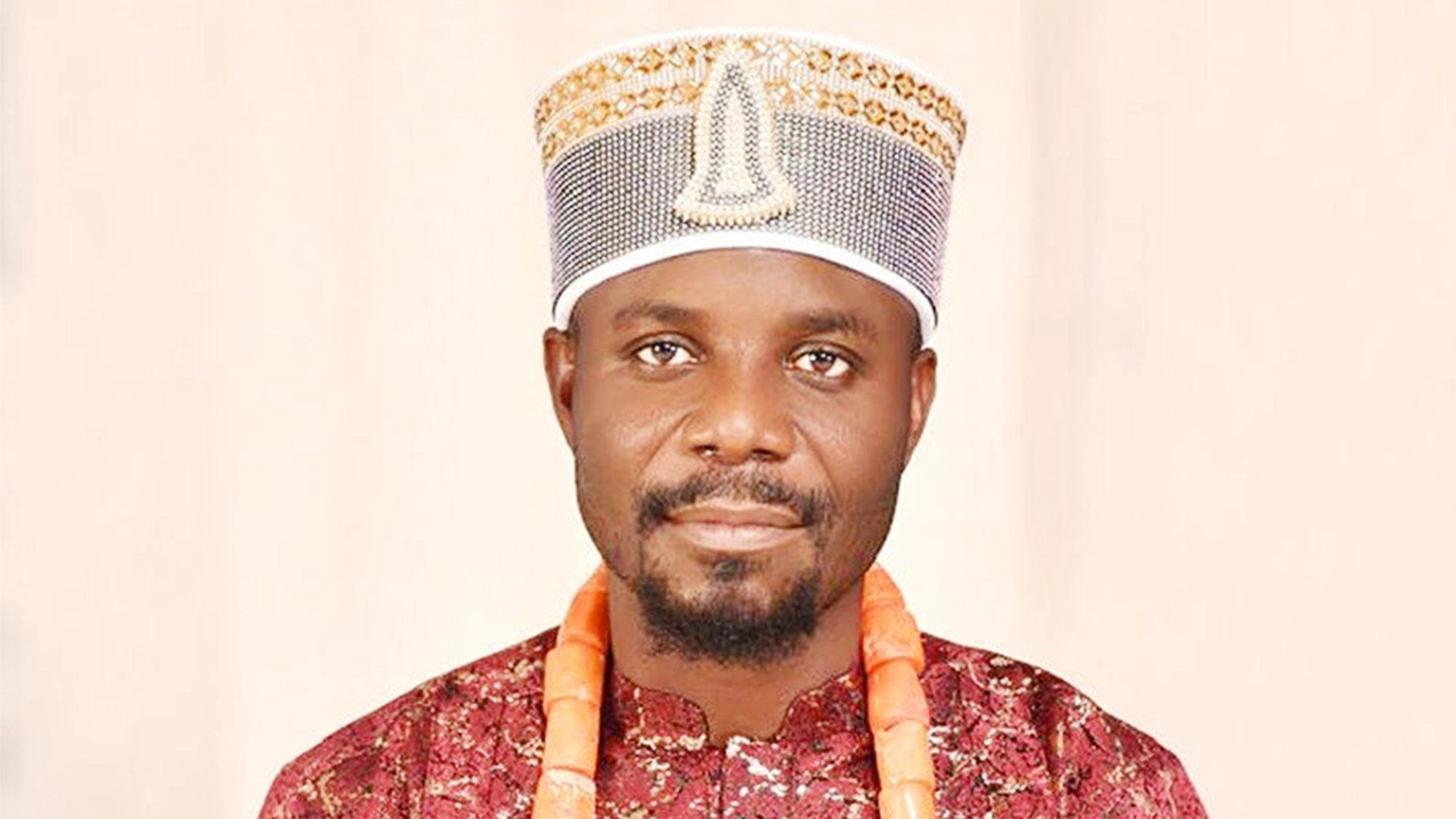
The Mayor of Urhoboland, Eshanekpe Israel, speaks with OBIRE ONAKEMU on the impact of President Bola Ahmed Tinubu’s economic policies, which he says have worsened hardship for Nigerians despite their potential for long-term recovery. He also discusses the restructuring Nigeria needs to address its deep-rooted political and economic challenges, as well as the impact of youth unemployment on the nation.
What is your assessment of Nigeria’s political and economic development under the current administration?
Nigeria is evolving and moving towards a new direction of national recovery and economic rebirth under President Bola Ahmed Tinubu. His administration inherited a difficult economic situation, including fiscal pressures, distortions in the foreign exchange market and the burden of petrol subsidy. The decision to remove the subsidy and reform the foreign exchange market was politically difficult and one that previous administrations had struggled to implement.
However, I believe Nigerians must distinguish between reforms and their outcomes. Reforms are not an end in themselves. They must ultimately translate into improved living standards, jobs, stronger public institutions, better infrastructure and greater confidence in the country.
The government has made significant interventions in fiscal management, infrastructure, agriculture, education and other sectors. But there are still serious challenges, particularly the high cost of living, poverty, insecurity and unemployment. These challenges cannot be dismissed as opposition propaganda.
The World Bank has acknowledged that Nigeria’s reforms have helped improve macroeconomic stability, including lower inflation and reduced exchange-rate volatility. But it has also warned that poverty remains a major concern and that growth has not been sufficiently inclusive. Therefore, the administration must be judged not only by the boldness of its policies but by how effectively those policies improve the lives of ordinary Nigerians.
President Tinubu has said that he deserves to be listed in the Guinness World Records because of the reforms he has undertaken since assuming office on May 29, 2023. Does he really deserve such recognition?
That is a political statement, and I would rather leave the Guinness World Records to determine what qualifies for such recognition. But I would say that President Tinubu has undertaken reforms that required considerable political courage.
The removal of the petrol subsidy and the foreign exchange reforms were major policy departures. The subsidy regime had become extremely expensive and distorted, while the multiplicity of exchange rates created opportunities for arbitrage and corruption. The World Bank itself described the previous system as opaque and distortionary.
However, courage should not be confused with success. A government may take difficult decisions and still get some aspects of implementation wrong. Nigerians are entitled to ask what they have gained from these reforms.
For me, the real test will be whether the reforms create a productive economy, reduce poverty, increase purchasing power, generate employment and strengthen institutions. History will ultimately judge the Tinubu administration by its results, not by the number of reforms announced.
Nigeria continues to face serious unemployment and underemployment. Can the government afford to tell millions of young Nigerians to abandon the expectation of formal employment and become entrepreneurs?
The global economy is changing, and we must acknowledge that the government cannot employ everybody. The private sector, technology, entrepreneurship, agriculture, manufacturing and the creative industries must play a much larger role in job creation.
But I would not advise the government to simply tell unemployed young Nigerians to become entrepreneurs. That would be inadequate. Entrepreneurship requires capital, electricity, infrastructure, markets, skills, security and access to credit.
If a young Nigerian is given a business idea but cannot access affordable finance, has no reliable electricity, faces multiple taxation and cannot move goods because of poor roads, telling that person to become an entrepreneur is not enough.
The government must therefore create an environment in which businesses can survive and grow. Nigeria needs millions of productive jobs, not merely survival activities. We should move from celebrating people who sell goods by the roadside to building a manufacturing and technology ecosystem capable of absorbing our growing population.
China and other Asian economies did not become competitive simply by telling citizens to become self-employed. They invested heavily in infrastructure, education, manufacturing, skills and industrial capacity. Nigeria must learn from that experience.
The World Bank and other institutions have warned that poverty is increasing in Nigeria. Why do you reject the description of Nigeria as a poor country?
Nigeria is a country of enormous wealth, but we must distinguish between national wealth and citizens’ welfare. Nigeria is rich in natural resources, human capital and entrepreneurial capacity. We have produced exceptional professionals, businessmen, scientists, doctors, academics and innovators.
But the existence of wealthy Nigerians does not mean that Nigerians are not poor.
The World Bank’s data are sobering. Its recent estimates put the share of Nigerians living below the national poverty line at about 61 per cent in 2024, with a further increase projected in 2025. Its analysis also indicates that millions more Nigerians have been pushed into poverty by the cost-of-living crisis.
So, I would rather say Nigeria is a potentially rich country with a large population experiencing poverty. The responsibility of the government is to convert national resources into human welfare.
We must also stop using poverty as a political weapon. If poverty exists, the government must confront it. If the economy is growing, the government must explain why that growth is not reaching enough households. That is the real debate Nigerians should have.
How can Nigeria build a prosperous, just and equitable society?
We need character reform, institutional reform and value rebirth. But beyond that, we need institutions that work regardless of who occupies the presidency.
Supporting President Tinubu’s reforms does not mean giving the government a blank cheque. Nigerians must demand accountability, transparency and measurable results.
The reforms are ongoing, and I believe the administration should be given the opportunity to consolidate them. But by the end of the administration, Nigerians should be able to point to better roads, stronger healthcare, improved education, more jobs, greater security and a more productive economy.
A prosperous Nigeria cannot be built solely through presidential initiatives. State and local governments must also accept responsibility. The private sector, civil society, professional organisations and citizens all have roles to play.
There has been a persistent clamour for restructuring and true federalism. Do you think restructuring can solve Nigeria’s problems?
Federalism has a definition. I do not believe there is a constitutional concept of “true federalism” and “false federalism”. What Nigeria needs is structural reform that makes governance more responsive and productive.
We have over-centralised too many responsibilities at the federal level. The Federal Government should not be attempting to manage everything from Abuja.
Local governments must become genuinely functional. State governments must also become more accountable. Fiscal autonomy is important, but autonomy without accountability can simply decentralise corruption.
That is why I believe restructuring must go hand in hand with institutional accountability. If corruption is transferred from Abuja to the states and local governments, we will not have solved the problem.
The objective should be to bring government closer to the people, strengthen local institutions and ensure that citizens can hold elected officials accountable.
Under President Tinubu, do you genuinely believe Nigeria is on the path to greatness, as the Majority Leader of the Senate, Opeyemi Bamidele has argued?
I believe Nigeria is moving in that direction, but I would qualify that statement. We are on a possible path to greatness; whether we arrive there will depend on implementation.
There are encouraging developments in fiscal management, infrastructure, agriculture, energy and other sectors. Economic growth has also shown resilience. But Nigerians are entitled to ask why economic growth has not yet translated into sufficient improvements in household welfare.
We should not confuse macroeconomic stability with prosperity. A country can have improved reserves, stronger fiscal numbers and lower inflation while many households are still struggling.
Therefore, the government must move from stabilisation to inclusive growth. The next phase should be about jobs, productivity, industrialisation, human capital and social protection.
What should be the basic components of a sustainable governance structure for Nigeria?
There must be fiscal responsibility, institutional independence, accountability and genuine autonomy across the three tiers of government.
The Federal, state and local governments should work together rather than constantly compete for resources and political influence.
Citizens must also be carried along. Liberal democracy is not simply about voting every four years. It involves citizens participating in governance, demanding accountability and having access to information.
We must also strengthen public institutions so that they do not depend entirely on the personality of whoever occupies the presidency.
The Yoruba freedom fighter, Sunday Adeyemo, popularly known as Igboho, recently said that President Tinubu has implemented revolutionary policies that previous governments lacked the political will to pursue. Do you agree?
I agree that President Tinubu has taken some decisions that previous administrations were reluctant to take, particularly the removal of petrol subsidy and the reform of the foreign exchange regime.
The subsidy had become a major drain on public finances, while the previous exchange-rate system created distortions. The World Bank estimated that the petrol subsidy cost Nigeria more than N8.6 trillion between 2019 and 2022.
However, the difficult part of reform is not announcing it. It is managing its consequences.
The removal of subsidies increased petrol prices sharply and contributed to higher living costs. The exchange-rate reforms also brought significant naira depreciation and inflationary pressure. The World Bank noted that these reforms, although necessary for correcting distortions, initially intensified pressure on households.
So, the administration deserves recognition for taking difficult decisions, but it must also accept responsibility for mitigating their social consequences.
The government should accelerate investment in infrastructure, public transportation, agriculture, health and education so that the burden of adjustment does not fall disproportionately on ordinary Nigerians.
There are also major infrastructure projects across the country, including the Lagos-Calabar Coastal Highway and the Sokoto-Badagry road corridor. Such projects can stimulate economic activity if they are properly executed, transparently funded and completed within reasonable timelines.
How would you assess the Niger Delta under President Tinubu?
The Niger Delta remains central to Nigeria’s economic survival, and the region deserves more than periodic interventions after crises.
There have been institutional interventions aimed at accelerating development, including the creation of the South-South Development Commission alongside existing structures such as the Niger Delta Development Commission and the Presidential Amnesty Programme.
But the real question is whether these institutions will produce measurable development. The Niger Delta still faces environmental degradation, youth unemployment, poor infrastructure and the consequences of decades of oil dependence.
The region needs a development model that moves beyond compensation and patronage. We should be talking about industrialisation, fisheries, agriculture, maritime industries, gas development, environmental restoration and human capital.
Security in the creeks is also important because increased oil production means little if communities do not benefit from the resulting economic activity.
Governor Sheriff Oborevwori has spent more than two years in office in Delta State. What areas do you think require greater attention?
Governor Oborevwori has made visible investments in infrastructure, particularly roads, and has maintained a strong focus on physical development across the state. His administration can point to several signature projects.
However, no administration should be assessed only by the number of roads it constructs.
Agriculture requires greater attention. Delta has enormous agricultural potential, but many young people do not see farming as a viable career. The government should provide access to affordable credit, mechanisation, extension services, storage facilities and markets.
Healthcare also requires stronger attention, particularly primary healthcare. A functional primary healthcare system can prevent many problems that eventually become expensive hospital cases.
Education is another area that deserves sustained investment. Public primary education cannot be left entirely to private operators. The state must improve infrastructure, teacher quality and learning outcomes.
Governor Oborevwori has made progress, but the remaining years of his administration should be used to deepen investment in these less visible but equally important sectors.
Finally, what would you say to Nigerians about patriotism and the country’s future?
I believe Nigerians should stop deliberately destroying the image of their own country. Criticism is necessary in a democracy, but criticism should not become the deliberate denigration of Nigeria.
At the same time, patriotism must not mean defending everything the government does. A patriotic Nigerian should be able to condemn corruption, insecurity, poor governance and injustice.
We need a more mature patriotism — one that combines love of country with accountability.
Nigeria is a country with enormous potential. But potential is not achievement. We have spent decades talking about our greatness. The challenge now is to build institutions and an economy that make that greatness measurable in citizens’ daily lives.
The National Orientation Agency (NOA) should play a stronger role in promoting national identity, civic responsibility and social cohesion. But patriotism cannot be manufactured through slogans. Citizens become proud of their country when institutions work, when justice is accessible, when elections are credible and when the government treats them with dignity.
Nigeria is our heritage, and we must protect it. But protecting Nigeria also means demanding that those entrusted with its resources govern responsibly.
The country does not need propaganda. It needs competent leadership, honest institutions, productive citizens and a political culture in which those in power can be questioned without being branded enemies of the state.
That, ultimately, is how we build the Nigeria we all want.

