 Follow Us on Google News


 Follow Us on Google Discover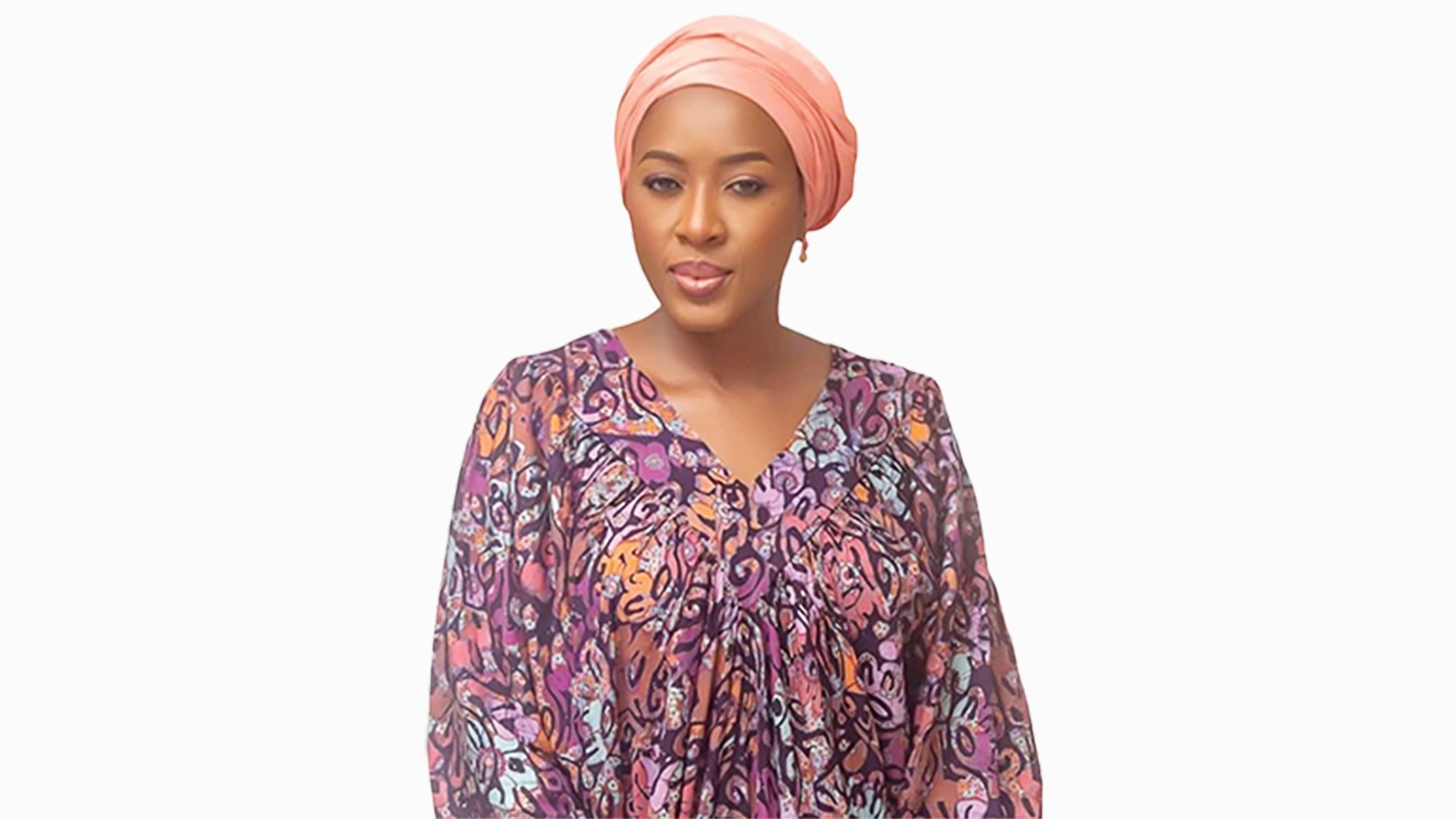
Dr Chiogo Constance Ikokwu recently threw her hat into the ring for the Nigeria Democratic Congress (NDC) ticket to represent Idemmili North and South Federal Constituency of Anambra State in the House of Representatives. In this interview with LEO SOBECHI, Ikokwu, also known as Ugonecheora, outlines the challenges women face in their quest to participate in decision-making and elective politics.
Recently, you announced your transition from the media to participation in partisan politics and electoral contests. What informed those decisions?
My decision to participate in partisan politics and electoral contests was informed by a deep conviction that meaningful development in my community and country requires direct involvement in governance, not just observation or advocacy from the sidelines.
Over time, I have seen how gaps in infrastructure, social services, and representation affect everyday lives, and I believe that stepping into elective office provides a practical platform to address these challenges more directly.
My motivation is therefore rooted in service, accountability, and the desire to use democratic institutions to deliver tangible improvements in the lives of the people I seek to represent.
Do you think the progression of Nigeria’s democracy over the past 27 years has given women the confidence to participate actively in decision-making?

I will say yes and no. In one way, Nigeria’s democracy over the past 27 years has created space for participation and has gradually improved awareness about inclusion, which can give women greater confidence to engage in decision-making.
Having said that, it is important to add a caveat, which is that the progress is still uneven and not yet fully sufficient. That is where my “no” comes in. While we have seen increased advocacy, stronger civil society voices, and a few landmark achievements for women in politics and leadership, structural barriers such as cultural norms, financial constraints, party gatekeeping, violence, intimidation and harassment in politics, and limited access to political networks still restrict full participation.
With mentorship and deliberate policies, women can increasingly take up stronger roles in shaping governance and policy outcomes.
In the management of the Nigerian economy, how would you rate the 16 years of the Peoples Democratic Party (PDP) and the about 11 years of the APC?
I would say both the PDP’s 16 years and the APC’s period so far reflect different phases of Nigeria’s economic journey, with mixed outcomes that do not lend themselves to a simple “good or bad” rating.
The PDP era is often associated with relative economic stability and growth in certain sectors, driven by high oil revenues, debt relief, and expansion in telecommunications and banking.
But it also faced criticism for weak institutional reforms and overdependence on oil. The government did its best. The APC era, on the other hand, has been marked by the first eight years, which were sluggish, underwhelming and honestly disappointing for many Nigerians.
Now, we see aggressive policy reforms, such as debates over removing border subsidies and attempts at economic diversification, alongside significant pressures like inflation, currency instability, and rising cost of living.
The real issue is the need for consistent, long-term economic planning that transcends party lines and focuses on structural transformation, productivity, and inclusive growth.
Your state, Anambra, holds the enviable record as the only one out of the 36 states of the federation to have a woman as state chief executive by default. Did this inspire you in any way to take the plunge into politics?
While that was a good thing, it was not my reason for jumping into the fray. But the fact that Anambra State once had a woman as chief executive by default is both symbolic and inspiring for many women, as it demonstrates that leadership is not defined by gender, but by competence, circumstance, and public trust.
It reinforces my belief that women can and should occupy the highest levels of political leadership when given the opportunity. Actually, we should not wait. We should rise up to the challenge.
There have been mixed perceptions about the performance of women in public office, some savoury, others not so becoming. Patricia Etteh’s stint as Speaker of the House of Representatives and Senator Natasha Akpoti-Uduaghan are but a few examples. Do you think that their track records support Nigerian women’s demand for more opportunities?
That is right. The experiences of these women demonstrate that we have a long way to go as a country. Women are fully capable of operating at the highest levels of public office, even though, like all politicians, their tenures may be subject to public debate and differing perceptions.
What is important is that their emergence and participation show that women are not only present in governance but are actively shaping national discourse, legislation, and leadership culture.
These examples support the broader demand for increased opportunities for women because they highlight that competence and performance in public office are not gender-specific, and that the focus should be on fairness, inclusion, and the strengthening of democratic representation rather than limiting access based on stereotypes or isolated judgments. I absolutely support equal opportunities for men and women.
Some commentators argue that the agitation for reserved seats for women in parliament feeds the narrative of discrimination and segregation. What is your take on that?
This should not be viewed in that way. Rather, it should be seen as a corrective measure to address long-standing structural barriers that have limited equal participation in politics.
In many democracies, including emerging ones, such mechanisms are used temporarily to level the playing field where historical, cultural, and economic disadvantages have made it difficult for certain groups to compete fairly.
The goal is not to isolate women, but to ensure meaningful inclusion and representation so that governance reflects the diversity of the population. Ultimately, once the playing field becomes truly balanced, such special measures may no longer be necessary, but in the meantime, they can serve as an important bridge toward genuine equality in political participation.
How does the 2026 Electoral Act make you feel about the forthcoming 2027 general election?
Cautious optimism, as well as apprehension. I am aware that the effectiveness of any electoral law depends on its implementation, institutional independence, and the collective commitment of stakeholders to uphold the rules. So, my expectation is that 2027 will be a test of both the law and the integrity of our democratic institutions.
You are aspiring to represent Idemili North and South in the House of Representatives. Can you give us a helicopter view of your legislative agenda?
My legislative agenda for Idemili North and South is focused on a practical, people-centred approach that prioritises infrastructure renewal, human capital development, and economic empowerment.
Given the constituency’s challenges with erosion-prone roads and pressure from commercial spillover, I intend to push for federal intervention in some areas, while also advocating improved access to healthcare through outreach programmes.
In addition, I plan to strengthen youth and women empowerment by attracting skills acquisition programmes to support small businesses and reduce unemployment. Ultimately, my goal is to ensure that federal presence is felt more directly in Idemili through service delivery, job creation, and improved quality of life for constituents, while also maintaining strong oversight and representation in the National Assembly.
Your party does not have a foothold in Anambra State by way of visible structures. Does that not worry you that you are going to confront established platforms like the All Progressives Grand Alliance (APGA) and the federal ruling All Progressives Congress (APC)?
While it is true that established platforms like APGA have stronger structures in Anambra State, I do not see this as a discouraging factor, but rather as a call to focus on building genuine grassroots connections and issue-based politics.
Political strength is not only about party machinery; it is also about credibility, trust, and the ability to present a clear agenda that resonates with people’s daily realities. People are frustrated and yearning for something new and different. This is where I come in.
My grassroots mobilisation has taken off strongly because people recognise credibility, competence and capacity when they see them. My approach has been to engage directly with constituents, build broad-based support across community structures, and demonstrate through consistent service-oriented engagement that representation should be about the people first.
I believe that when voters are presented with sincerity, competence, and a clear developmental vision, they are willing to look beyond party dominance to choose effective representation.
What word do you have for Nigerians on democracy, especially against the obvious threat of voter apathy through distrust of the electoral umpire and dejection from economic downturn?
My message is that democracy should not be viewed as a distant institution. It is the power of the people, and it only loses meaning when citizens withdraw from it. I understand the frustration caused by economic hardship and concerns about electoral trust, but voter apathy only strengthens the very systems people are dissatisfied with.
The way forward is not disengagement, but deeper engagement. But we must first of all decide whether the Western-style democracy that we practise is the right way for Nigeria. Then, we must demand accountability, using civic power to insist on better governance.
This is a long struggle, and the quality of our political system depends on the willingness of citizens to show up and speak out, even when conditions are difficult.

