 Follow Us on Google News
 Follow Us on Google Discover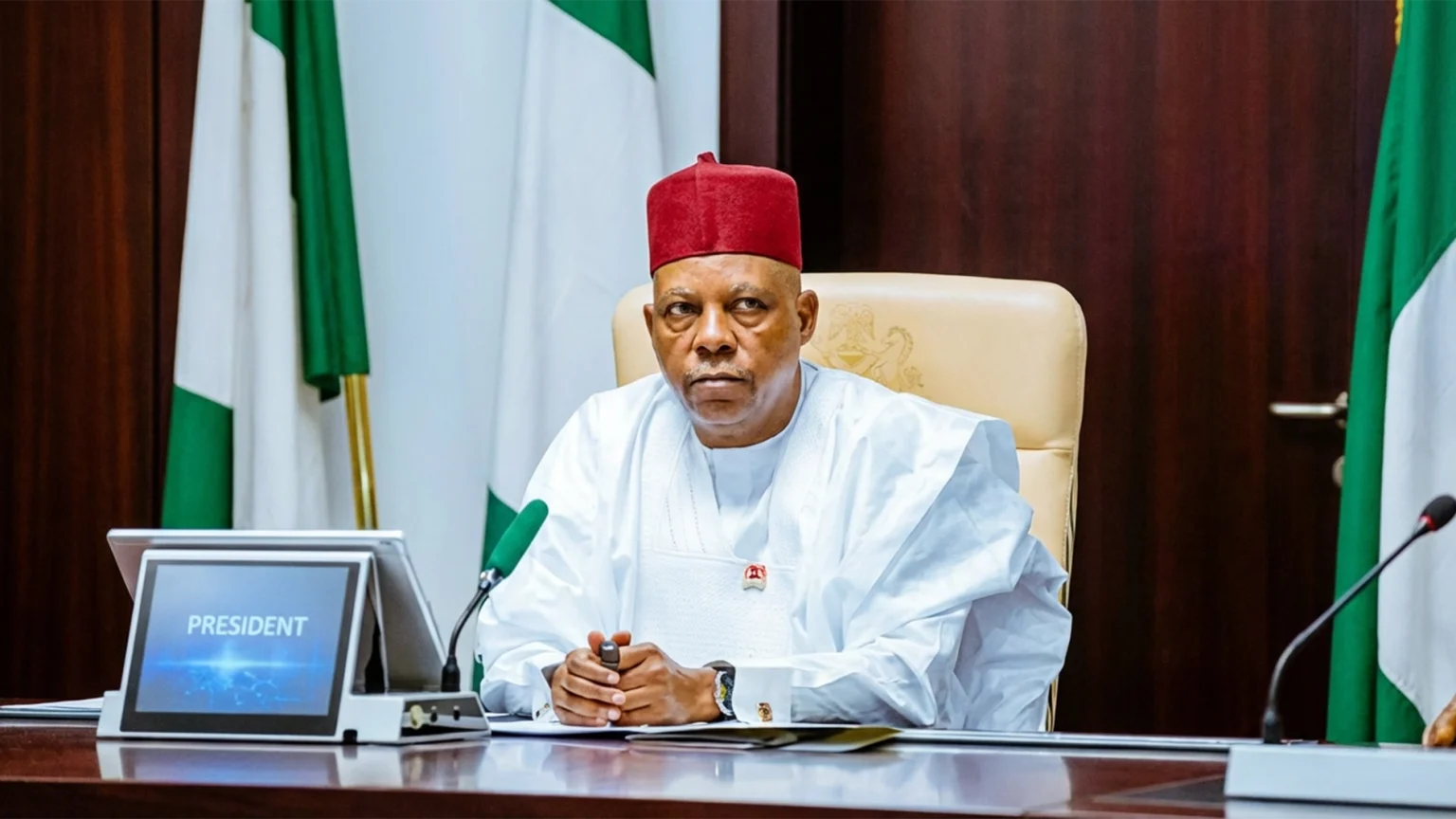
Vice President Kashim Shettima on Wednesday said the sweeping economic reforms initiated by President Bola Tinubu are rebuilding the critical foundations of Nigeria’s economy to empower states as viable centres of growth and investment.
According to him, the administration’s restructuring agenda is designed to reduce dependence on the federal government by strengthening subnational economies through fiscal reforms, increased state allocations, energy sector liberalisation, tax reforms and improved investment coordination.
Speaking at the Nasarawa Investment Summit 2026 in Lafia, the Vice President said the reforms were already positioning states to become engines of enterprise, industrialisation and policy innovation.
“At the national level, we are rebuilding the pillars every state depends on: energy reliability, fiscal balance, tax reform and a single digital gateway for investment,” Shettima said.
“The ongoing power sector reforms are opening new paths for state participation. Federal projects connected to the Ajaokuta-Kaduna-Kano gas pipeline and the Abuja industrial corridor will complement Nasarawa’s Gas Master Plan and position this region as a critical energy hub.”
He said the Tinubu administration deliberately placed states at the centre of its economic reform agenda because countries that achieve rapid development are driven by strong federating units.

“All over the world, nations that move fastest are powered by strong federating units, and Nigeria is embracing that truth as our subnationals become centres of enterprise, policy innovation and industrial energy,” he stated.
Shettima added that the reforms had created greater fiscal and policy space for states to plan, build infrastructure, attract investments and respond more effectively to the needs of their citizens.
“States now have greater room to think, to build, to invest and to respond to the needs of their people with renewed confidence,” he said.
The Vice President explained that the emerging relationship between the federal government and the states is anchored on fiscal responsibility, competitiveness and reform-driven governance.
“What Nasarawa State pursues here aligns with the national direction set by our courageous and reform-minded leader, President Bola Ahmed Tinubu. Across the federation, we are laying the foundations for an economy that rewards production, protects enterprise and gives our states the room to become engines of growth,” he added.
On the “Lafia Declaration” adopted at the summit, Shettima described it as more than a ceremonial document, saying it represents a public commitment to continuity in governance and investment policy.
He said: “The Lafia Declaration is an economic covenant, a public assurance that Nasarawa’s progress will outlive elections and endure beyond personalities.”
Highlighting gains recorded from the administration’s economic reforms, the Vice President said investor confidence in Nigeria was gradually rebounding.
According to him, capital inflows rose from $12.32 billion in 2024 to $23.22 billion in 2025, while the equity market posted a 51.19 per cent return in 2025, with market capitalisation hitting N99.38 trillion.
“Investors are beginning to read Nigeria again as a country willing to correct itself, a country prepared to take difficult decisions in defence of its future. Capital follows credibility, stability and direction,” he said.
Shettima also commended the Nasarawa State Government for aligning its development policies with the Renewed Hope Agenda through initiatives such as the establishment of the Nasarawa State Investment Development Agency (NASIDA), the One-Stop Investment Centre, the State Electricity Regulatory Commission and the Nasarawa Infrastructure Fund.
Earlier, Governor Abdullahi Sule said the investment summit was convened to reinforce investor confidence by emphasising policy continuity, institutional stability and predictable governance.
According to him, the summit demonstrates that governance reforms and development policies in the state are anchored on enduring institutions rather than individual political actors.
“The summit represents a critical moment for aligning political leadership, institutional actors, investors and citizens around a shared vision of a prosperous and resilient Nasarawa State,” Sule said.
Minister of Budget and Economic Planning, Senator Abubakar Bagudu, noted that reforms must remain dynamic because of the constantly evolving global economic environment.
He praised President Tinubu and Vice President Shettima for managing the economic disruptions associated with the reform programme, saying the benefits were beginning to manifest across states.
“I think it is the benefits of that disruption that are enabling states like Nasarawa to achieve what they have achieved,” Bagudu stated.
Also speaking, Minister of Industry, Trade and Investment, Dr Jumoke Oduwole, said the Tinubu administration had undertaken bold reforms over the past two years to stabilise the economy and improve the investment climate.
She reaffirmed the federal government’s commitment to partnering with states to attract investments, strengthen local supply chains and connect domestic production to global markets.
Managing Director of NASIDA, Barrister Ibrahim Abdullahi, disclosed that the agency had attracted over $2 billion in investments into Nasarawa State, adding that the summit was organised to sustain and deepen investment inflows into the state.

