 Follow Us on Google News
 Follow Us on Google Discover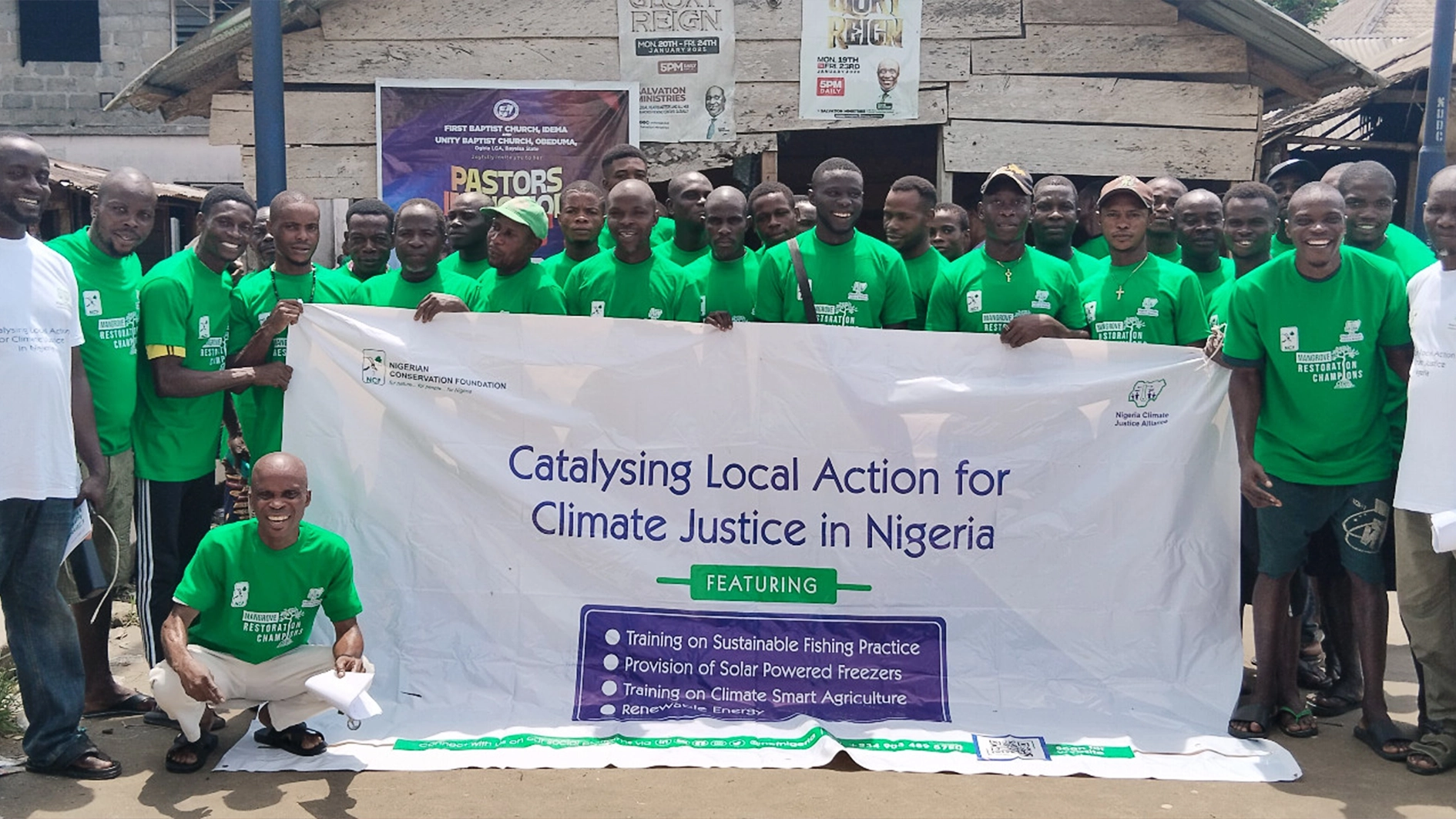
As communities continue to experience the growing impacts of climate change, the Nigerian Conservation Foundation (NCF) has commenced a targeted intervention to strengthen resilience, improve livelihoods and promote biodiversity conservation in the proposed Edumanon National Park, Bayelsa State.
The initiative, supported by the Ford Foundation, targets Idema, Obeduma and Eboh communities and integrates Climate Smart Agriculture (CSA), women-led economic empowerment, youth participation in forest restoration and stronger community governance systems.
The programme seeks to establish a holistic grassroots model for climate action by linking environmental protection with improved livelihoods and sustainable resource management.
Speaking on the project, Director General of NCF, Dr Joseph Onoja, said lasting conservation outcomes are more achievable when communities are equipped with the knowledge, tools and opportunities to participate meaningfully in protecting their environment.
“This intervention reflects NCF’s commitment to supporting people-centred approaches that promote both environmental sustainability and resilient livelihoods.
“It also demonstrates how integrated community-based approaches can address environmental and socio-economic challenges. By combining agriculture, forestry and governance, the programme supports climate resilience while improving livelihoods,” he said.

Project Officer, Mr Shittu Usman, explained that the initiative was designed to build a strong foundation for community-led climate resilience by combining livelihood support, conservation efforts and local governance. “Through continuous engagement and capacity building, we hope to encourage long-term sustainable practices across the communities,” he said.
According to him, 100 community members, including men, women and youths, were trained in CSA practices covering sustainable land preparation, crop diversification, soil fertility management and climate-resilient farming techniques.
To support practical application, 1,000 improved plantain suckers were distributed across the three communities, while demonstration farms were established as learning centres where farmers could observe and replicate improved practices to increase yields and adapt to climate variability.
Chairman of the Community Development Committee (CDC), Mr Leslie Odu, said the programme had increased awareness among residents on the importance of conservation and sustainable resource management.
“The engagement with local leaders is also encouraging stronger community participation in protecting our forests and mangroves for future generations,” he said.
Recognising the role of women in food production and household nutrition, NCF trained 40 women in vegetable gardening techniques. The training focused on small-scale, high-yield production methods, the use of organic manure and efficient water management practices.
A community leader, Mrs Rose Ebufu, said the vegetable gardening training had equipped her with new knowledge and skills that would improve food production and create additional income opportunities.
The project also engaged young people as key drivers of environmental restoration, with 40 youths trained in forest tree nursery development and management, including seed selection, germination and transplanting techniques.
Following the training, the youths successfully raised 40,000 tree seedlings within a few weeks. The seedlings will be used for future planting in degraded forest areas to support reforestation, carbon sequestration and long-term ecosystem restoration.
Beyond livelihood support and restoration activities, the project also focused on strengthening community governance through dialogue sessions with traditional and religious leaders on mangrove protection, sustainable resource use and preventing illegal exploitation of forest resources.
A major outcome of the engagement was the commitment by community leaders to develop and enforce local by-laws aimed at protecting forest ecosystems, strengthening ownership and ensuring the sustainability of conservation efforts.
Participants also received improved vegetable seeds, including okra, tomato and pumpkin, as part of efforts to enhance household nutrition, improve food security and provide additional income opportunities for women and their families.

