 Follow Us on Google News


 Follow Us on Google Discover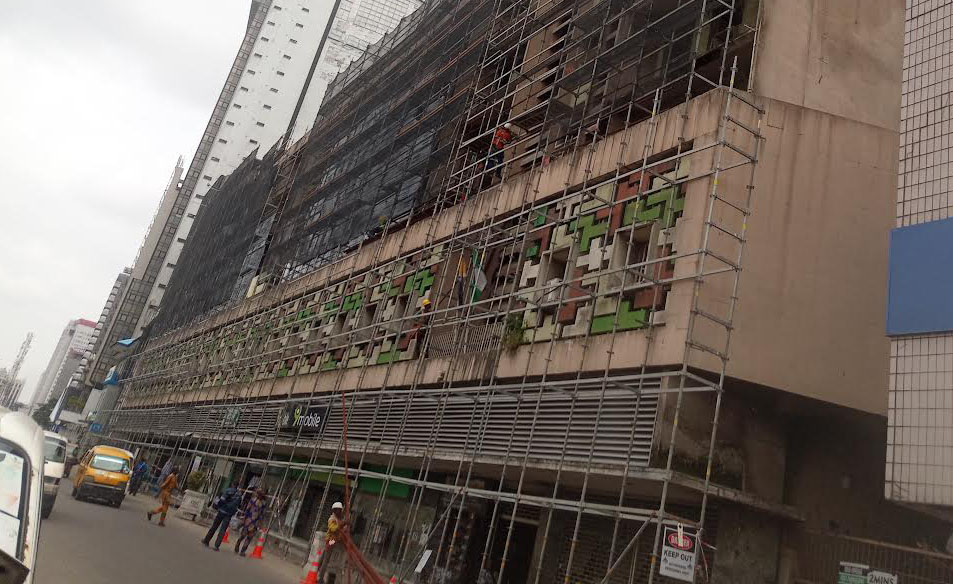

PHOTO: CHINEDUM UWAEGBULAM
Following the growing demand for standard warehouses by logistics companies, enterprises and multinationals in cities, the industrial market is facing acute shortage of state-of-the-art facilities and investors are opting to erect new warehouses in the outskirts, VICTOR GBONEGUN reports.
As importers and logistics companies stockpile goods to hedge against inflation and skyrocketing exchange rate problems, there are growing space constraints to stash the merchandise in most populous cities in the country.
[ad]
The shortage of commercial warehouse and industrial space is the latest fallout from retailers, e-commerce businesses and distributors of major manufacturing companies, who are stockpiling goods as measures to ensure they don’t run short on inventory and sustain profitability.
The Guardian learnt economic uncertainty combined with building materials’ cost and high interest rates on commercial loans, have prompted some developers to give up plans for new warehouse construction. While in some cities, such as Port-Harcourt, Abuja, Kaduna, Ibadan, and Lagos, the demand for distribution centres has continued to offer some investors strong investment opportunities.
In Port-Harcourt, many companies are choosing to diversify warehouse locations, by constructing new warehouses in outskirts, as there has been scarcity of land to erect new warehouses in industrial locations. Whereas, in Lagos, most of the existing ones have become obsolete and others have been converted to churches, banks and shopping malls.
A recent report released by the Oxford Business Group revealed that retail sales hit a whopping $22 billion figure globally, with online shopping figures accounting for a major part of this figure. In Nigeria, the growth of online platforms such as Jumia, Konga, Yudala, Pentagon sea, GadaAfrica, Payporte, V-connect, Kara, Fashpa, Gloo.ng, Wakanow, and others have pushed the frontiers for internet businesses, through which operators could get about 400,000 online orders in 24 hours.
According to Knight Frank report 2023, there is a persistent need for top-tier warehouses across Africa, as demand remains unmet in most nations, consistently surpassing the available supply. The report, entitled: ‘The key drivers influencing prime warehousing demand in Africa’, emphasised long-standing inadequacy of high-quality warehousing in Nigeria, where many multinational corporations opt to conduct their operations in self-owned, purpose-built facilities in Ikeja, Sagamu, and Agbarawe.
[ad]
The Guardian investigation revealed that the average price of warehouses for rent in Lagos starts from N12 million to N15 million yearly. However, the most expensive warehouses are above N3, 000,000 yearly, on location, sizes and facilities.

Findings show that most industries that need large warehouses demand 500 to 1, 000 square meters space and at most 2,000 square meters used for storage of goods. Locations such as Trans Amadi in Port-Harcourt, Idu district in Abuja, Lagos-Ibadan ExpressWay, Ogba, Agbara, Oregun, Oyingbo, Lasuda-Ogun, Ikeja, Isolo and Gbagada, Oshodi- Apapa, boast of both of many of obsolete and very few modern warehousing facilities.
The Chief Executive Officer, Sonedis Logistics, Dr. Solomon Aigbavboa, said the warehousing market size, which had a yearly growth rate of 11 per cent, is predicted to be worth $170 million by end of 2023.
Aigbavboa said: “For the increasing demands for logistics for agro products, fast-moving consumer goods, and emerging specialised markets, such as cold chain facilities in pharmaceuticals, there is a greater corresponding amount of returns. This means that the logistics arm of real estate is an area for the government and private sector to look into and invest in, to send a clear signal to the real estate sector.”
Giving perspectives on the development, Chairman, Nigerian Institution of Estate Surveyors and Valuers (NIESV), Rivers State, Mr. Hamilton Odom, confirmed the scarcity of warehouses in major industrial locations in the city due to scarcity of land to erect such facilities.
He explained that with the rise in e-commerce and retail activities, Port-Harcourt is in dire need of warehousing, adding that there is a shortfall in supply. Odom said one hardly finds vacant warehousing within the industrial market as current rent for available warehousing is as high as N15, 000 per square metre, while in other cases it could be quite higher.
He said: “Land is no longer there for expansion but people are moving towards the Eleme axis, Obigbo and the refinery. The challenge there is that the roads in those areas, especially the East-West road, are in a terrible state. That is part of the reasons companies are not branching out. Everybody wants to be in the centre.
“Demand is high while the supply is limited. The challenge we have is that the industrial area, Trans Amadi, is not so big with 2, 500-acres size and I think there is a lack of infrastructure in terms of expansion of industrial accommodation. When there is no infrastructure in other areas, there could be a problem. For now, everyone wants to be in Trans Amadi.”
Former NIESV Lagos branch Chairman, Dotun Bamigbola, said in Lagos, the issue revolves around the fact that existing warehouses in industrial locations may not be up to standard or lack some basic modern facilities like Closed Circuit Television (CCTV) sprinklers and others, which are requirements by firms, who need warehouses.
[ad]
Another estate surveyor and valuer, Abraham Akinropo, emphasised that because of the new requirements in the service sector, many of existing warehouses are becoming obsolete in terms of height and other conditions.
He said: “Most of the old warehouses are always single volumes but currently because of the service sector requirements, they are requested to be double volume. With the condition and the materials used to build some of them, a lot of the new warehousing has to come with certain building condition codes and requirements like the type of roof, which will give allowances for natural lighting and indoor air quality.”
The President, International Real Estate Federation (FIABCI), Mr. Gladstone Opara, said e-commerce innovations have sustained the growth in warehousing amid the downturn in the economy affecting industrial and manufacturing activities.
He argued that e-commerce has revolutionised almost all aspects of life including real estate in general and everybody has come to embrace it.
Opara said: “What is happening in warehousing and industrial property business reflects the economy. For some years, there was a slump in demand because businesses were not growing and there was no funding support from government and banks.”
However, the former Chairman, NIESV Faculty of Real Estate Consulting, Mr. Niyi Fadoju, said the impact of e-commerce and retail on demand for warehousing in locations like Abuja is minimal due to the low population.
He said: “There was a time when Amazon had its warehouse in Abuja; Konga shipped many products from Lagos to Abuja rather than having warehouses to store those goods in Abuja. Maybe that is due to the fact that they have retailers.
“Abuja is well planned and there are areas zoned for warehouses and that is basically the Idu industrial district. That area because of its nature is deserted at night. So, if goods are stored there, there could be security risks. The closer warehouses are to the city, the more secured it is likely to be. There could be security concerns for limited supply of warehouses.”
[ad]

