 Follow Us on Google News


 Follow Us on Google Discover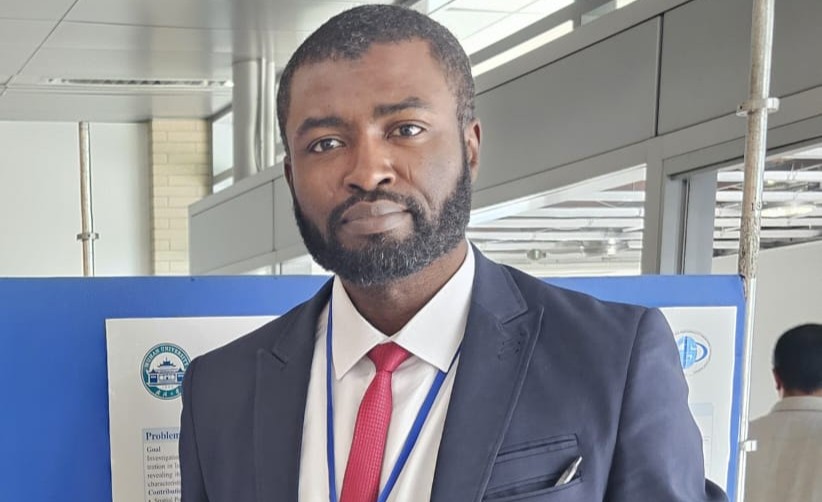
By Racheal Olatayo
As Nigeria’s tropical cities become denser and hotter, a new wave of climate-smart urban planning is emerging—spearheaded by geospatial expert and environmental researcher, Michael Ekwe. Through his cutting-edge research on urban microclimates, Ekwe is demonstrating how the precise design of urban green spaces can dramatically cool down Nigeria’s scorching cities.
The Cooling Power of Green Parks
In his recent study, “Assessment of Green Parks Cooling Effect on Abuja Urban Microclimate Using Geospatial Techniques,” Ekwe provided compelling scientific evidence that urban parks do more than beautifying a city—they act as natural air conditioners and coolants.
Using satellite thermal data and geospatial analysis tools, Ekwe analyzed temperature differences between green areas and surrounding built-up zones in Abuja, Nigeria. His findings were clear: green parks consistently recorded significantly lower surface temperatures, offering a powerful buffer against urban heat intensity.
“Cities like Abuja are heating up not just because of climate change, but also because of how we’re building them,” Ekwe said. He further emphasized that “green spaces are not a luxury; they are essential infrastructure for climate resilience.”
Design Matters
When asked, do all green spaces provide the same cooling benefits in urban areas? He stated that not all green spaces are equally effective. Ekwe’s research highlights the importance of green space design, including the size, shape, and spatial distribution of parks. According to him, large, well-connected green areas offer better cooling effects than small, scattered patches. He further highlighted that tree canopy density, vegetation type, and proximity to residential zones also play a role. He advocates for city planners to move beyond simply planting trees and focus on strategic urban greening, where the layout and purpose of green infrastructure are tailored to reduce local temperatures, improve air quality, and boost public health.

Ekwe pointed out that integrating well-planned green parks into city design—especially in high-density neighborhoods—could significantly cool down urban cores and enhance liveability for millions of people.
A Call to Action
Michael Ekwe is calling on the government, urban policymakers, architects, and environmental planners to rethink the design of cityscapes. “The heat crisis is real, but it’s also preventable,” he said. “By investing in well-designed green infrastructure, Nigerian cities can be cooler, healthier, and more livable for future generations”, he further stressed. As the climate continues to change, Ekwe’s work offers a clear and actionable roadmap: cooler cities through greener planning.

