 Follow Us on Google News


 Follow Us on Google Discover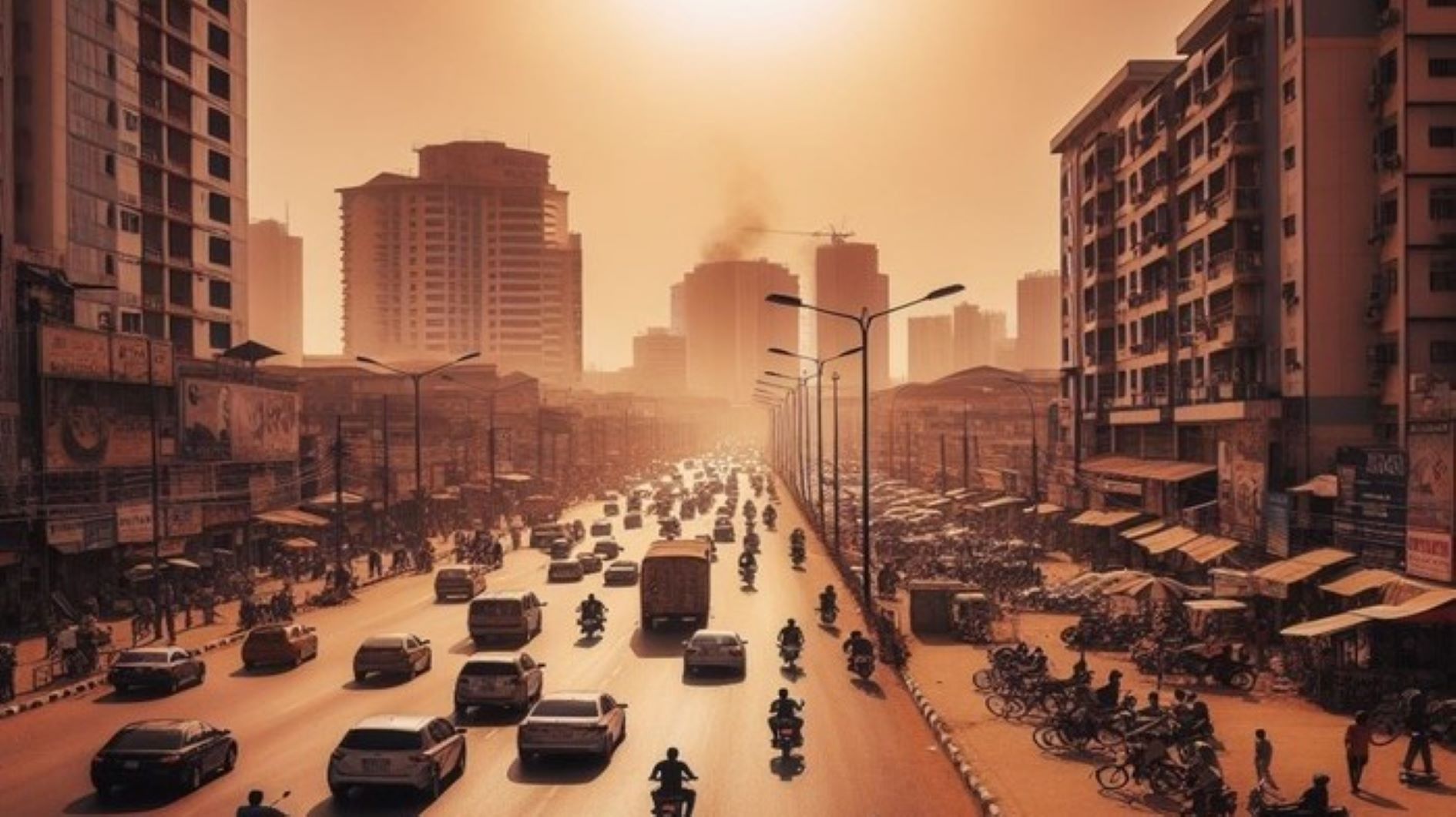
Climate experts have attributed the rising frequency and intensity of heat waves in Nigeria largely to climate change, warning that the trend is already reshaping environmental and socio-economic conditions across the country.
Data from the Nigerian Meteorological Agency indicate a steady rise in average temperatures over recent decades, accompanied by more frequent episodes of extreme heat.
In northern cities such as Sokoto and Kano, temperatures now regularly exceed 40 degrees Celsius during the dry season. Further south, in Lagos, rising humidity is compounding the effect of heat, creating conditions that many residents say feel more oppressive than in previous years.
At the centre of this trend is global warming, driven by greenhouse gas emissions from human activities. These emissions trap heat in the atmosphere, gradually increasing global temperatures and altering climate systems. For Nigeria, this has translated into longer dry seasons, more erratic rainfall, and a higher likelihood of prolonged heat waves.
Climate scientists note that even marginal increases in average temperature can significantly raise the frequency and intensity of extreme heat events, particularly in tropical regions.
Urbanisation is compounding the problem as in rapidly expanding cities such as Abuja and Lagos, natural land cover is being replaced by concrete, asphalt, and dense infrastructure. These materials absorb heat during the day and release it slowly at night, creating what experts describe as an urban heat island effect. This means that cities are not only hotter during the day but also remain warm well into the night, reducing opportunities for relief and increasing discomfort for residents.

The implications are already being felt across multiple sectors. In public health, rising temperatures are contributing to an increase in heat-related illnesses, including dehydration and heat exhaustion. Vulnerable populations, particularly children, the elderly, and those who work outdoors, face heightened risks. For millions of Nigerians in the informal sector, where work is largely conducted under the open sun, extreme heat is also reducing productivity and income.
An environmental lawyer, Huzi Mshelia, explained that while natural climate variability still plays a role in short-term fluctuations, long-term temperature records and regional observations point to a sustained warming trend consistent with global climate projections driven by increased greenhouse gas emissions. “This has resulted in more frequent, prolonged, and intense heat extremes, particularly over the past two decades,” he said.
According to him, the impacts of rising temperatures vary across regions. Northern Nigeria, especially the Sahel and Sudan savannah zones, is experiencing the most severe heat conditions, with temperatures often exceeding 40 degrees Celsius, alongside longer heat waves and warmer nights.
These conditions are worsened by desertification, land degradation, and declining vegetation cover.
In the North-Central region, rising temperatures are combining with erratic rainfall patterns to intensify heat stress on agriculture, water resources, and rural livelihoods. The area is also witnessing longer dry spells and a delayed onset of rains.
In Southern Nigeria, although temperatures may be relatively lower, high humidity significantly increases the heat index, making conditions more dangerous. Major cities such as Lagos and Port Harcourt are increasingly affected by urban heat island effects, where dense infrastructure and limited green spaces trap heat and elevate temperatures, especially at night.
Mshelia noted that rapid urbanisation is further amplifying heat exposure across the country, as expanding concrete surfaces, reduced vegetation, and higher energy consumption drive localised temperature increases compared to rural areas. He warned that prolonged heat waves are already having far-reaching impacts on public health, livelihoods, and agricultural productivity.
“Heat stress, dehydration, and heatstroke cases are rising, particularly among vulnerable groups such as children, the elderly, and outdoor workers,” he said. “High temperatures, especially when combined with humidity, also worsen respiratory conditions and increase the risk of infectious diseases.”
On livelihoods, Mshelia said extreme heat reduces labour productivity in sectors such as agriculture, construction, and the informal economy, while also driving up energy demand for cooling, thereby increasing household costs and pressure on the power sector.
He added that agriculture is particularly vulnerable, with prolonged heat leading to crop stress, reduced yields, and increased risk of crop failure, especially for staples such as maize and rice. Livestock production is also affected due to heat stress and water scarcity, posing a threat to food security and rural incomes.
Despite Nigeria’s progress in establishing a broad climate policy framework, Mshelia noted that the country has yet to develop targeted strategies for extreme heat events. He acknowledged existing frameworks such as the Climate Change Act (2021) and the National Climate Change Policy (2021–2030), as well as institutional coordination through the National Council on Climate Change. However, he said these frameworks remain largely general and do not adequately address heat waves as a distinct and growing risk.
“There is currently no dedicated National Heat Action Plan, and early warning systems for extreme heat remain limited,” he said. “There is also weak integration of heat risk into urban planning, labour policies, and public health preparedness.”
Mshelia, who is also the Chairman of the Board of Directors, International Centre for Energy, Environment, and Development (ICEED), called for urgent government action, including the development of a National Heat Action Plan to establish heat thresholds, early warning systems, and coordinated emergency responses across all levels of government.
He also stressed the need to strengthen data and early warning systems by integrating meteorological information with health surveillance, as well as providing real-time heat alerts to vulnerable communities. Other key measures he recommended include promoting climate-resilient urban planning through the expansion of green spaces, the adoption of cool roofing technologies, and improved housing design to reduce heat exposure.
He further urged the government to enhance public health preparedness by training healthcare systems to manage heat-related illnesses and launching nationwide awareness campaigns on heat safety.
To protect vulnerable populations, he advocated for the introduction of heat safety guidelines for outdoor workers and the adjustment of working hours during extreme heat conditions.
Mshelia also emphasised the importance of integrating heat risk into broader national policies, including climate commitments, agriculture, energy, and disaster risk management frameworks.
According to him, while Nigeria’s climate policy architecture provides a strong foundation, it must be strengthened with targeted interventions to address the growing threat of extreme heat.
“Developing a comprehensive, well-funded National Heat Action Plan backed by reliable data and local implementation is critical to protecting public health, livelihoods, and economic productivity in the face of rising temperatures,” he said.
Also, the Chairman, Board of Directors, Nigerian Environmental Study/Action Team (NEST), Prof. Chinedum Nwajiuba, called for stronger scientific evidence and coordinated policy responses to address the growing risks associated with extreme heat in Nigeria.
Speaking on concerns over rising temperatures and heat waves, Nwajiuba noted that while climate change is fundamentally driven by increasing global temperatures, there is insufficient local data to conclusively establish a rise in the frequency and intensity of heat waves across the country.
“The main driver of climate change globally is the rise in average temperature above pre-industrial levels. Temperature and climate change are foundational,” he said. “While people may express concerns about increasing heat waves, we need long-term data to compare present conditions with those of at least the past three decades before drawing firm conclusions.”
He, however, pointed to earlier studies, including the Building Nigeria’s Response to Climate Change (BNRCC) project implemented by NEST, which showed a steady rise in temperature, particularly in the northeastern region of the country.
Nwajiuba, a former Vice Chancellor, Alex Ekwueme Federal University, Ebonyi State, explained that although rising temperatures are linked to climate change, they are not identical to heat waves, which require specific scientific assessment to determine trends in frequency and intensity.
On regional vulnerability, he identified Nigeria’s Northeast as the most exposed to extreme heat, based on previous scientific studies, while stressing the need for updated, large-scale research to reflect current realities.
According to him, factors such as urbanisation, deforestation, and geography significantly contribute to heat vulnerability. Rapid urban expansion, he said, often replaces natural land cover with concrete surfaces that absorb and retain heat, while increasing population density drives higher energy consumption and carbon emissions.
“Urbanisation leads to changes in land surface and increased use of fossil fuels, both of which contribute to rising temperatures. Geography also plays a role, depending on a location’s position on the globe,” he added.
The NEST chairman warned that prolonged heat exposure poses serious risks to public health, ecosystems, and economic activities, particularly agriculture. “Heat has adverse impacts on human health and affects both plant and animal systems. Crop performance can decline, livestock productivity may suffer, and this ultimately affects livelihoods,” he said.
He added that extreme heat could also reduce agricultural productivity, noting that farmers may need to adopt heat-resistant crop varieties and adjust livestock management practices to cope with changing conditions.
On policy preparedness, Nwajiuba said Nigeria’s response to extreme weather events is currently embedded within the framework of the National Emergency Management Agency (NEMA) but noted the absence of a clearly defined national policy specifically addressing heat waves.
“To some extent, the existing emergency response framework covers such issues, but I am not aware of a specific national policy focused on heat waves,” he said. “There may be a need for NEMA to develop a dedicated national response framework for extreme heat events.”
He emphasised the need for renewed scientific research, urging stakeholders to undertake comprehensive climate studies comparable in scale and depth to the BNRCC project, which produced Nigeria’s National Adaptation Strategy and Plan of Action on Climate Change (NASPA-CCN). According to him, such efforts are critical to generating reliable data that can guide policy decisions and strengthen Nigeria’s capacity to respond to climate-related risks.

