Location remains the ultimate driver of home prices in Nigeria, with geography, neighbourhood context, and accessibility often outweighing building quality or size. Experts note that proximity to commercial hubs, job centres, and transport corridors drives demand, while reliable infrastructure, including roads and other facilities, further enhances property value, CHINEDUM UWAEGBULAM reports.
For decades, real estate professionals have repeated the old mantra that location is the most powerful force shaping home prices in the country.
In Nigeria’s turbulent property market, where inflation, currency fluctuations, and construction costs continually push prices upward, the phrase rings even truer in major cities, where a home’s location often determines more than half of its value.
As urbanisation accelerates and cities expand outwards, the influence of location on housing prices has become sharper and more visible. While architectural style, finishing, and building quality matter, experts argued that geography and neighbourhood context remain the greatest determinants of market value.
Today, the price gap between premium and ordinary locations has widened more than at any time in the past decade. A three-bedroom flat in Lekki Phase 1 can sell for ten times the cost of a similar unit in Abijo or Sangotedo.
In Abuja, a two-bedroom apartment in Maitama may cost ten times what a comparable property in Lugbe commands. The divide, experts add, reflects deep inequalities in access to infrastructure, amenities, and opportunities.
Proximity to jobs drives demand
One of the strongest price drivers in major Nigerian cities is closeness to business districts and job centres. In Lagos, homes near Victoria Island, Ikoyi and parts of Lekki attract strong demand from corporate executives, expatriates and foreign missions. These areas serve as magnets for investors because they reduce commuting time in a city known for gridlock.
Estate surveyors agreed that centrality consistently commands a premium. “People will always pay more to live close to work,” says a Lagos-based valuer. “The more traffic worsens, the higher the value of central locations becomes.” Abuja exhibits the same trend as properties in the Central Area, Asokoro and Wuse II continue to sell at premium prices despite the general slowdown in the economy.
Infrastructure shapes neighbourhood destiny
Beyond centrality, transport infrastructure is another powerful determinant of property value. Good road networks, effective drainage, multiple access routes, and proximity to public transportation can increase home prices by 15 to 40 per cent, depending on the region.
Developers note clear examples across the country. The completion of the Lekki–Epe Expressway in the early 2010s ignited a massive rise in land and housing prices from Lekki Phase 1 to Awoyaya.
Similar patterns are visible around the FCT’s Airport Road corridor, where improved road networks made communities such as Lugbe, Kuje and Idu more attractive to middle-class buyers.
For instance, areas like Ajegunle, Alaba, or Ikorodu remain much lower in value due to infrastructural strain and congestion. A valuation on Admiralty Way in Lekki, where a commercial shop is rented for nearly N25 million yearly, will differ from Okokomaiko, where a bigger shop barely attracts N1.5 million.
All these scenarios confirm that neighbourhood features directly drive price variation even within the same city, sometimes more strongly than the size or quality of the building itself.
However, when infrastructure fails, values suffer. Numerous neighbourhoods in Lagos, Rivers and Anambra states have seen property prices stagnate or decline due to perennial flooding, traffic congestion or deteriorating access roads. Even new estates are not immune, as parts of Lekki Phase 2 and Ajah have seen rental values flatten despite fresh construction due to worsening travel time and flooding concerns.
Security and neighbourhood perception
Also, security remains a top priority for most homebuyers. Areas with strong private or government-backed security, street lighting, and controlled access often command higher prices. In Lagos, gated estates in Magodo, Omole and parts of Ikeja GRA are notable examples. In Abuja, places like Jabi and Gwarimpa benefit from both formal policing and estate-level security.
In Lagos, neighbourhood features are even more decisive. Areas like Ikoyi, Victoria Island, Lekki Phase 1 and Ikeja GRA command extraordinary premiums because of high-grade roads, security infrastructure, corporate clustering and quality drainage, although the latter is still imperfect.
But experts said pricing is not only tied to actual safety, but it is also tied to perceived safety. Once a neighbourhood gains a reputation for calmness, exclusivity or orderliness, values stabilise and rise. The reverse is also true that neighbourhoods that suffer unrest, rising crime or gang activity experience sharp declines in demand.
Social amenities push prices upward
The availability of good schools, hospitals, supermarkets, recreation centres and reliable utilities has also become a major price determinant. Families pay attention to school clusters. Neighbourhoods hosting established private schools or international institutions often witness higher demand.
The presence of retail hubs and green spaces adds another layer of desirability. In Lagos, estates close to malls in Oniru, Ikeja or Sangotedo see higher rental and capital values, while areas lacking basic amenities, water supply, waste management or reliable electricity, struggle to attract buyers despite new developments.
Environmental risks now shape buyer decisions
As climate risks worsen, the environmental profile of a neighbourhood increasingly dictates pricing. Flood-prone areas, coastal zones vulnerable to sea-level rise, or neighbourhoods without drainage infrastructure now face buyer resistance.
Experts said the impact is visible in the Lekki–Eti-Osa corridor, Isheri North, parts of Port Harcourt’s waterfront areas and some communities along the Ogun River. Even when homes are well-built, repeated flooding scares off potential buyers and depresses rental values.
Conversely, locations on higher elevation or with access to waterfront views, Ikoyi, Banana Island, Osborne or highland zones in Jos and Enugu, retain premium pricing.
Government policies and planning uncertainty
In fact, urban planning decisions, zoning enforcement and land administration policies also shape market value. Effective planning aids investor confidence. But ambiguous land titles, inconsistent approvals or sudden demolition exercises make buyers cautious.
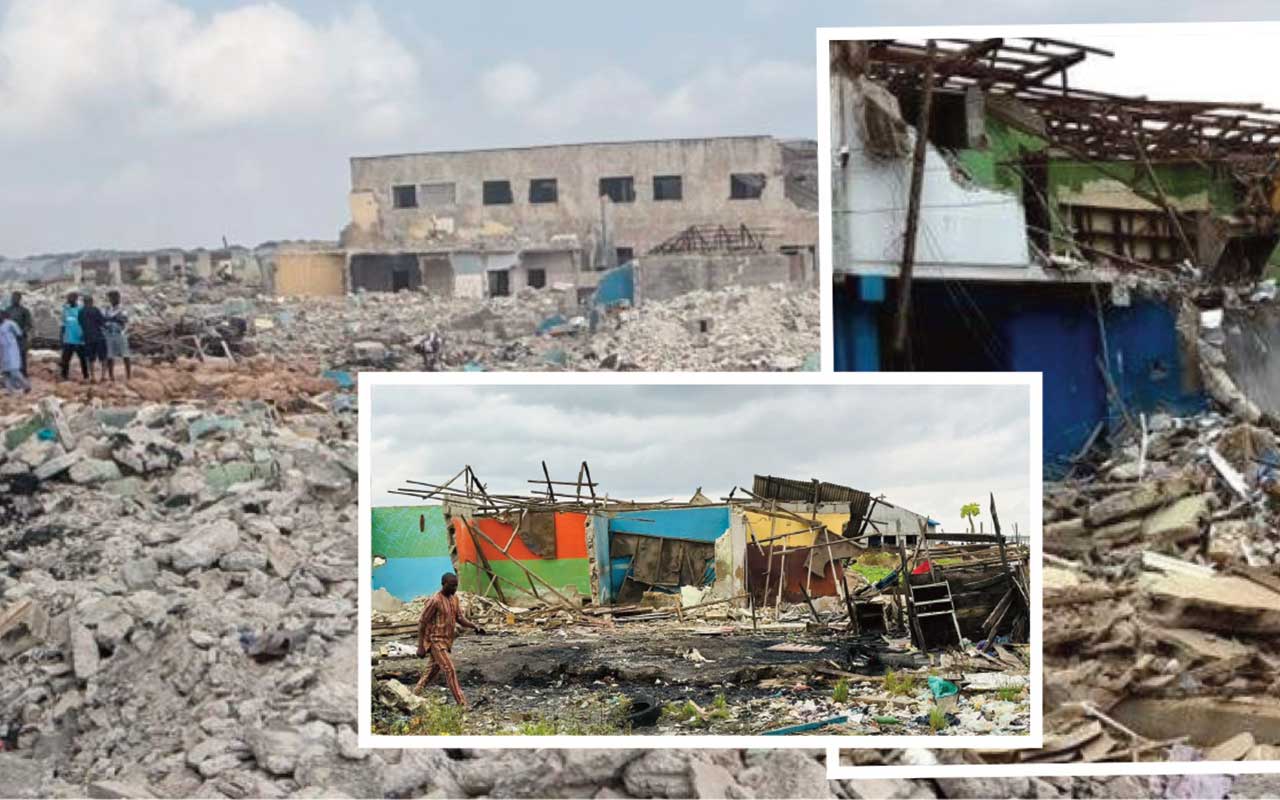
Recent demolition campaigns in Lagos, Kano and parts of the FCT have shaken confidence in certain districts. Real estate practitioners argue that even when government actions fall within legal boundaries, the lack of clarity on planning rules reduces the attractiveness of some locations.
Where planning is predictable, values rise. Eko Atlantic, Alaro City and certain parts of Ibadan’s New Bodija and GRA zones benefit from clear master plans that give investors a sense of long-term stability.
The power of prestige and community identity
Also, some locations carry brand value. For instance, Ikoyi, Banana Island, Asokoro, Maitama and GRA neighbourhoods across Nigeria enjoy prestige that elevates prices beyond their physical attributes. Buyers are drawn not just to the homes themselves, but to the status the address confers.
Cultural or community-based preferences also influence neighbourhood pricing. Some districts naturally attract specific professions, religious groups or socio-economic classes, creating pockets of demand that reinforce higher price levels.
As cities expand and urban pressures intensify, experts expect the gap between premium and low-value locations to widen further. Rising fuel prices, worsening traffic and flooding, and stretched infrastructure mean households will continue to pay premiums for proximity, safety and convenience.
For developers, the message is clear that the most successful housing projects will be those aligned with infrastructure, climate resilience, and integrated community amenities.
In his submission, the First Vice President of the Nigerian Institution of Estate Surveyors and Valuers (NIESV), Mr Muhammad Bature, told The Guardian that real-life market behaviour reinforces the core valuation principle that location is the most powerful determinant of property value. He noted that two identical buildings with the same design, finishing and plot size can attract significantly different prices solely because of their locations.
Citing Kaduna as an example, he explained that a four-bedroom duplex in Unguwar Rimi GRA commands almost double the value of a similar house in Rigasa due to differences in security, infrastructure, neighbourhood perception, and proximity to quality schools, clinics and workplaces. “Buyers and investors do not simply purchase structures, they buy strategic advantages, accessibility, prestige and the risk profile of a location,” he said, adding that this applies across Kaduna, Abuja and Lagos.
Bature noted that environmental conditions also influence valuations. In Kaduna communities along the River Kaduna, such as Kakuri, Kigo Road Extension, Romi and Kabala West, seasonal flooding remains a recurring challenge. During inspections in 2022 and 2023, he observed homes with crack lines, damp walls and deteriorated access roads after heavy rainfall. Even where demand persists due to affordability, valuers must apply downward adjustments reflecting repair costs and future risk.
He said such environmental risks exert less pressure on values in the FCT, where planned layouts and infrastructure ensure consistent accessibility, stronger structural integrity and high market confidence.
According to him, valuers across major cities now incorporate environmental assessments, flood history, soil stability and climate-related risks into their analysis, making risk-adjusted valuation standard practice even in high-demand neighbourhoods.
Bature also stressed that government policies, planning, enforcement and infrastructural investment significantly shape long-term desirability.In Kaduna, road rehabilitation projects along Rabah Road, Nnamdi Azikiwe Expressway and the Kabala-Barnawa corridor have boosted land transactions, with land prices in Nariya almost doubling within two years.
However, delays in upgrading inner roads in Kakuri and Tirkania continue to slow appreciation in areas with strong commercial potential.
A past president of the Africa Chapter of the International Real Estate Federation (FIABCI), Mr Chudi Ubosi, emphasised that location remains the key determinant of property value. “Similar properties on the same street, one at the end, the other in the middle, can have vastly different values simply because of their location,” he said.
He noted that proximity to commercial hubs and security levels significantly influence pricing, while properties prone to flooding attract lower valuations.
Ubosi, the Managing Partner at Ubosi Eleh and Company, urged the government to invest in infrastructure, undertake repairs, and enforce planning regulations to support property values.
Echoing this, past Chairman of NIESV, Lagos branch, Mr Gbenga Ismail, said location drives value through multiple factors, including accessibility, road quality, traffic conditions, and proximity to central business districts and transport corridors.
Security features such as gated estates, surveillance, crime rates, and perceived safety also play major roles. He added that reliable infrastructure, stable power, water, drainage, sewage systems, waste management, and broadband further strengthen market confidence.
Ismail highlighted the importance of effective land administration, including efficient title registration, consent processes, and property regularisation. “Predictable taxation and moderate transaction costs encourage investment, while excessive charges dampen activity,” he said. He also noted that targeted urban renewal projects improve neighbourhood perception and attract private capital inflows.