 Follow Us on Google News


 Follow Us on Google Discover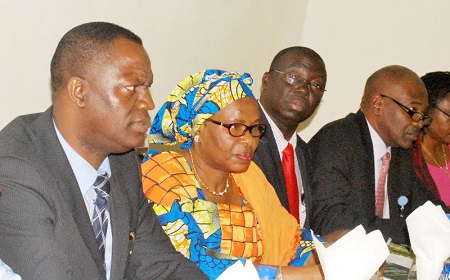

BARELY seven weeks to the international agreement at the United Nations climate change summit in Paris, Nigerian authorities have moved to enhance and strengthen the skills and knowledge of negotiators so that they can navigate international processes and positively influence outcomes of the climate change negotiations.
Under the programme, Federal government is educating the negotiators on Nigeria current position in the context on the United Nations Framework Convention on Climate Change (UNFCCC), which falls in line with African groups’ scheme that is based on equitable multilateral rules with strong link to fair access to sustainable financing.
African group proposes the use of a reference framework to reflect mitigation actions and adaption measures taken by the countries that would lead to equity. Nigeria wants to see a global objective for adaptation and a mitigation objective in the 2015 agreement to limit global warming to below two degrees compared with pre-industrial levels.
This position was unveiled through the Federal Ministry of Environment at a two-day training workshop for climate change negotiators organised by the Department of Climate Change in partnership with the United Nations Development Programme (UNDP) in Abuja, recently.
Making the government’s position known to the negotiators, the Permanent Secretary, Federal Ministry of Environment, Mrs. Nana Fatima Mede who opened the workshop, said: “We will therefore continue to stress in our negotiation the necessity for the developed country parties in the climate change process to come forward with ambitious scale of emission reduction both in the pre and post 2020 agreement.”
Mede noted that the training would help to strengthen the technical capacity of Nigeria in the development of actions that allow the mainstreaming of climate change into national and sectoral development goals. The Permanent Secretary urged the negotiators to ensure they make efficient and effective use of the programme and pledged to sustain the training process.

She used the programme to launch the National Policy on Climate Change, which the ministry developed to act as a guide in the implementation on climate change activities. According to her, the implementation is crosscutting and involves all sectors towards sustainable development of the country.
Mede also announced the approval and financial support by the Global Environment Facility (GEF) to develop its BUR. The BUR is a global mitigation architecture for the new agreement in Paris and the national documents are prepared and submitted yearly every tow years to the UNFCCC, taken into account the greenhouse gas emission level of all the sectors of the economy.
In his speech, the UNDP Country Director, Dr. Pa Lamin Beyai said: “we would like to see Nigeria and along with other African countries develop a common position to address climate change challenges and its adverse effects on her population’s livelihood.
“We need to develop a strong legal framework, with clear rules, a central role for equity and with very strong linkage to the 2015 Sustainable Development Goals. Hopefully, with these elements in the new deal, we are well on our way towards tackling the impacts of climate change on the continent.”
He disclosed that the development agency is supporting the event under its Climate Diplomacy programme. “The programme is aimed at increasing Nigeria’s presence and influence on international politics, notably within the UNFCCC framework, in a way that actively contributes to building the key conditions for successful mitigation and adaptation in the country,” Beyai said.
The Country Director told the negotiators that a strong deal will not only help Nigeria meet her international obligations, eliminate poverty, improve health and the living standards of the people, make agriculture a flourishing sector, but that it would also help increase investment opportunities, especially in clean and renewable energy solutions, and as well as develop the much needed human and institutional capacities to undergird these progress.
He canvassed for the establishment of a gender balanced core group of national negotiators, with increased capacity to support Nigerian climate negotiations; stated that the event “will foster deeper dialogue and cooperation across a network of national and subnational technical experts and leaders in the field of international relations, economic development, forestry, natural resources management, green economy, national development and financial planning.”

