 Follow Us on Google News


 Follow Us on Google Discover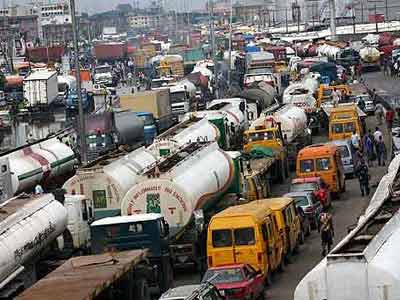
Only True, Not Almajiri Federalism Will Benefit State, Others’<em

THE goose that lays the golden eggs, Lagos State, is host to federal apparatuses that monthly send staggering sums of money into the national treasury. The state, however, is shortchanged by the federal government and deprived of vital funds that might have been used to revitalize its decayed infrastructure. Only last week, the Federal Executive Council approved a $200m World Bank loan for roads and other developmental projects in the state, being part of a $600 sum approved in 2010. But unless the federal government does more, allowing generated revenue to be used in renewing worn or overstretched facilities, it might unwittingly be killing the treasured bird.
Sprawling with ports, an international airport, headquarters of multinationals, pricy real estate, industries and a huge tax-paying base from its estimated 21-million strong population, Lagos is unarguably the powerhouse for public finance optimisation in Nigeria.
Touted as the fourth largest state by Gross Domestic Product (GDP) in Africa, coming just after Cairo, Johannesburg and Cape Town, Lagos is believed to be the only state that may survive without crude oiled federal allocations. It boasts of a highly diversified economy, attracting the best brains and hands around the country, to its strained public utilities.
But while its Internally Generated Revenue (IGR) in 2014 stood at N23bn monthly, expectedly topping other states in a recent data from the National Bureau of Statistics (NBS), Lagos is befuddled by difficulty in leveraging revenue from port operations in its domain, to solving its ever-increasing problems, chief of which are traffic congestion, insecurity and population explosion.
Also, the state’s inability to control Value Added Tax (VAT) earnings, which flow from its residents to the federal purse for ‘sharing’ with other states, has pitched it against the central government for years. This has also caused former governors of the state to demand fiscal federalism in order to pool resources directly from residents to pursue deep-rooted, capital-intensive infrastructural projects.

Not only has Lagos asked for a share from earnings from the ports, capped at about N2trn a year, it has also enacted a law on consumption tax, challenging the central government on why money from the state would siphoned at the centre while the state, which bears the brunt of activities that generate the funds, gets little in return.
Former governor of the state, Babatunde Fashola, had demanded from the Federal Government part of revenue generated from Apapa and Tin Can ports, as activities in the corridor put enormous pressure on the state’s roads and other facilities.
According to Fashola, who is now Minister of Power, Housing and Works, “Over N1tr was realised from the Apapa ports without a proportionate share given to the state, which owns the larger per cent of the roads used to haul goods within Lagos and to other states.
“There are only 117 federal roads in Lagos State: while the state owns 3, 028 roads, the local governments control 6,415. This shows that the roads used frequently for haulage business belong to the state and the local governments.
“Even the 117 federal government roads in the state, the state government has spent over N50bn in their maintenance and no one has paid back. The money was used to fix Apapa-Oshodi and other federal roads in the state.”
He spoke of Funsho Williams Road, a link to the ports: “Every two years, we commission Julius Berger Construction Company to repair the road, for it to serve its goal. If we hadn’t done that, the road would have followed the line of Apapa-Oshodi expressway that is almost impassable for residents. The central government distributed the revenue across to states that have no business with shipping and port operations in the country. These are the states that do not bear the pain of traffic and dilapidated roads caused by port activities.”
Lagos has also taken the federal government to task on the collection of Value Added Tax (VAT) and has passed what many say is a duplication of VAT—the Hotel Occupancy and Restaurant Consumption Law (HORCL) which places a consumption tax of five per cent on personal services enjoyed in a hotel or restaurant or event centre. Although the law has caused a long-drawn legal battle, it appears Lagos State is not resting until it gets back from the federal government a sizeable chunk of revenue generated from the state.
The state faulted how the federal government, through the Federal Inland Revenue Service (FIRS), handled VAT generated in the state and consequently redistributed the same throughout the federation. This rule was categorically written into the VAT Act (VATA).
According to Section 40 of VATA: “Notwithstanding any formula that may be prescribed by any other law, the revenue accruing by virtue of the operation of this Act shall be distributed as follows: (a) 15 per cent to the federal government; (b) 50 per cent to the state governments and the Federal Capital Territory, Abuja; and (c) 35 per cent to the local governments: provided the principle of derivation of not less than 20 per cent shall be reflected in the distribution of the allocation among states and local governments as specified in paragraphs (b) and (c) of this section.”
The state had sought to leverage its standing as the country’s commercial hub to review the enforcement of VATA. At the Supreme Court, last year, it won reprieve against the federal government on whether it was the government (through the Nigeria Tourism Development Corporation) or a state government that should regulate the operation of hotels or hospitality centres within a state.
“We would need to review revenue allocation and tax sharing formula so that states, like Lagos, would benefit from pressure on their infrastructure. Something, in the form of derivation, should be worked out for Lagos and other big states,” said Associate Professor of Economics and expert in Public Policy at the University of Lagos (UNILAG), Femi Saibu.
“For the consumption law, Lagos only sought fairness, because it had always been marginalised by the federal government in the past. But now that they are on the same page, things are likely to get better,” he said, stressing that states like Lagos, Rivers, Kaduna and Kano should get a larger share of what is generated in their domain and should be given special treatment because of the strategic roles they play as urban hubs.
As former political capital of Nigeria, Lagos State lost to Abuja the reputation of federal authority on December 12, 1991 when former Military President, General Ibrahim Babaginda relocated the federal seat to Abuja. But as economic capital, both of the country and the entire West African sub region, it has continued to attract millions from the four winds; millions who mount pressure on its hard-pressed resources. Consequently, the state is plagued by heavy traffic congestion, overcrowding, crime and shortage of basic needs, like water and electricity.
Unveiling the then federal government’s plan for the state, late General Murtala Muhammed had acknowledged the need to accord it some exceptional privileges. There could never have been a more sensible assessment of the peculiarity of Lagos.
Announcing the proclamation of Abuja as future capital, one that should be free from congestion, General Murtala Mohammed disclosed he would make Lagos the country’s commercial capital, alongside two other ‘Special Areas’ in the South South and the North West, respectively.
He said: “Lagos will in the foreseeable future remain the nation’s commercial capital and one of its nerve centres. But in terms of servicing the present infrastructure alone, the committed amount of money and effort required will be such that Lagos State will not be able to cope. It will even be unfair to bear this heavy burden on its own.
“It is therefore necessary for the federal government to continue to sustain substantial investment in the area. The port facilities and other economic facilities in the Lagos area have to be expanded. There is need in the circumstances for the federal government to maintain a special and security arrangement in Lagos, which will henceforth be designated a special area.
“These arrangements will be carefully worked out and written into the new constitution. Accordingly, Kaduna and Port Harcourt are to be accorded similar status and designated special areas under the constitution.”
Sadly, the lofty vision of the leader remains unfulfilled.
While subsequent leaders of the nation have shunned or pretended the idea is non-existent or unnecessary, few words have so ignorantly or blatantly described the Lagos situation, as those credited to one time Minister of Information, Labran Maku, during a 2013 ministerial platform in Abuja.
“Edo State is benefitting entirely from federal roads. At the NGGT (Nigeria Good Governance Tour) in Edo, I could not recognise roads from my youth service days in the ‘80s…Lagos too rests on federal infrastructure. The governor of Lagos has nothing significant to do aside environmental sanitation. Lagos is the luckiest state. Even the BRT (Bus Rapid Transit) lanes are on federal government roads,” he said. (Lagos and Edo States, at the time, were opposition strongholds.)
But for Femi Okunnu, lawyer and former Federal Commissioner for Works and Housing (1967 to 1974), the condition of Lagos roads can only be described as “criminal neglect”, even as he said the federal government needs to support the state’s infrastructure because of rising population and status as commercial nerve.
“In spite of movement of the capital to Abuja, Lagos remains the commercial capital, the heartbeat of Nigeria. It consumes at least 40 per cent of oil products totally consumed in Nigeria. So, its infrastructure must be well protected and supported by the federal government for the sake of the economy…I hope that the federal government would refund to Lagos the cost of construction of the road from Maryland to Ikorodu Town (Mile 12/Ikorodu Road) because that still remains today part of federal road. It is part of what we used to call Trunk A Road from Lagos to Kano.
“The advice I will offer is based on the deplorable condition and almost criminal neglect of the 21,000 kilometers of federal road network, which I left behind in December 1974 that are either under construction, recently completed or soon to begin. I will say the government should look into it and also visit and tour as many as they can of all the federal roads. Of course, that would take time but the Minister of Works can get report of the situation, to enable him see and assess the criminal neglect of these roads by all the past administrations, especially the regimes of General Ibrahim Babangida and Sani Abacha.
“During the periods of Murtala/Obasanjo and Alhaji Shehu Shagari and a brief period of the present President Muhamadu Buhari, most of the roads were still new or relatively in good conditions. My suggestion is that besides studying the notes or brief of advisers, the minister should endeavour to tour all these roads.
“I am dissatisfied with the condition of roads throughout the country, for instance Oworonsoki, Oshodi-Apapa Expressway that leads to the Lagos-Ibadan Expressway, which is the most important section in the Nigeria road network and is the most heavily trafficked; Tin Can Island in Apapa to Oshodi, Oworonsoki leading to Lagos-Ibadan Expressway; to be more precise, Lagos-Shagamu, the most heavily trafficked in Nigeria because in terms of commerce, all goods to and from Tin Can Island Port…over 50 per cent of Nigeria’s import and export passes through that road.
“In terms of the population, if you want to go to the Mid West and Eastern states from Lagos, you must pass through Lagos-Shagamu, and if you want to go to Sokoto or Kano or Abuja, you must pass through that road. It is the most heavily trafficked. The rehabilitation and reconstruction of Lagos-Ibadan Expressway are both vital for the economy of this country.”
What Lagos needs, according to Mr. Yinka Odumakin, who was one of Lagos State’s delegates in the 492-member National Conference set up by former President Goodluck Jonathan’s administration, is the practice of true federalism. “If Lagos takes and retains what is due to it by having autonomy over activities on its soil, what is special status? So, Lagos does not need a special status. It is begging the issue if the clamour is for special status, going to the federal government as the father before which it kneels down, ‘Daddy, please pay our school fees.’ And then probably saying, ‘You know, I am a gifted child; please create a special room for me to have this and that’,” he said.
Odumakin who is also the National Publicity Secretary of pan-Yoruba socio-cultural organisation, Afenifere, said: “True federalism is it. The port is on Lagos land, let Lagos collect the revenue from the port and its waterways and pay something to the centre. There is no grant that can match that. It should be noted that anybody that gives you a special status could give you a lower status. But if Nigeria practices true federalism, Lagos will prosper and every state in Nigeria also will prosper. So, the future of Lagos is in true federalism; not begging for special status under this unitary arrangement called federalism or this almajiri federalism that we are practicing, where we would be bowing down and going to Abuja to beg for what is due us.
“The only issue of disagreement at the Conference was on the basis of derivation, and it was because all eyes are still fixed on oil. We agreed at the Conference that the derivation percentage should increase and that the federal government should set up a technical committee to work on that increment and other revenue generated from other states. If Lagos is thinking, it has better stake in true federalism than begging for special status under almajiri federalism. Let Lagos collects its VAT and remit part of it to the federal government. About 70 per cent of VAT of the country is generated from Lagos. So, the state should know that its future is in true federalism, not in begging for special status or allocation.”
At a 2014 flag-off of the expanded Lagos State Economic and Empowerment Programme, EEP, at the Adeyemi Bero Auditorium, Alausa Secretariat, Ikeja, former Governor Babatunde Fashola had lamented: “The big brother (the federal government) has taken more than half of the total revenue. We get income from three major sources; there are other ones but these are the main sources. One is oil, the other is charges and import duties. On imports duties, the central government in 2013, made an income of N1.4tn in six months. And this was from the Apapa Ports alone. We do not collect taxes from companies. All the companies in Nigeria, once you declare your profit, certain percentage is paid to the federal government. What we collect is personal income tax on the employees of the companies. Yet, the federal government has failed to provide constant electricity for its citizens. If there is power today, many companies will pick up.”
The uniqueness of Lagos State cannot be overemphasized. It occupies a distinctive position in Africa. It is the economic and financial nerve-centre of Nigeria, the biggest economy on the continent. It also accounts for over 70 per cent of the country’s industrial and commercial establishments and has extensive infrastructural facilities, including the most extensive road and telecommunication networks in Nigeria. It is also host to the most active Stock Exchange in West Africa.
Though, Lagos is the smallest state in Nigeria, with an area of 356,861 hectares of which 75,755 hectares are wetlands, it has one of the highest populations in the country, which is over five per cent of the national estimate. From its 1952 size of 325,000 to its current disputed population of 10 million to UN estimates of 15 million in 2025, Lagos has an hourly growth rate of 40 persons (migration and births) in contrast to 43 persons in Mumbai and 1.4 persons in London.
The implication is that whereas the country’s population growth is four to five per cent and global two per cent, Lagos population is growing 10 times faster than New York and Los Angeles with grave implication for urban sustainability.
Current demographic trend analysis by experts have revealed that the state population growth rate of eight per cent has resulted in its capturing of 36.8 per cent of Nigeria’s urban population estimate at 49.8 million people.
Of this population, metropolitan Lagos, an area covering 37 per cent of the land area of the state, is home to over 85 per cent of the state’s figure. The rate of population growth is about 600,000 per annum with a population density of about 4,193 persons per sq. km. In the built-up areas of metropolitan Lagos, the average density is over 20,000 persons per square km.
Clearly, Lagos State deserves much more; perhaps true federalism.

