 Follow Us on Google News


 Follow Us on Google Discover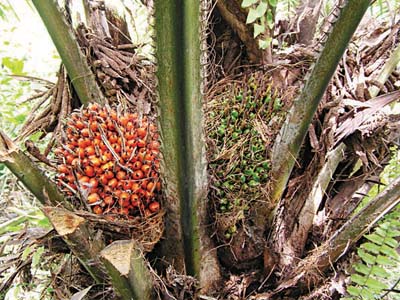
 NATURE and providence have left different nations with various agro-ecological endowments such that, in broad terms, the geo-political zones in Nigeria have alternatives to oil to turn their economies around.
Major Crops and Zones
Southeast, South-south, Southwest (Cassava, Banana and Yam)
Nigeria is reputed to be the highest grower of cassava in the world, producing about 45 million metric tonnes annually. It grows almost in all parts of the country, even in very poor soil; its yield in the naturally most suitable climate of the Southeast, South-south, Southwest and parts of the North central zones showcases its economic importance.
The last administration, using the Agricultural Transformation Agenda, pushed the incorporation of High Quality Cassava flour into wheat flour for bread making.
Two flour millers in Lagos run plants that produce special flour that contain between 5-10 per cent HQCF still being used by bakers.
Due to the wide variety of use of the tuber for feed and food, more is expected from the government and private sector to make the production a revenue earner and job creator. For now, Nigeria produces 40m tonnes of cassava flour per year.

In these zones, too, the growing of yam, maize and plantain is well favoured and could be good earners for households, corporate farmers and processors.
Banana and its crop mate, plantain, though not as widely grown as in other parts of Nigeria, remains a favorite crop in the south south. It could be turned an export earner like Cameroun and other banana-exporting countries.
Southwest, South south (Cocoa)
This tree crop, grown mainly in the southwest, and on a lesser scale, in the South south (Cross River and Akwa Ibom) was a major earner of foreign exchange in the 60s. Production was at 300,000tonnes per annum before being eclipsed by oil production. Nigeria was a world-leading exporter until overtaken by Cote D’Ivoire that remained focused on her area of strength.
It remains a major non-oil foreign exchange earner. In 1999, it dipped to 90,000tons, however, it climbed back to 250,000 tonnes a few years ago and the plan is to double that with the ATA of the FMARD.
Southeast, South south (Oil Palm)
Investment in oil palm across the southeast and south-south is being stepped up greatly, especially with the fresh impetus the crop received in the Agricultural Transformation Agenda.
Nine million sprouted nuts of oil palm free were given free-of-charge to farmers, while private sector operators in the zones are expanding their plantations. The goal is to make Nigeria self-sufficient in oil palm products and a net exporter in the medium term.
“We are replacing the tall palm trees variety with short once. Because nobody can export a tree, we are investing in planting them so that it will be producing fruits in the next 30 years.
North central zone (Maize)
Maize, particularly, can be grown across so many zones, but north central zone has relative advantage. It is a crop of strategic importance being raw material for feed (livestock) and food (man) as well as the industry.
According to the USDA, in 2012/2013 season, 7.6million tonnes was produced. However, substantial quantities are reported to be imported through unofficial means since there appears to be a restriction of the grain over the years.
Northcentral, Southeast (Rice)
Rice is grown in many zones in Nigeria and in the river basins, it remains a strong area for north central and southeast zones. To reduce massive drain on the economy via importation, in 2012, 406,000 farmers were given seeds for planting, and stepped up to 2.6 million and even more farmers in 2013 and 2014 respectively.
Grown in both wet and dry season, rice investment is considered very profitable (between 42-50 per cent in two years) owing to increasing number of consumers in the country.
Northeast, North-central, Northwest (Livestock)
With about 19 million herds of cattle nationwide and a consumption of 360,000 tonnes per annum, there is demand gap that gives room for huge investment in the sector, especially with the projection of 1.3million tonnes by 2050.
Although Lagos State is not rearing cattle, it slaughters the highest number nationwide at about 5,000 heads per day. The revenue impact can be deduced from the various jobs created at different levels of processing. The inference is that jobs are created and income generated in the cattle economy in the three main zones.
According to a Federal Ministry of Agriculture and Rural Development report, commerce in hide, a small part of the trade, yields substantial revenue. Being a delicacy in Lagos, and other parts of the country, the quantity ofponmo consumed daily is huge.
It reckons that gross profit from hide to ponmo trade is about N150/kg since one kg of rawhide is purchased at N500, and ponmo sells for N650 per kg. Therefore, at N15,000 per hide, the turnover per day for 5,000 hides is N75 million. That is, for 312 slaughter days in a year excluding Sundays, the turnover is estimated at N23.4billion per annum with an estimate of N24million gross profit from cattle hides earned from ponmo by the traders in the city.
With the available data, Lagos State can generate 32,760,000 sq.ft leather per annum from its 1.56million raw hides sold at N11.45billion by tanneries at N350 per sq. ft. Unfortunately, the rising demand for Ponmon has made it difficult for tannery industries to compete with ponmon traders at the current price of hides.
The northeast and north central are particularly notable in cattle production, but the effect of insurgency has been taking a toll on the business lately. A developed cattle livestock value chain is the right direction for a nation in dire need of diversification.
Northeast, northwest (Cowpea)
Nigeria is the largest cowpea/pulses producer in Africa, and the fourth in the World. It has received heavy support from Government and IITA. The major growing states in the zones are Sokoto, Zamfara, Kano, Borno, Yobe and Gombe, relatively drier parts.
Southwest, South south (Poultry)
The southwest is generally regarded as the poultry capital of the nation, with concentration of farms in Ogun State though there is a spread to states in the north central zone and southeast.
In 2011, a report by the Poultry Association of Nigeria (PAN) revealed the sub-sector accounted for 25 per cent of the agricultural GDP and 5.83 per cent of the total GDP.
Middle Belt – North central zone
With low population density and large swaths of arable land, the area provides various opportunities for production of crops including export crops like sesame, cashew, shea, honey and ginger. Other crops such as rice, maize, and cassava, as well as livestock are well favoured in this zone.
North central, Northeast (Mineral deposits-Tin)
Tin Ore reserves are located in states like Plateau, Kano, Ondo, Nassarawa, Kwara, Bauchi, and Osun states, which are in north central (middle belt), part of northeast and southwest zones. Nigeria has reserves to carry on with a larger production and remain in contention globally.
North central, Northeast (Iron Ore)
With oil doing so badly in the world market, it is time to return to the iron ore furnace on a serious note. Iron and steel products continue to eat deep into the nation’s forex, whereas it could be locally produced. The ore could be found in Kogi, where an estimated reserve of 1.5-2 Billion tonnes is deposited, making it one of the largest reserves in the world. Other reserves are Nasarawa, Sokoto, Kaduna, Oyo, Osun, Bauchi, Borno and Benue. Nigeria’s iron ore is approximated at over five billion metric tonnes.
Southeast, Middle Belt (Coal)
Enugu, Kogi, Benue and Plateau are the coal-producing states in the two zones.
Largely affected by the discovery of oil that introduced a different power source, coal could still be used to generate electric power and in coke production for iron and steel industries.
The nation’s reserve is about two billion metric tons.
Southwest, North central, Northeast, (Limestone)
With the private sector investment in utilization of limestone, Nigeria has become the largest cement producer in Africa. More than 50 per cent of cement in the African continent comes from Ewekoro and Ibeshe areas of Ogun state.
Other states with limestone are Kogi state, Edo state, Cross river, Enugu state and Gombe.
Southwest (Bitumen reserves)
Ondo State, Ogun State, Lagos State and Edo States (smaller deposit) hold the bitumen deposits in Nigeria. It is reported that a technical and economic evaluation of these deposits reveal billion barrels of oil in the deposit.
Several other minerals in Nigeria, when fully exploited, could be game changers in the complex matrix in plotting way out of the economic doldrum.
Others include Uranium, Gold, Columbite Wolframite, Tantalite, lead, kaolin, manganese, gypsum, graphite and glass. Diatomite, dolomite, diamond, chromium, cobalt, aluminium and barite are among the minerals waiting to be exploited.

