 Follow Us on Google News


 Follow Us on Google Discover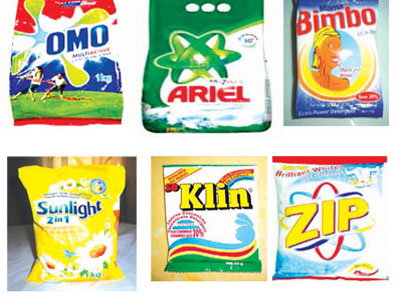
 THE changing strategies in the battle for consumers’ pockets in the detergent market have remarkably shifted the overall narrative of brand activities in the sector.
Away from the age-long tradition where detergent brands embarked on a sponsored washing contest on mass media in order to display its efficacy in contradistinction to other detergent brands, the Advertising Practitioners Council of Nigeria (APCON) and consumers are demanding more from the brands.
Commenting on this issue few months ago, the APCON Registrar, Alhaji Bello Kankarofi said the Council’s findings show that the some of the televised washing contests were deceptive.
He said: “I invited a detergent company for a live test here and the result was very dismal. After soiling some clothes with dirt, we did the washing experiment and discovered that the whole TV exercise was a sham after all.”
Many industry analysts have also pointed out that the current highly sensational detergent commercials woven around experiential narratives by players in this brand category have missed a vital detail — brand believability.
It could be recalled that the earliest detergent brand with this “revolutionary” messaging to hit the Nigerian mass media was the Omo Elephant commercial with Chike Okpala (known as Chief Zebrudaya in the New Masquerade). In the said commercial, Zebrudaya was scripted to deploy the traditional word of mouth testimonials to showcase the cleansing solution of Omo Elephant to his friend ‘Samanja’. Nigerian consumers who witnessed this ad in the 80s and the nostalgic feeling it creates now can understand that the 21st century consumers have become more sophisticated and discerning in their product choice.

Whether driven by improvements in computers, biotechnology, communications or other technologies, tumbling transportation costs, falling regulatory barriers or freer domestic and international capital markets, increasing globalisation and rapid innovation are profoundly altering the marketplace. The 21st century consumers are increasingly demanding quality delivery from products as explicated in their messages.
Kevin Johnston, an international marketing consultant states that experiential marketing as a concept appeals directly to the senses through touch, sound, smell, taste and sight. “The objective of experiential marketing is to create the connection wherein the consumer responds to a brand or product both emotionally and rationally. Experiential marketing is a concept that integrates elements of emotions, logic and thought processes to connect with the consumer,” he said.
Two leading FMCG companies — Procter & Gamble and Unilever — have remained unrelenting in their quest to dominate and hold the ace in the detergent market. After 50 years of sustaining the Omo brand in the Nigerian market place, Unilver has embarked on Ultimate Showdown Challenge on streets across major cities in the country. This consumer experience engagement plan, according to Unilever, is designed to prove Omo’s efficacy at removing the toughest stains in just one wash.
Speaking with The Guardian on this development in relation to consumers’ dissatisfaction with over-hyped messages with regards to detergents, Unilever Nigeria’s Brand Manager for Omo, Sarah Adoki, stated that the Ultimate Showdown Challenge is meant to address consumers’ misgiving about the brand messaging.
“Omo has been around for over 50 years and the set “Wash Demos” will allow members of the public to participate in the challenge and also express their observations. We want to prove to consumers that our brand, Omo Fast Action detergent, is the fastest tough stain remover. Also, Omo’s celebrity ambassadors and Nollywood stars – Funke Akindele, Chioma Chukwuka-Akpotha and Ali Nuhu are billed to lend credence and help feel the pulse of the people at select locations,” Adoki said.
She added that beyond the thrill factor, these celebrities literally lay their reputation on the line when they tell their admiring public what products can best meet their needs.
“Omo is doing a similar thing by staking our reputation of being tested and trusted for over 50 years. At Omo, we know and believe in the product we have and by staging these Challenges, we present the evidence of Omo Fast Action’s cleaning power to the public and let them pass their verdict,” she added.
Similarly, P&G has also launched an onslaught on the detergent market with the introduction of the New Ariel Automatic for washing machines. In what could be seen as a message with strong similarity with that of Omo, Ariel claims that it has improved its hand-wash detergent that gives consumers brilliant stains removal in one wash.
The company is quoted as saying that “Ariel helps to transform the world of washing through constant innovation. Ariel contains unique enzymes and polymers that remove tough stains even more effectively in just one wash, which ordinary detergents can’t remove even after two washes. With Ariel’s “one wash” promise, you can be certain you are making a smart choice.”
However, consumers have differed on the positions of these detergent brands, demanding for more forthright communication.
Speaking with The Guardian on this development, Mr. Smart Edeki blamed the trend of overrated detergent messages on the insensitivity of brand owners on the consumer.
“I have always heard that detergents can rid tough stains but I am yet to believe their brand promises. The consumers have been taken for a ride a very long time and it is high time the regulatory bodies checked communications or messages before they get to us. We feel slighted with all the marketing gimmicks detergent brands employ to misinform us,” he said.
Also, Mrs. Kafayat Balogun is of the opinion that detergent commercials have outlived their relevance because the consumers no longer believe in their efficacy.
“Sometimes when I still see some detergent commercials on TV, I just cannot wonder if they think that consumers cannot make rational choice based on experience. Beyond the pleasant stories woven around a detergent brand that fixes a stain in one wash, we have not gotten value for money spent on purchasing detergent solutions. If indeed these detergents were as potent as the brands claim, how come we still go out our ways to buy bleach leathers to remove tough stains? Consumers are rational and perceptive agents of the open market system and can switch to another brand that fulfils its brand promise. For me, I have stopped believing everything TV commercials throw at me. I shop for products based on experience,” she noted.
Emmanual Aduramo also feels that detergent brands should step up their game by ensuring that consumers experience the full import of the ad or communication with regards to brand promise.
“I am so tired of the normal and commonplace ad on detergent brands. What makes it even more annoying is that consumers do not experience the ad communication in actual usage. Consumers are better informed and technologically savvy, hence brand owners had better not promise what they cannot achieve. I have come to detest detergent ads or commercials these days that I change over to other channels because of the misgiving that I have about their messages,” he explained.
Commenting on the issue, marketing expert and communication consultant, Mrs. Wunmi Enilo stated that using the mass media to convince the people is actually effective but very costly.
She said: “Most times, I suggest traditional marketing for clients because we are not restricted to the number of people that would get the information. However, no matter which medium a brand chooses to deploy, it is important that the communication is not over-hyped and misleading. Customers are to reflect on the information and decide whether to go for the brand or not.”
She advised that irrespective of bogus detergent commercials, the buying decision is left totally to the consumer who is either convinced or not.
“Most importantly, brand should not be over-board in their messages as it could lead to disenchantment with the consumers,” she warned.

