 Follow Us on Google News
 Follow Us on Google Discover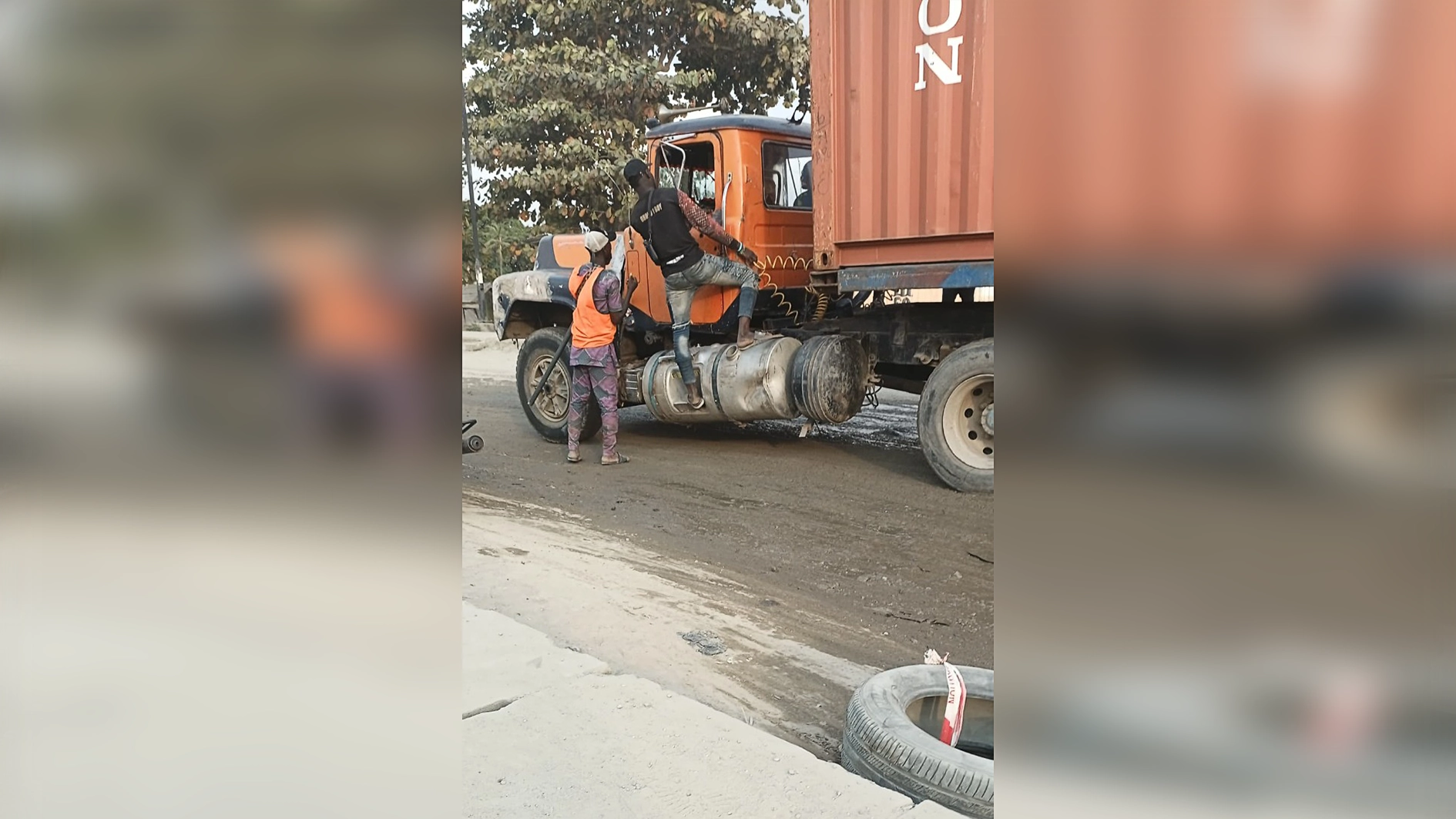
Extortion, multiple illegal checkpoints and roadblocks along the Lagos port corridors continue to defy lasting solutions, with truck operators paying heavily to state and non-state actors, ADAKU ONYENUCHEYA reports.
“We have never posted officers to mount roadblocks or checkpoints within the port environment. Any officer found operating under the claims of deployment by Zone 2 Command, the Maritime Police, the Lagos State Government or the Nigerian Ports Authority (NPA) is acting fraudulently.”
This was the unified position of the NPA, the Lagos State Government and the Nigeria Police Force, as they denied deploying personnel involved in the illegal extortion of truck drivers along the Lagos ports corridor.
The maritime haulage industry has continued to face persistent operational challenges affecting cargo movement, truck operations and the ease of doing business around the Lagos seaports.
These challenges include extortion, illegal checkpoints and roadblocks, as well as the alleged harassment and intimidation of truck drivers by both state and non-state actors.
They are further compounded by overlapping jurisdictions among government agencies operating along the access roads to the Apapa and Tin Can Ports.

The Guardian gathered that extortionists employ various tactics to harass and exploit truck drivers transporting cargo to and from the ports. Multiple illegal roadblocks are set up indiscriminately along the port access roads, alongside numerous checkpoints operated by overlapping government agencies that perform similar functions.
The Guardian observed that some law enforcement agencies deliberately obstruct traffic flow to compel truck drivers to pay a fee before allowing them passage.
Drivers are frequently subjected to unofficial penalties and cash collections without receipts.
Truck drivers also face harassment over minor or questionable offences, often as a pretext for extortion, as well as being subjected to intimidation, threats and the seizure of vehicle documents to compel compliance with illegal demands.
Some of the operators alleged that while drivers who offer bribes are often granted preferential treatment and allowed to proceed quickly, those who refuse are frequently subjected to unnecessary delay.
Extortion hot spots
The Guardian obtained a list of alleged extortion points along the Lagos port corridors, and the amounts truck drivers reportedly pay at each location before gaining access to the ports.
For a truck conveying an empty container to Apapa Port, the driver allegedly pays N1,500 at Sifax, Ijora; N2,000 at Total Bridge; N2,000 at Iyana Ajegunle; N2,000 at Danlami; N1,000 at Leventis; N3,000 at Area B; N1,000 at Airways; N2,000 at Eleganza; N1,000 at the Etisalat Roundabout and N1,000 at the Fidelity Roundabout.
The driver also reportedly pays between N5,000 and N30,000 at Mr Bigg’s, depending on the time of day and the discretion of those demanding payment.
Additional payments of N1,000 are reportedly collected at PZ, while between N2,000 and N20,000 is demanded at both Cocoa Board and the port gate.
For export-bound cargo, truck drivers reportedly pay between N2,000 and N10,000 at Hub Blyt, between N2,000 and N20,000 at the port gate, and N4,000 at the Customs checkpoint.
For flatbed trucks, drivers also pay between N1,000 and N5,000 at Eleganza, N1,000 at First Bank, N2,000 at Hub Blyt and N2,000 at the port gate.
The Guardian learnt that some security personnel within the Apapa Port allegedly stop truck drivers and demand illicit payments before allowing them to proceed.
Along the Tin Can Island Port corridor, a truck conveying export cargo to the Five Star Terminal through the First Gate reportedly pays N4,000 at the Roundabout, N2,000 at the Waybill checkpoint, N6,000 to the CIU, N1,000 at the last border, N5,000 at the Five Star Gate and N10,000 inside the terminal, bringing the total to N33,000.
For trucks using the Abuja axis, drivers reportedly pay N3,000 to police officers stationed under the bridge, N1,000 to officers at Grimaldi, N1,000 to officers near the Maersk Line office, N3,000 at the Roundabout, N2,000 at the Waybill checkpoint, N6,000 to the CIU, N1,000 at the last border, N5,000 at the Five Star Gate and N10,000 inside the terminal, amounting to N38,000.
A truck conveying an empty container to the Five Star Terminal through the First Gate reportedly pays N4,000 at the Roundabout, N1,000 to an official identified as “Oga Mike”, N1,000 at the last border and N15,000 at the Five Star Gate, bringing the total to N21,000.
Drivers transporting empty containers through the Abuja axis allegedly pay N1,000 to police officers stationed under the bridge, N1,000 to officers at Grimaldi, N1,000 to officers near the Maersk Line office, N3,000 at the Roundabout, N1,000 to “Oga Mike”, N1,000 at the last border and N15,000 at the Five Star Gate, amounting to a total of N23,000.
For trucks accessing the Ports and Cargo Handling Services terminal with export cargo through the First Gate, drivers reportedly pay N4,000 at the Roundabout, N2,000 at the Waybill checkpoint, N6,000 to the CIU, N1,000 at the last border, N3,000 to the Police, N1,000 to a maritime official, N2,000 to an official identified as “Oga Ben”, N1,000 for seal cutting, N1,000 for security, N1,000 for “small paper”, N2,000 to the Nigeria Customs Service official, N2,000 to the National Drug Law Enforcement Agency (NDLEA) official, N2,000 to the Department of State Services (DSS) officer, N2,000 for computer processing, N2,000 for confirmation, N2,000 for weighing on the scale and N2,000 for dropping, bringing the total to N34,000.
Drivers using the Abuja axis reportedly pay a total of N38,000 for the same trip. For empty trucks accessing the terminal through the First Gate, drivers allegedly pay N4,000 at the Roundabout, N1,000 to “Oga Ben”, N1,000 at the last border, N3,000 to the police, N1,000 to a maritime official, N4,000 for checking, N1,000 for security and N1,000 for dropping, amounting to N16,000. The truck drivers using the Abuja axis reportedly pay a total of N19,000.
For export cargo destined for the Tin Can Island Container Terminal (TICT), truck drivers reportedly pay N12,000 to Customs and N11,000 from the TICT gate, while drivers conveying empty trucks pay N5,000.
At the Grimaldi terminal, drivers transporting export cargo reportedly pay N10,000 through the First Gate and N14,000 through the Abuja axis. Trucks conveying empty containers allegedly pay N3,000 through the First Gate and N5,000 through the Abuja axis.
Financial impact on business
Haulage operators lament that there are no fewer than 34 checkpoints mounted by various government security and traffic agencies.
They also purported that each haulage operator spends over N250,000 per trip on unauthorised payments to navigate these illegal checkpoints, severely eroding profit margins.
Using the Trucks Transit Parks (TTP) Limited average daily traffic volume of 4,000 trucks at the Lagos port, at N250,000 per trip, the extortion ring makes about N750 million daily and about N270 billion yearly.
The General Secretary of the Association of Maritime Truck Owners (AMATO), Muhammed Sani, in a document made available to The Guardian, identified about 17 checkpoints along the Apapa port corridor and over 21 checkpoints on the Tin Can Island Port corridor.
Sani described the alarming rate at which various government agencies extort truck drivers both within and outside Apapa and Tin Can Ports, as disturbing, vexatious and unacceptable.
He lamented that these unwholesome activities are usually hinged on flimsy excuses and fabricated offences, many of which are not entirely the truckers’ fault.
According to Sani, in most cases of racketeering and illegal collections, there are always collaborators who deliberately create opportunities for extortion.
“The irony of the situation is that artificial bottlenecks are intentionally created, thereby forcing drivers and truck owners into unnecessary struggles, negotiations, preferential treatments, favouritism, and bargaining before they can proceed with their lawful businesses,” he said.
Sani decried that these activities were having serious economic consequences on truck operations, as funds meant for the maintenance and servicing of trucks are being siphoned through direct and indirect extortion on a daily basis.
He said the visible evidence of this unfortunate development was the deteriorating and dilapidated condition of many trucks operating within the ports’ corridors.
These illegal activities, Sani added, also increase haulage and logistics costs, as truck owners pass these costs on to importers, while cargo owners, in turn, factor them into the prices of their goods, leaving consumers to bear the brunt.
President of the Shippers Association of Lagos State (SALS), Nicodemus Odolo, said the situation was a major contributor to the rising logistics costs, as expenses incurred transporting cargo from the ports to warehouses can sometimes exceed the freight cost of transporting the same cargo from China to Nigeria.
According to him, cargo owners ultimately absorb the burden by adding the extra expenses to the final cost of goods, contributing to rising prices and weakening consumers’ purchasing power.
Odolo argued that cargo already examined and released by relevant agencies within the ports is often subjected to repeated checks by multiple government officials on the roads, resulting in delays, additional payments and operational inefficiencies.
Similarly, the Chairman of the Importers Association of Nigeria (IMAN), South-West chapter, Joseph Ajoku, emphasised that arbitrary cargo interceptions by enforcement officials after clearance remained a significant challenge for importers.
He noted that importers are frequently compelled to incur additional expenses due to delays and repeated inspections, which are ultimately passed on to end-users through higher prices.
Ajoku maintained that the persistent increase in logistics and compliance costs was discouraging many importers from remaining in business and limiting the government’s ability to maximise revenue from legitimate trade activities.
The many failed attempts
This long-standing menace within the port corridor has persisted for years despite several efforts to address it.
Most recently, a multi-agency committee comprising government agencies and maritime stakeholders was established to monitor and tackle reports of extortion and the proliferation of illegal checkpoints.
The committee comprises representatives of the NPA, the Nigerian Police Force, the Department of State Services (DSS), Lagos State Traffic Management Authority (LASTMA), Federal Road Safety Corps (FRSC), port users and other key agencies, with a dedicated platform created for real-time reporting of infractions.
During a high-level stakeholders’ meeting in Lagos, attended by security agencies, freight forwarders and transport unions, participants agreed to establish a joint task force to tackle extortion, illegal checkpoints and other impediments to the seamless movement of cargo along the port corridors.
However, this is not the first time a joint taskforce or committee has been formed to address this issue.
In 2026, the NPA Western Ports Intervention Committee was formed and in 2018, the Lagos State Government, the Police, LASTMA, FRSC and NPA set up a Joint Security Task Force.
Also, the Port Standing Task Team (PSTT) was set up in 2021 as well as the formation of the Minister of Marine and Blue Economy’s Committee in 2023 to review extortion, illegal checkpoints and to clear the port corridor of extortionists.
All the government agencies continue to deny deploying officials to mount checkpoints, warning that any officer caught would face the law.
Yet, to this day, no officer has been apprehended or sanctioned. Instead, the illegal checkpoints continue to multiply.
Search for solutions
The Managing Director of the NPA, Dr Abubakar Dantsoho, had disclosed that investigations revealed multiple illegal extortion points, jurisdictional overlaps among security agencies and distortions that had slowed down cargo movement.
Dantsoho said collaboration among all agencies operating within the port environment would be strengthened to create a more efficient operational corridor and eliminate delays faced by importers and exporters.
Dantsoho expressed optimism that the clarification would significantly improve traffic flow and operational efficiency along the corridor.
He stressed that the collective goal was to improve Nigeria’s competitiveness by positioning its ports as the leading maritime gateway in Africa and globally.
Also speaking, the Assistant Inspector-General of Police in charge of the Maritime Command, Okunade Ronke Nurat, assured stakeholders that any police officer found operating illegally under the guise of representing either the Lagos State Police Command or the Maritime Police would be sanctioned.
“If you see any police officer on the road claiming to have come from either Lagos State or the Maritime Police, that person can be brought to book. We have decided that we have a way of getting such matters reported to the appropriate authority so that necessary action can be taken,” she said.
Representing the Lagos State Ministry of Transportation, the Director of Transport Operations, Olasunkanmi Ojowuro, said while the State government was responsible for managing roads leading to the ports, the challenges go beyond transportation.
Ojowuro noted that authorities regularly arrest and prosecute offenders involved in illegal activities along the corridor.
Ojowuro disclosed that no agency of the Lagos State Government would henceforth carry out enforcement activities within the port environment without a joint understanding reached.
Meanwhile, port users are calling for a more direct and practical approach to resolve the issues permanently.

