 Follow Us on Google News


 Follow Us on Google Discover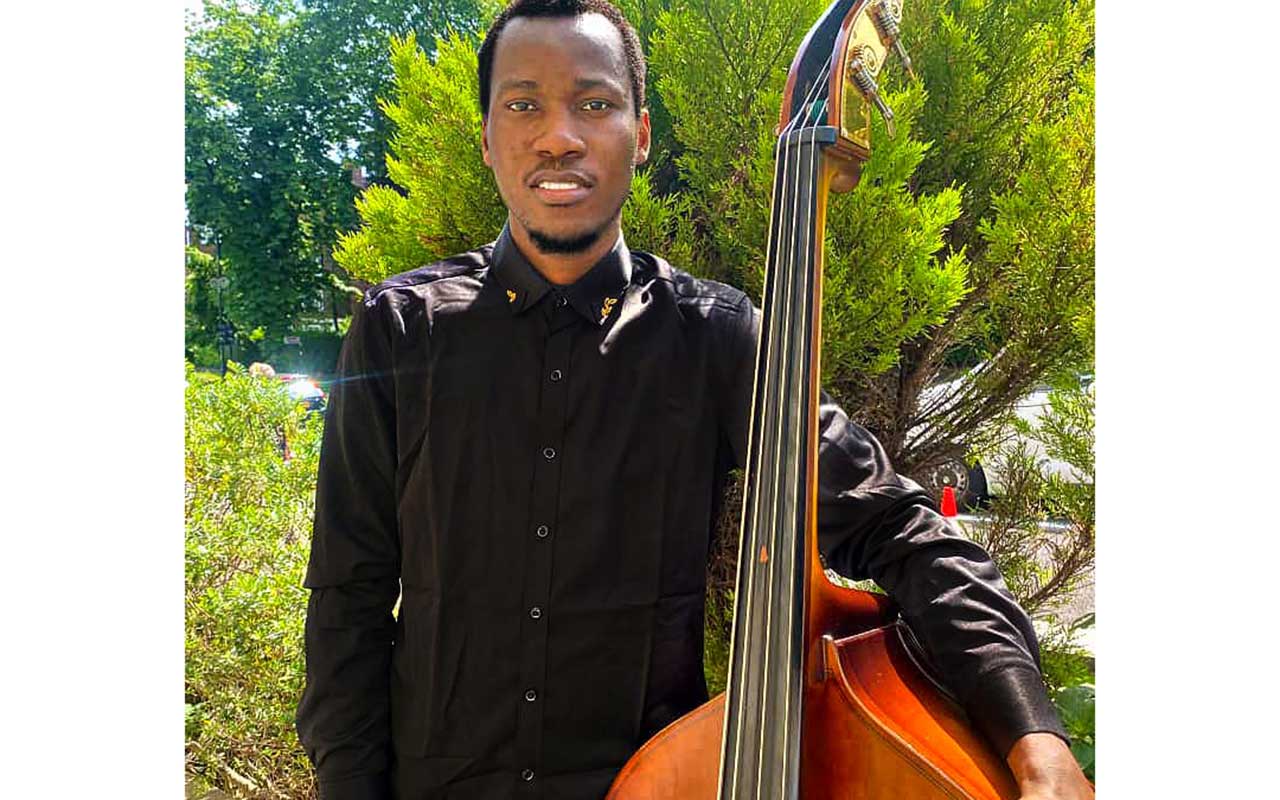
Growing up as a child, the Yoruba folk song, Òjò N Rò, usually struck cheer among us, especially whenever this writer and his peers rather preferred to be caught in the rain. There were a myriad other folk songs about rain, egging us to resist its tender torrents; but we sang them even more passionately while we rebelled. There was just something about the rain that made us all feel calm, warm, and wanderlust — just as Toluwani Ajayi’ latest symphony, ‘Òjò N Rò,’ succeeds in evoking.
Toluwani Ajayi’ ‘Òjò N Rò,’ surfaces as a cornucopia of the Flute, Clarinet, Contrabassoon, Trumpet, Flugelhorn, French Horn, Timpani, Bass drum, Grand piano, Violin, Viola, Cello, and his solo double bass that paces the soul of the ensemble. The overall feeling from the record is piety; a certain hallowed sacredness that hovers above its entire arrangement, heightened with melancholic chords that purge catharsis throughout the 2-min spin.
Across the soundpiece, Toluwani Ajayi’s harmonic synergy rings through with a tempered cadence that allows for easy recall. Using a deft ostinato on the vocal line, he soothes the ensemble with measured melancholia, ranking his imitation techniques as one of the song’s core pleasure points. “Òjò n rò, sere ninu ilé, ma wo nu òjò, kí aṣọ rẹ má baà tutù, kí òtútù má baà mú ọ, (It’s raining, play inside the house, don’t go into the rain so that your clothes don’t get wet, and so that you don’t catch a cold),” the song rings through.
He further bass phrases an elderly voice, imitating Yoruba grandparents who commonly sing these folk songs to their grandchildren. The song generally conveys a universal message of protection and care, teaching children about cause and effect. And to showcase his sleight of hand with the imitation technique, Ajayi mimics natural rainfall sound, using the grand piano; bass drum and timpani (for thunder effects).
On the self-produced track, Toluwani Ajayi creates a novel fusion, churning out one of the first known classical orchestral arrangements of “Òjò N Rò”, leveraging the double bass as the core melodic voice. His fusion deepens the cross-cultural exchange between traditional Yoruba music and classical Western music. He joins a sweltering cadre of fusion-focused bassists stringing Africa and the West together, including South Africa’s Leon Bosch, and Edgar Muzah, respectively, among others.
The tone discrepancy across the symphony comes from, mostly, the horn section; and the scratchy tune from the Contrabassoon stands out as the only noisy misfit from the fray. The song’s brevity, also, technically complicates the overall cohesion of the ensemble; perhaps, pointing towards the need for a medley or lengthier song, to allow for a much better tone balance across all 13 instruments in the ensemble.

Overall, ‘Òjò N Rò,’ strikes one as a legacy record, thriving with rich ethno-conscious musicality. Its cathartic depth, message-melody sync, tonal synergy, cadence and articulation rank the record as a stellar addition to the annals of futuristic African symphonies in recent times.
Ajayi Toluwani John is a distinguished Nigerian musician, celebrated for his exceptional artistry as a double bassist, composer, arranger, and performer. A classically trained instrumentalist with a versatile musical ability, Ajayi brings depth, creativity, and emotion to every performance, making him one of Nigeria’s most sought-after double bassists.
Although a graduate of Mechanical Engineering, Ajayi’s lifelong passion for music led him to pursue professional music studies. He holds certifications in music theory and double bass performance from the Associated Board of the Royal Schools of Music (ABRSM), United Kingdom. He had master classes under world-renowned musicians, including British double bassist Chi-chi Nwanoku and German cellist and conductor Walter-Michael Vollhardt, refining his craft under their tutelage.
Ajayi Toluwani John has been a standing double bassist with the Àkójọpọ ̀ Music Foundation since 2020. In 2023, he delivered a remarkable performance at a major concert organized by the foundation—a milestone event that underscored his technical excellence and expressive power. His contributions to this concert highlighted his unique musical style, deep interpretative understanding, and unwavering commitment to artistic excellence.
Beyond the stage, Ajayi is a passionate advocate for the transformative power of music. Since 2017, he has been an integral member of the Global Arts in Medicine Fellowship, where he has used his musical talents to support healing in diverse spaces. His performances have touched lives at the Sickle Cell Foundation Nigeria (LUTH), Alima Atta Oncology Ward, Children’s Emergency Ward, and the Nigerian Correctional Service (Ikoyi Custodial Centre), among others.
He has played a vital role in national initiatives such as the Arts & Health Week in Nigeria, collaborating with international organizations including the World Health Organization and the United States Consulate in Lagos.
In 2023, he co-led the Tunis–Nigeria Music Ensemble, a cross-cultural exchange project that was part of the Global South Arts and Health Week, and is an active member of the Young Leaders for Arts & Health, an initiative supported by the Global Arts in Medicine Fellowship in partnership with the Commonwealth Leadership Institute.
Presently, Ajayi shares his expertise through his work with the East London School of Music and performs as a dedicated member of the HACS Philharmonic Orchestra UK.

