 Follow Us on Google News


 Follow Us on Google Discover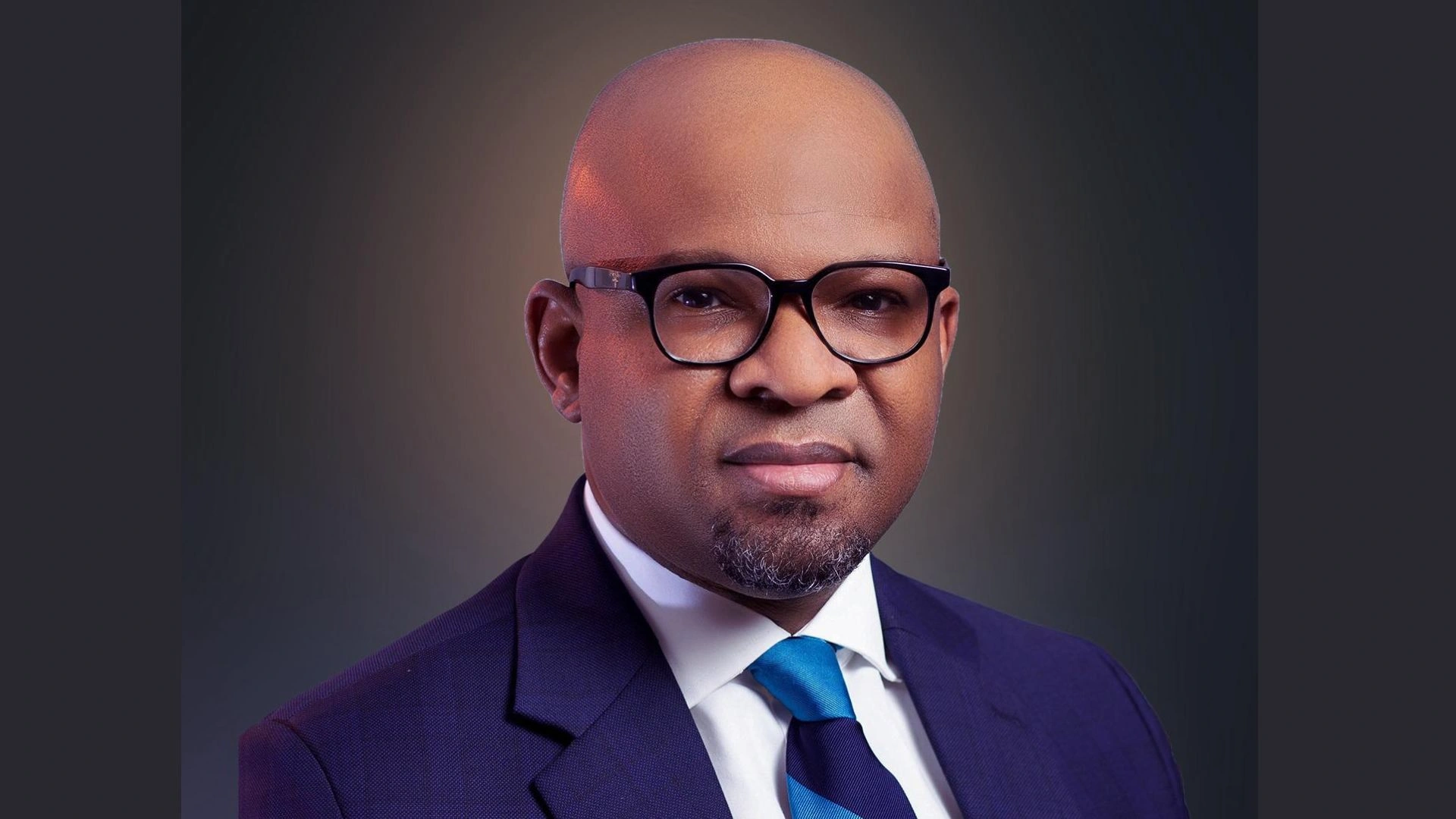
Dr. Femi Ademola stands as one of the respected figures within Nigeria’s financial services industry. Over more than two decades, he has built a career defined by discipline, intellectual depth, and a consistent commitment to performance. As the Managing Director and Chief Executive Officer of AIICO Capital Limited, he leads a transformation that reflects his belief in merit, clarity of vision, and institutional growth driven by competence.
His professional story reflects deliberate preparation, as each stage of his academic and professional development aligns with a clear intention to understand finance from multiple angles. The result is a career that cuts across investment banking, investment research, portfolio management, economic analysis, credit evaluation, risk management, and commercial banking. These experiences shaped his perspective on markets, institutions, and leadership.
Ademola’s academic journey mirrors the same seriousness with which he approaches his career. He earned his first degree in Accounting and Finance before advancing his management training with an MBA from the Lagos Business School. His appetite for deeper analytical knowledge led him to pursue a Master’s Degree in Actuarial Science at the University of Ibadan. He also holds a Master of Science in Finance with a specialization in Economic Policy from the SOAS University of London and a PhD in Finance from Babcock University, Nigeria.
Beyond academic qualifications, he holds some of the most respected professional designations in finance. He is a Chartered Financial Analyst, widely recognized globally as a mark of deep expertise in investment analysis and portfolio management. He is also a Fellow of the Institute of Chartered Accountants of Nigeria and an Associate of the Chartered Institute of Stockbrokers.
Before assuming leadership at AIICO Capital, Ademola held several strategic roles across Nigeria’s financial services space. He served as Group Executive Director at Cordros Capital Limited, where he contributed to the firm’s investment banking and capital markets operations. Earlier in his career, he served many years with the BGL group, ending up as the MD/CEO of BGL Capital Limited, where he gained significant experience navigating the complexities of the Nigerian financial market.
He also held leadership responsibilities at Wema Bank Plc and its predecessor National Bank Limited as Relationship Manager and Risk Manager, respectively. His early professional grounding began in the accounting profession at Baker Tilly Nigeria, formerly known as Oyelami Soetan Adeleke & Co. That early exposure to auditing and financial advisory sharpened his analytical discipline and provided a foundation for his later work in investment and financial strategy.

Across these roles, Ademola earned a reputation as a goal driven leader who places strong emphasis on structure, measurable results, and the development of capable teams. His leadership style reflects a blend of high expectations and personal example. He sets demanding targets but remains deeply involved in execution. For him, leadership requires both direction and participation.
At the heart of his philosophy lies a strong belief in merit. To him, merit represents more than professional success. It represents a life built on preparation, effort, and personal responsibility. He often describes merit as the outcome of disciplined engagement with one’s chosen field. In his words, being called a man of merit carries deep meaning. It suggests achievement without reliance on family name, social privilege, or political influence. It reflects progress earned through competence and consistent effort.
For Ademola, his many academic pursuits were not accidents. Each program of study served a specific purpose. He pursued knowledge because he intended to apply it in practice. He explains that real competence requires immersion, as it is not enough to declare interest in a field. A professional must understand it thoroughly, compete within it, and perform with excellence. That philosophy shaped his professional growth. According to him, the positions he has held throughout his career emerged from rigorous selection processes rather than personal connections. His appointment to AIICO Capital itself followed professional recommendation and detailed evaluation.
Merit also guides how he leads people. Within his organization, he promotes objectivity and measurable performance. He makes it clear that recognition must be tied to defined goals rather than personal preferences. Performance must be assessed through clear standards. He encourages his teams to set goals that are specific, measurable, achievable, realistic, and time bound. Once targets are defined, results become the basis for evaluation.
His guiding principle reflects this results driven mindset. Effort alone does not determine success. Outcome determines value. He illustrates this belief with a simple analogy. In a long race, the athlete who slows down before the finish line risks losing to someone who maintains momentum to the end. Completion matters more than intention. Merit lies in finishing the race at the required standard.
This philosophy influences how he approaches institutional leadership at AIICO Capital. When he joined the company, the organization already had an established history as the investment arm of its parent company, AIICO Insurance Plc. For years, the firm primarily managed investment portfolios tied to the insurance business. Then the financial environment began to change. Regulation evolved. Market expectations expanded. These shifts created a moment that demanded strategic repositioning.
When Ademola assumed leadership, he saw an opportunity to reposition the company beyond its traditional role. His vision involved building AIICO Capital into an independent financial services institution capable of sustaining its own growth. Instead of operating solely as a portfolio manager, the firm would evolve into a broader financial services platform.
Within two years of his leadership, the organization began moving in that direction. AIICO Capital expanded its operational licenses and began building multiple business lines. The company now holds licenses covering portfolio management, capital issuance activities, and lending operations. The lending segment is also developing into a microfinance banking structure designed to expand the firm’s financial services reach.
These developments mark the beginning of a broader transformation. Ademola envisions AIICO Capital as a financial powerhouse with diversified capabilities across capital markets, investment management, and financial advisory services. The goal is to build an institution that operates with independence while maintaining its strategic relationship with its shareholders.
Such transformation rarely occurs without resistance or challenge. Ademola identifies alignment as one of the most critical hurdles in organizational change. Every transformation requires support from multiple stakeholders including staff, board members, and shareholders. Each group must understand the direction and believe in the possibility of success.
Within the company, he faced the task of reshaping internal culture. When he arrived, the working environment carried tension from past experiences. Some employees perceived high expectations as pressure rather than opportunity. Ademola addressed this challenge through personal example. When he demands effort from his team, he participates fully in the work.
One initiative involved extensive market engagement campaigns designed to strengthen the visibility of AIICO Capital as a distinct financial brand. He personally participated in these activities, joining staff in client visits and business development exercises. When employees saw their leader involved directly in the work, their perception began to change. Shared effort replaced earlier tension.
Convincing the board and shareholders also required patience and clear communication. Strategic change can create concern among decision makers who prefer familiar models. Ademola focused on explaining the rationale behind each step. He simplified complex market developments and clarified the opportunities emerging within the financial sector.
Economic uncertainty presents another layer of challenge. Nigeria’s financial markets operate within a volatile macroeconomic environment. Currency movements, regulatory adjustments, and capital requirements often reshape the operating landscape. Rather than viewing these changes as barriers, Ademola approaches them as openings for strategic innovation.
He draws inspiration from mentors who taught him that opportunity exists even during downturns. Market losses in one area often reveal profit possibilities in another. Crisis contains both disruption and opportunity. The key lies in identifying where value can still be created.
This perspective shapes his strategic thinking. When others focus on the difficulties within an economy, he studies the areas where demand continues to grow. Infrastructure gaps create opportunities for alternative energy providers. Traffic congestion opens small commercial opportunities for vendors. Every constraint reveals a corresponding market need.
This outlook defines how he approaches business decisions. Instead of waiting for ideal conditions, he encourages his team to identify workable opportunities within existing realities. That mindset drives the firm’s expansion into new service areas.
Beyond corporate leadership, Ademola also navigates the complex demands of personal life, professional responsibilities, and social engagement. He describes this challenge through a framework he calls the three rooms. The sports room represents social relationships. The bedroom represents family life. The boardroom represents professional responsibilities.
Each space requires attention within the same twenty four hours available to everyone. Maintaining balance demands constant adjustment. In cases where family members are not in the same place, which reduces the amount of physical time they spend together, there is need to compensate through consistent communication and regular visits during important moments. Those moments carry lasting meaning for family members.
Social engagement also remains important in his professional environment. Financial services operate heavily on relationships and trust. Networks often determine where opportunities emerge. For that reason, he makes deliberate efforts to attend social events connected to friends, clients, and professional partners. Even brief appearances help maintain relationships that may later develop into business engagements.
Delegation forms another key element of his management approach. Without structured delegation, leadership pressure becomes overwhelming. Early in his tenure at AIICO Capital, he distributed significant operational responsibilities among senior executives. Each leader carries ownership for specific areas of business development and client engagement.
This structure reduces bottlenecks and allows the organization to pursue multiple opportunities simultaneously. While he maintains strategic oversight, the broader leadership team drives execution across markets and sectors.
His relationships with shareholders and investors follow a similar philosophy. Regular communication builds trust. He keeps shareholders informed about strategic decisions and operational progress. Although they do not participate in daily management, they remain central to the company’s direction. Clear updates ensure alignment.
For investors who entrust their funds to the firm, transparency remains critical. Technology allows clients to track their investments in real time. If questions arise, responsiveness becomes essential. Quick explanations and open communication reinforce confidence in the institution.
Ademola also maintains an academic presence as an adjunct lecturer at Babcock University. Teaching allows him to share practical insights with emerging professionals while staying connected to academic research. His decision to teach partly stems from his own doctoral experience at the university, where examiners recognized the depth of his research work. That moment reinforced his belief in thorough preparation. When scholars produce work they truly understand, they can defend it confidently under scrutiny. The same principle applies to professional practice. Genuine knowledge creates authority.
On his advice to younger professionals, he encourages them to develop clear career goals and pursue them with diligence. Technology offers powerful tools, including artificial intelligence. Yet tools cannot replace understanding. Professionals must still grasp the ideas behind the work they present. True credibility comes when individuals can explain their thinking clearly and confidently. Mastery of subject matter allows professionals to stand in any room and contribute meaningfully to discussion.

