 Follow Us on Google News
 Follow Us on Google Discover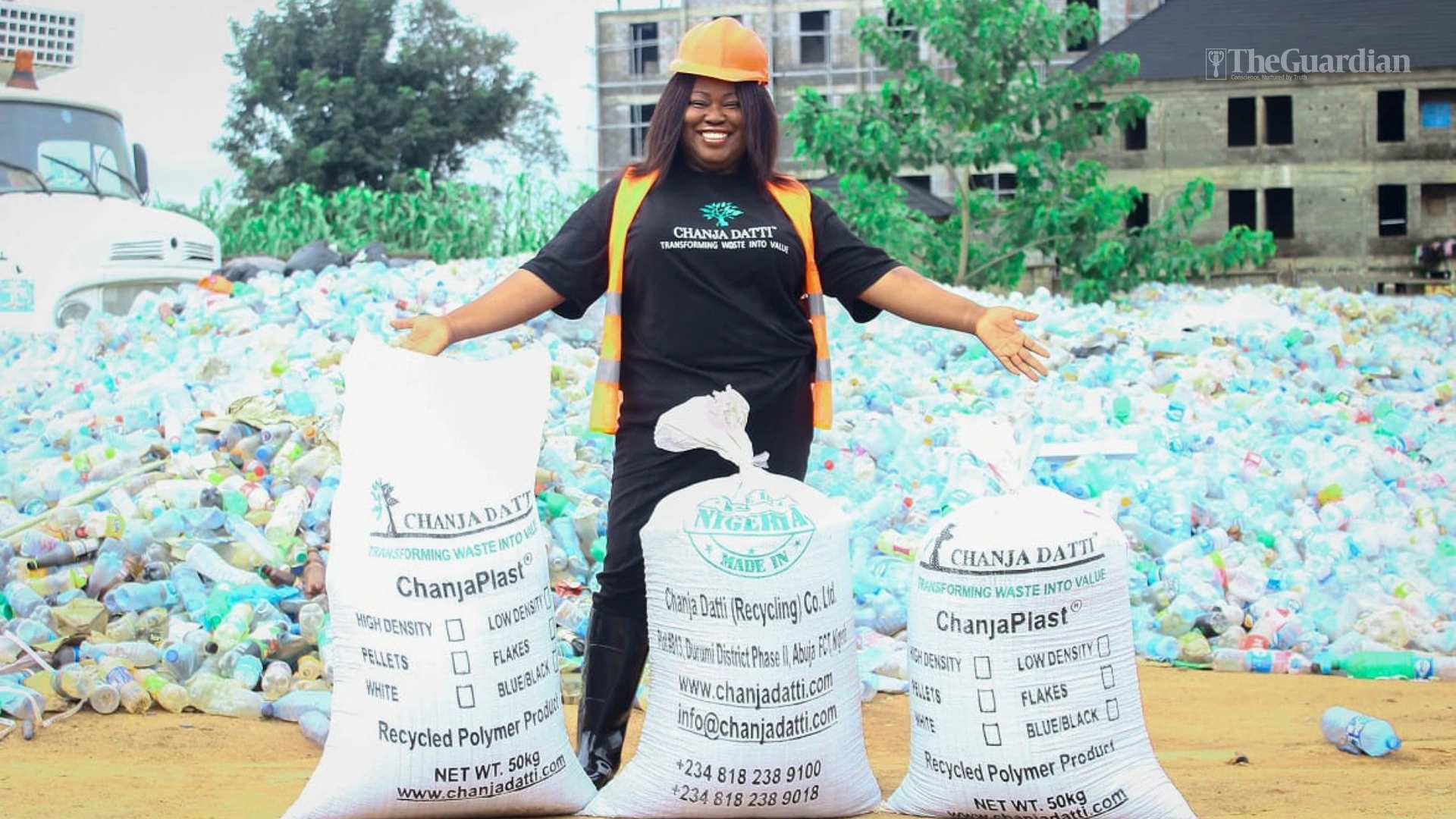
Across Nigeria, the conversation around environmental sustainability is no longer limited to policy rooms or international conferences. It is now visible in communities, schools, markets, hotels, streets, and recycling facilities where everyday waste is being transformed into economic, social, and environmental value. At the centre of this movement is Chanja Datti (Recycling) Ltd., a Nigerian social enterprise committed to building a cleaner environment while advancing the circular economy.
Founded with a mission to “transform waste,” Chanja Datti has grown into one of Nigeria’s most recognisable recycling and environmental sustainability companies. Its name, derived from Hausa, reflects both its northern Nigerian roots and its practical commitment to changing the way society sees waste. Chanja Datti is saying waste is not an end product but a resource, a livelihood opportunity, a climate solution, and a tool for social development.
The company collects, sorts, and processes recyclable materials such as PET bottles, pure water sachets, nylon bags, aluminium cans, paper, cartons, and cardboard. These materials are channelled back into productive use through off-takers, recycling companies, and manufacturers. By doing this, Chanja Datti helps reduce environmental pollution, diverts waste from landfills and waterways, and contributes to cleaner cities and healthier communities.
Chanja Datti’s does not stop at waste collection. Through its manufacturing arm (CD Plastics), the company transforms recovered and processed plastic waste into useful everyday products, including items such as bowls and dustpans. This is where the circular economy becomes practical and visible. Materials that may once have polluted the environment are given a second life as durable household products.
Over the years, the company’s impact has gone beyond waste collection. Chanja Datti has processed over 14 million kilograms of plastic waste, contributing significantly to Nigeria’s circular economy. This figure represents millions of kilograms of material prevented from becoming environmental burden, flooding risk, visual pollution, or unmanaged waste.
One of Chanja Datti’s most important contributions is its community-centred approach to recycling. Through its Cash 4 Trash model and the Recykoin mobile application, the company makes recycling more accessible and rewarding for individuals, households, and organisations. Residents can request pickups, drop off recyclables at hubs, and receive value in return. This approach encourages behaviour change by showing that responsible waste disposal is not only good for the environment but also economically beneficial.

Chanja Datti also recognises that sustainability must include people. Through the 5000 strong Women Recyclers Empowerment Initiative, the company has equipped over 500 women with practical skills, income opportunities, and pathways into economic independence. The initiative supports women at the bottom of the pyramid, helping them participate meaningfully in the recycling value chain. In a country where green jobs are becoming increasingly important, this kind of empowerment is essential for inclusive climate action.
Its Bottles for Books initiative further shows how waste can solve social problems. By converting recyclable waste into support for children’s education, Chanja Datti connects environmental responsibility with access to learning, helping over 1,000 children return to school. This is one of the clearest examples of the company’s belief that recycling can be both an environmental and human development tool.
Partnership is also central to Chanja Datti’s future-facing projects. With support from TRANSFORM, the company is expanding decentralised recycling through Micro Recycling Plants in communities. These plants are designed to process PET plastics locally, create employment for women and youth, reduce plastic waste, and bring recycling infrastructure closer to the source of waste generation. This model speaks directly to Nigeria’s need for scalable, community-based environmental solutions.
Chanja Datti’s activities also align strongly with several Sustainable Development Goals, including responsible consumption and production, climate action, decent work and economic growth, quality education, gender equality, and sustainable cities and communities. Its work proves that environmental sustainability is not a single-sector issue. It is connected to jobs, education, women’s empowerment, public health, innovation, and national development.
As Nigeria faces growing waste management and climate challenges, companies like Chanja Datti show what practical green leadership looks like. The company is not only collecting recyclables; it is changing behaviour, creating livelihoods, supporting education, strengthening partnerships, and proving that waste can become a foundation for inclusive growth.

