 Follow Us on Google News
 Follow Us on Google Discover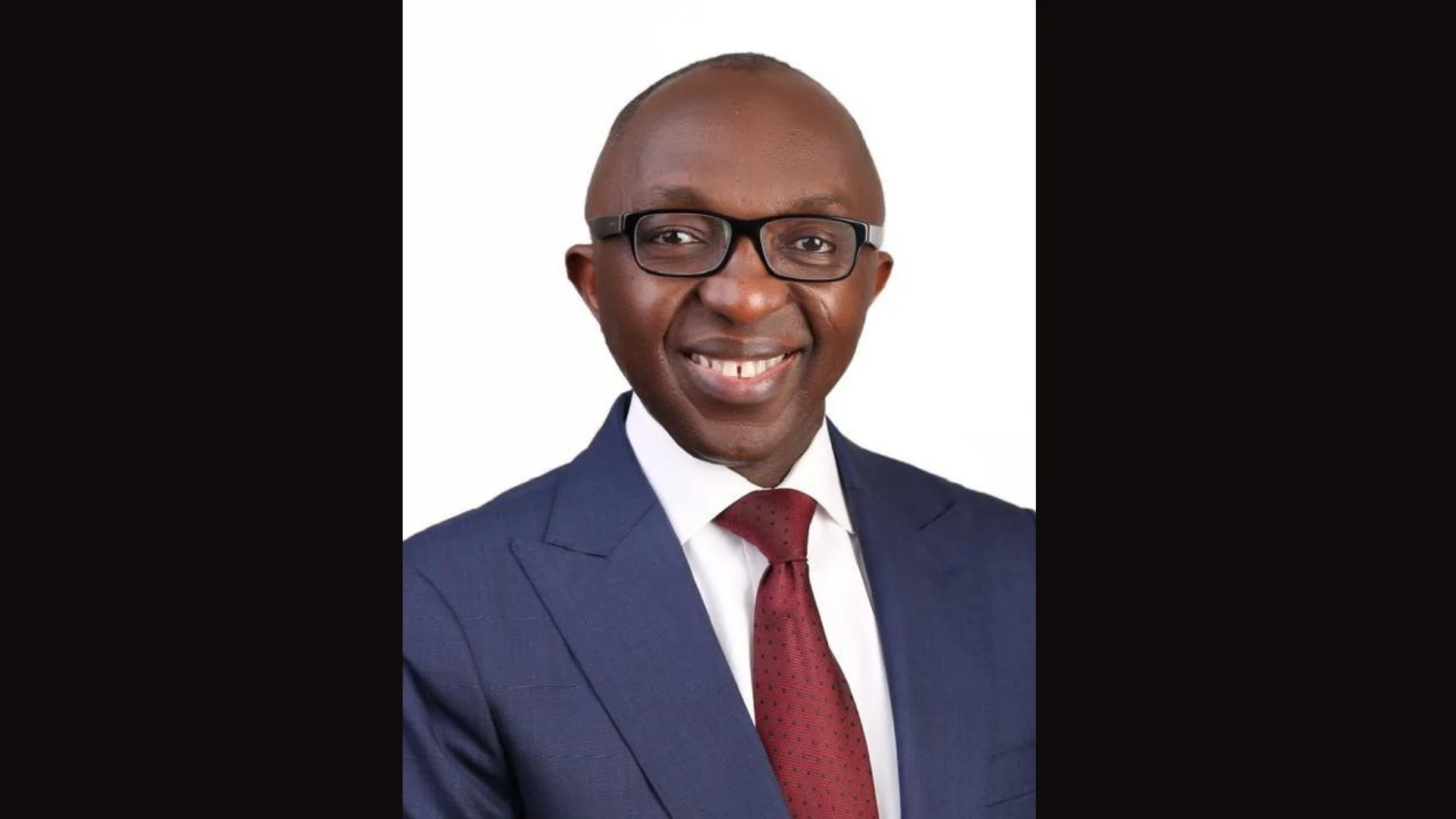
THE GUARDIAN’S SPECIAL FOCUS ON 20 MOST DISTINGUISHED AND RESULT-DRIVEN HARVARD UNIVERSITY ALUMNI OF EXCELLENCE IMPACTING NIGERIA’S ECONOMIC GROWTH IN 2026
Dr. Armstrong Ume Takang is an accomplished executive leader, investment professional and institutional transformation specialist whose career has been devoted to building organisations, strengthening corporate governance, mobilising investment capital and translating public assets into sustainable economic value. As Managing Director/Chief Executive Officer, Ministry of Finance Incorporated (MOFI), he leads the Federal Government of Nigeria’s investment and asset management institution, with assets under management at over US$40 billion.
Since assuming leadership of MOFI, Dr. Armstrong has led its transition from a largely passive asset-holding registry into an active investment, portfolio management and capital mobilisation platform for the Federal Government. His leadership has focused on establishing the true extent and value of government ownership, professionalising the governance of state-owned enterprises, improving portfolio performance and mobilising domestic and international capital into priority sectors of the Nigerian economy
A major feature of his leadership has been the establishment of stronger institutional and corporate governance systems for the management of public investments. Under his stewardship, MOFI has advanced the National Assets Register as a central platform for identifying, cataloguing, valuing and managing Federal Government assets. MOFI has also introduced a Corporate Governance Scorecard to assess governance, transparency, accountability, performance across government-owned and government-linked companies.
Dr. Armstrong’s leadership is further reflected in a portfolio of landmark national initiatives that combine investment discipline with measurable socioeconomic impact. One of the most significant is the MOFI Real Estate Investment Fund, MREIF – a ₦1 trillion blended-finance programme established to expand access to affordable, long-term mortgage financing in Nigeria.
With a rich experience spanning over 25 years, Dr. Armstrong has demonstrated excellence in strategizing, budgeting, and executing large scale projects across multiple sectors. These include Transportation, Education, Banking, Finance, Insurance, Healthcare, Government Administration, Automobile, Foundations, and Higher Education, both domestically and internationally.

Before his appointment as MOFI’s CEO, Dr. Armstrong served as Special Adviser to the Honourable Minister of Finance, Budget and National Planning, where he led major investment, technology and public-sector transformation initiatives. In that role, he played a central part in the restructuring and repositioning of MOFI and spearheaded the development of Project Lighthouse, a data analytics platform that strengthened the Federal Government’s revenue mobilisation and debt-recovery efforts. The platform supported the recovery of approximately ₦70 billion under the Voluntary Assets and Income Declaration Scheme and a further ₦62 billion in debts owed to the Federal Government.
In testament to his goal-oriented and transformative leadership, as well as someone whose accomplishments were crowned in excellence, Dr. Armstrong has earned recognitions and awards within and outside Nigeria. These include: “African CEO of the Year, 2025” conferred at the 15th African Business Leadership Awards, London; “African Finance Industry Personality of the Year Award, 2025” by African Leadership Organization; “Public Finance CEO of the Year, 2025” achieved at the 7th Leadership Excellence Awards, Abuja, and endorsed by the African Union; one of the “100 Most Reputable Africans, 2024” by Reputation Poll International.
For these and more, Dr. Armstrong Ume Takang has been recognised by The Guardian as one of the “Twenty Most Distinguished and Result-Driven Harvard University Alumni of Excellence Impacting Nigeria’s Economic Growth In 2026”.
In a brief chat with The Guardian, he spoke on what inspired his Harvard journey, why Nigeria’s education system must meet global standards, Nigeria’s financing gap in key sectors, responsible capital deployment and the role of MOFI, amongst sundry issues. Excerpts…
Tell us briefly about your personal/professional background and what inspired you to study at Harvard University.
My academic foundation is in Computer Science. I studied at the University of Hull, where I earned both my undergraduate degree and PhD. But if I reflect on my career, I would say that the thread connecting everything I have done is not necessarily technology. It is curiosity and an enduring fascination with how systems work, why institutions succeed or fail, and how we can make them work better for people.
That curiosity has taken me through technology, banking, consulting, investment management and public-sector reform, across different countries and institutional environments. Over the years, I have had the privilege of working on initiatives designed to improve how institutions manage information, public finances, investments, and ultimately, how they create value. That journey eventually brought me to the repositioning of the Ministry of Finance Incorporated and the responsibility I now carry as its Managing Director/Chief Executive Officer.
As my responsibilities grew, however, I realised that technical expertise and experience alone were not enough. Leadership requires you to make decisions far beyond the boundaries of your original discipline. You have to understand finance and strategy, certainly, but you also have to understand people, culture, organisational behaviour and the sometimes difficult process of turning a compelling vision into an institution capable of delivering it.
That was what drew me to the General Management Program at Harvard Business School. I wanted to challenge my own thinking, learn from accomplished leaders operating in very different environments and examine some of the assumptions I had accumulated over the years.
For me, education has never been something you complete. The greater your responsibility, the greater your obligation to continue learning. Leadership has a way of exposing the limitations of what you know, sometimes very quickly. Continuing education gives you the opportunity to discover some of those limitations yourself, before circumstances discover them for you.
Harvard was an opportunity to become a better student of leadership and, hopefully, a better steward of the responsibilities entrusted to me.
How would you describe the Harvard experience, and how has it shaped your worldview, career and day-to-day activities, particularly as MD/CEO of MOFI?
Harvard was intellectually demanding, but what made the experience particularly valuable was the different perspectives in the room at any given time. You were constantly examining decisions made by organisations operating in different industries, countries and circumstances. Through the case method, you were rarely asked simply whether a decision was right or wrong. You had to understand the context, consider the alternatives available at the time and think seriously about the consequences of each choice.
That discipline is particularly relevant to someone involved in institutional transformation because reform is rarely as simple as having the right idea. You can have an excellent strategy and still fail if the institution does not have the people, capabilities, culture, governance structures, and discipline required to execute it.
That lesson has stayed with me at MOFI. We operate across businesses and investments with very different commercial and developmental objectives. My responsibility is not to know more than every specialist around the table. It is to create an environment where those different perspectives can come together, where assumptions can be challenged constructively, and where we can ultimately make decisions that serve the broader mandate entrusted to us.
Perhaps one of the most important lessons was about people. No serious institution should become dependent on the brilliance, judgement or energy of one individual. If everything stops when the leader leaves the room, then you have not built an institution.
Thus, I have become even more deliberate about developing people, creating clarity of responsibility and giving talented colleagues the space to exercise judgement. Ultimately, one of the greatest tests of leadership is whether the institution remains capable, ambitious and effective long after the current leadership has moved on. That is the kind of institution we are trying to build at MOFI.
Can you share what you consider most pleasant and most trying moments at Harvard?
The most enjoyable part of Harvard was undoubtedly the people. I was surrounded by accomplished executives and leaders who brought extraordinary experiences from different industries, countries and cultures. Within my group especially, there was an openness that I found refreshing. People were willing to talk candidly not only about their successes, but also about difficult decisions, mistakes and moments of uncertainty.
Those conversations reminded me that irrespective of geography, sector or seniority, leadership confronts all of us with remarkably similar questions: How do you make decisions when the information is incomplete? How do you bring people with you? How do you balance performance with purpose? How do you remain true to your convictions while remaining humble enough to change your mind? Some of those conversations became friendships, and I value them, immensely.
Interestingly, the most trying aspect of Harvard was also one of its greatest gifts: being challenged. Experience can be a wonderful teacher, but it can also make you comfortable with your own judgement. You accumulate years of experience and naturally begin to trust the frameworks that have worked for you. Then you enter an environment where intelligent people are constantly asking, “Why?” or “What if you are wrong?” That can be uncomfortable, but it is incredibly valuable.
What improvements would you like to see in Nigeria’s education system to meet global standards?
For me, the starting point must be the quality of learning itself. We sometimes become preoccupied with enrolment figures, infrastructure or certificates, but ultimately, education must be measured by what a person is actually able to understand, do and create. The question we should be asking is not simply, “How many people have we educated?” but “What are they now equipped to do?”
We need a much stronger connection between our schools and the real problems Nigeria needs to solve. An agricultural university should be deeply connected to farmers, processors and agribusinesses around it. Engineering students should encounter real engineering problems before they graduate. Technology students should be building solutions to challenges in their communities and industries. Entrepreneurship, digital capability, communication, critical thinking and problem-solving must become integral parts of the educational experience.
We must also urgently rethink our attitude towards technical and vocational education. A productive economy cannot be built by university graduates alone. It needs highly skilled electricians, plumbers, welders, technicians, artisans, engineers, technologists and craftspeople whose expertise is respected, professionally certified, and economically rewarded.
This is becoming even more important as technology transforms the global economy. NVIDIA’s CEO, Jensen Huang, has made the point that the enormous expansion of AI infrastructure and advanced manufacturing will require hundreds of thousands of electricians, plumbers, carpenters and other skilled workers, describing the skilled crafts segment of the economy as an area poised for extraordinary growth. That should tell us something important: the future will not belong only to those who can write algorithms; it will also belong to those who can build, install, operate and maintain the physical infrastructure on which that future depends.
Nigeria, therefore, has an opportunity, but the window will not remain open, indefinitely. Government, educational institutions and the private sector must work together to redesign curricula, dramatically expand credible technical and vocational training, deepen apprenticeships and industry placements, invest in teachers and instructors, and create clear pathways from education to productive employment and enterprise
Beyond entrepreneurial education, what qualities do young entrepreneurs need to succeed in Nigeria?
Entrepreneurship usually begins with an idea, but building something that lasts requires discipline, resilience and a relentless focus on creating value.
The first discipline is knowing the difference between a good idea and a viable business. Who is your customer? What problem are you solving? Is your solution better, and will people pay for it? Entrepreneurs must also understand their numbers. Revenue is not profit, and growth is not always success. Understanding costs, margins and cash flow is as important as having a great product.
Above all, you need resilience. Entrepreneurship will test your confidence. There will be setbacks, wrong turns and moments when things simply do not work. But failure is not always the opposite of progress; sometimes, it is the tuition we pay for experience.
Hence, my advice to young entrepreneurs is simple: build something useful. Build it with integrity. Understand your numbers. Keep learning. And when you stumble, learn quickly and keep moving. Nigeria has no shortage of problems to solve, and therein lies enormous opportunity. The entrepreneurs who succeed will be those who learn to see problems not simply as obstacles, but as invitations to create value.
Can you speak to the financing gap in key sectors, responsible capital deployment and what MOFI is seeing on the ground?
When we speak about Nigeria’s financing gap, I think we should be careful not to see only the deficit. Behind every financing gap is also an opportunity that remains unrealised: a home that has not been built, a factory that has not expanded, agricultural production that has not been scaled, infrastructure that has not been developed, or a public asset that is not producing the value it should.
Nigeria has enormous capital requirements across housing, agriculture, manufacturing, transportation and infrastructure. But capital by itself is not the answer. The real challenge is bringing together capital, expertise, credible projects and appropriate governance on terms that allow investments to succeed.
The cost and tenor of capital are particularly important. You cannot sustainably finance long-term infrastructure with expensive short-term money. That is why, at MOFI, we are looking beyond traditional budgetary allocations and working with domestic and international investors to mobilise patient, long-term capital. Government capital can play an important catalytic role by absorbing appropriate risks, improving project bankability and creating the confidence required to crowd in private investment.
The MOFI Real Estate Investment Fund (MREIF), is a practical example. We brought together government seed funding and commercial capital to expand access to long-term mortgage finance. We have deployed over ₦140 billion in mortgages to more than 2,000 families across 27 states. But behind those numbers are families. There is a profound difference between saying that a fund has deployed ₦140 billion and recognising that thousands of Nigerians can now walk through the door of a home they can call their own. That is what responsible capital should ultimately do. It should translate financial architecture into human outcomes.
The same philosophy applies to the Federal Government’s existing assets. Nigeria owns substantial assets, and our responsibility at MOFI is first to understand what government owns, establish its value and then determine how those assets can become more productive. Sometimes the answer will be additional investment. Sometimes it will be restructuring, stronger governance or bringing in an experienced private-sector partner.
Investor confidence is indispensable. Capital goes where there is clarity, predictability and trust. Investors need confidence about ownership, commercial arrangements, governance and risk allocation. And our responsibility does not end when money is deployed. Responsible investment requires stewardship. We must monitor performance, ensure funds are used for their intended purposes and hold ourselves and our partners accountable for results.
Ultimately, MOFI’s mandate is not simply to manage public assets. It is to transform those assets into productive national wealth. We seek financial returns, certainly, but sustainable returns must also strengthen businesses, improve households, create economic opportunity and leave the Federal Government in a stronger financial position.
For me, that is when capital becomes truly consequential: when the return on investment is accompanied by a return to society.
What other steps is government taking to address challenges to economic development, help businesses scale, support infrastructure and long-term productivity?
Economic development requires us to address two sides of the same equation. Businesses need access to capital, but they also need the infrastructure, markets and institutional environment that allow that capital to become productive.
Across the institutions within MOFI’s portfolio, we are seeing deliberate efforts to broaden access to finance. Through the Bank of Industry, for example, the Presidential Conditional Grant Scheme reached 957,400 beneficiaries in 2025, while the Rural Area Programme on Investment for Development provided more than ₦6.5 billion to 880 rural enterprises. That rural dimension matters enormously because national development cannot be concentrated only in our largest commercial centres.
The Development Bank of Nigeria is similarly expanding financing through participating financial institutions. In 2025, its funding supported more than 289,000 end-beneficiary loans, while over 48,000 MSMEs received training. That combination is important. Capital can help a business survive or expand, but capability helps it endure. We therefore need to think about financial capital and human capital together.
CREDICORP is addressing another important part of the economic ecosystem by expanding access to consumer credit. By September 2026, more than 301,000 Nigerians had accessed CREDICORP-supported credit. When properly structured, consumer credit can allow people acquire productive and useful assets, while simultaneously creating demand for locally manufactured goods. That creates a virtuous circle between households, Nigerian businesses, manufacturing and employment.
But finance cannot compensate for inadequate infrastructure. If people cannot move efficiently, if goods cannot reach markets competitively, or if businesses lose productive hours because of infrastructure constraints, then the entire economy carries that cost.
That is why investments such as the Lagos Green Line Phase 1A, Kano Metro and Kaduna Light Rail are important. The objective is to build a rail infrastructure that connects people to jobs, businesses to customers and communities to economic opportunity.
For MOFI, our role across these interventions is to ensure that public resources are treated as investments rather than simply expenditures. They must be governed properly, structured intelligently, monitored rigorously and ultimately measured by the economic and social value they create.

