 Follow Us on Google News


 Follow Us on Google Discover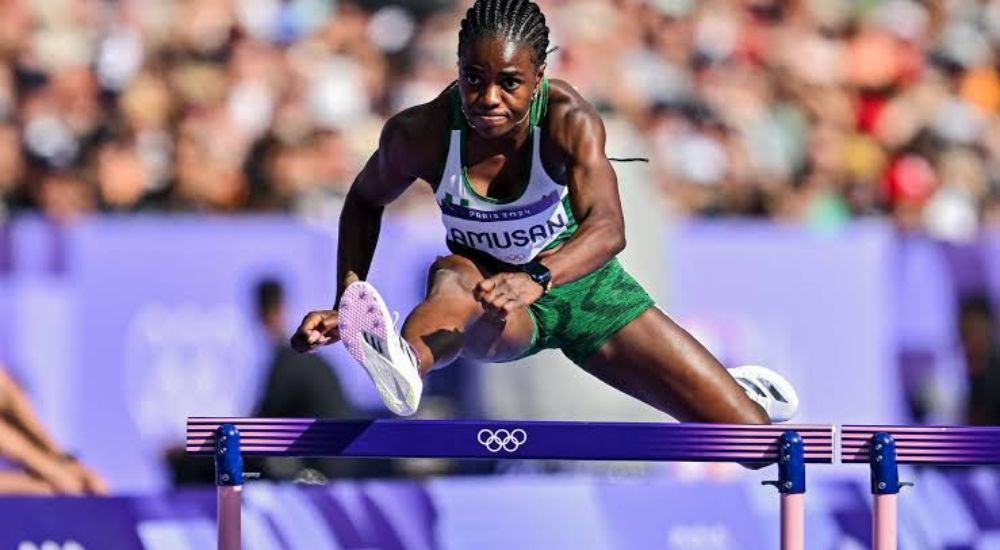

The routine scrapping of the Federal Ministry of Sports and replacing it with the National Sports Commission (NSC) and vice versa has not bode well for sports development in the country. This explains why some doubt that the NSC’s return is the silver bullet needed to address years of mismanagement of the sector, writes GOWON AKPODONOR.
Every epoch has its defining moments for men and women who shape history, either for good or for bad.
[ad]
History is replete with stories of man struggling to attain perfection through changes in routes to the desired goal. This explains why countries swap one system of administration for another in search of that which, they believe, would facilitate their attainment of stipulated goals.
Nigeria’s search for a system that would solve the legion of niggling problems hampering its sports development efforts has been on since the President Muhammadu Buhari-led government scrapped the National Sports Commission (NSC) in 2015 and replaced it with the Ministry of Sports and Youth Development.
While the clamour lasted, stakeholders made a case for the return of the NSC, which they believe is better equipped to deal with the country’s peculiar sports development issues. The call became even louder after the country’s dismal performance at the Paris 2024 Olympics, where Team Nigeria returned from empty-handed.
On October 23, 2014, their prayers were answered when President Bola Tinubu scrapped the Ministry of Sports Development and brought back the NSC. But even with the return of the NSC, many still believe that the commission may not be the answer to the country’s numerous sports development problems.
According to the pessimists, ensuring that the various sports development policies are fully implemented, and conforming with extant laws of the land holds more promise for sports development than any step that the Federal Government may take, including changing or scrapping the sports ministry and returning the NSC.
[ad]
The problem, they say, is not in the system, but in the managers of the system and their lack of capacity/unwillingness to deliver.

The government’s involvement in sports began in 1962 with the establishment of the defunct National Sports Council (NSC), with the late Pa Abraham Ordia, as secretary. It was domiciled in the Federal Ministry of Labour.
In 1971, the council was replaced with the National Sports Commission (NSC) through the promulgation of Decree 34.
In 1975, the then-military regime of General Yakubu Gowon upgraded the commission to a ministerial status and appointed a minister of cabinet rank to oversee its affairs.
 However, in 1991, the NSC re-emerged through a promulgation, when it became a parastatal under the Federal Ministry of Youths and Sports Development, and was saddled with the responsibility of sports administration in the country.
After four years, the NSC was again scrapped as the Ministry of Sports and Social Development took over its roles. In another twist in 2007, the Ministry of Sports and Social Development was again scrapped, and the NSC was reinstated to handle sports development.
However, in 2015, then Sports Minister, Solomon Dalung, unilaterally scrapped the NSC, which then had former captain of the national volleyball team, Alhassan Yakmut, as Director General. Following the scrapping of the agency by Dalung, the Ministry of Sports, which was usually supervised by politicians, took charge of the sector.
That singular act by Dalung, many believe, resulted in the country’s dwindling performances in international competitions.
Critics of the sports ministry point to the performances of the country in international sporting events since the Rio 2016 Olympics to buttress their point.
[ad]
At the Rio 2016 Olympics, Nigeria got just a bronze medal when the likes of Kenya, Egypt, Ethiopia, South Africa, and Morocco, among other African countries, won several medals.
Nigeria’s bronze medal was won by a football team made up of mostly Europe-trained players, who, according to some stakeholders, would not have reached that level of success if they were based at home.
Even though Nigeria fared slightly better at the Tokyo 2020 edition of the Games, some believe that given the improved preparation that athletes would have received under the NSC, the return would have been much better.
According to stakeholders, the NSC with the template set by the President Goodluck Jonathan-led administration in 2012, would have transformed Nigeria’s sports if it were not discarded by the Buhari regime-led administration.
The Jonathan administration had, in 2012, convened a summit to ferret out why Nigeria failed to win a medal at the London Olympic Games held that year.
The result of the summit was the resolve to change the country’s sports development pattern, with the NSC ensuring the discovery, development, and preparation of athletes in the best way possible.
Hinged on a grassroots development programme that would harness the rich human resources in schools, the Federal Government set up a National Schools Sports Commission (NASCOM), which job was to scout for talents through the organisation of competitions for schools at all levels.
[ad]
The NSC, according to the summit, was to be manned by sports technocrats, instead of politicians, with the head (chairman) given the same power as a cabinet minister to run the body. But like so many aspects of the country’s life, that noble idea was discarded at the advent of a new administration, which was spearheaded by a different political party.
Since the scrapping of the NSC in 2015, there have been calls for a return to that system each time Team Nigeria fails or underperforms at the Olympics.
And now, with the return of the NSC with Mallam Shehu Dikko, as its chairman, many believe that the country is on its way to greatness in sports again. But is that a given?
To the Director General of the Delta State Sports Commission, Festus Ohwojero, the Federal Government’s decision to revert to the NSC is the best way forward for sports development.
“The National Sports Commission will produce for the country, a blueprint for sports development, and it will give those managing our sports at the national level enough time to produce and execute their programmes,” Ohwojero said. He continued: “The NSC, to an extent, removes bureaucratic bottlenecks from the sports sector, and ensures prompt release of funds for preparation and execution of various programmes by the sporting federations before major events,” Ohwojero said.
He claimed that the sports ministry over the years has proven that it is poor in sustaining earlier initiated programmes as evidenced any time there is a change of administration.
[ad]
“Another major advantage of the National Sports Commission is that it is manned by sports experts, and technocrats, who understand the terrain, unlike the setting in the sports ministry where non-professionals and non-sports inclined persons find themselves in key positions.
For the NSC to succeed, Ohwojero urged the Federal Government to ensure that only appropriate technocrats, irrespective of religion, ethnicity, or political affiliations are appointed to key positions.
A renowned sports administrator and former Secretary General of the then Nigeria Football Association (NFA), Alhaji Ahmed Sani Toro thinks it is not yet Uhuru with the return of the NSC.
According to him, it is too early for stakeholders to celebrate the return of the NSC, arguing that the Federal Government has yet to clearly define the powers of the new chairman.
He said if Dikko is made to report to either the Secretary to the Government of the Federation (SGF), the Office of the Chief of Staff to the President, or directly to the President, it would be difficult for him to perform optimally.
“People have been clamouring for the commission to be brought back but I ask, what would happen after that? If you scrap the Ministry of Sports, the National Sports Commission would be answerable to who? Will it be answerable to the President, Secretary to the Government of the Federation (SGF), or to the Chief of Staff? This has not been defined, and it has to be cleared before we begin to celebrate,” he said.
Toro, a former member of the House of Representatives, and whose tenure as NFA Secretary General in 1996 the country won the men’s football gold medal at the Atlanta Olympic Games, said: “Let us wait and see what will happen in the coming days. If tomorrow the appointee is given executive powers, or is made a member of the Federal Executive Council, then we would have made progress.”
[ad]
Toro advised Dikko to consider revisiting the Vision 2020 document for sports development, which was put together by some of the best brains in Nigerian sports.
“He should invite those who were members of the committee like Chief Patrick Ekeji, Chief Segun Odegbami, Mitchell Obi, and a host of others who prepared a very comprehensive document, which was accepted by the government at that time. Unfortunately, nothing has been done about it,” Toro said.
For a former chairman of the Nigeria Football Association, Alhaji Ibrahim Galadima: “We cannot pretend that all is well with this important sector. We have not been able to live up to our potential in sports because of a lack of clear vision and focus.
“In addition to this, the different segments of sports are enveloped in crises,” Galadima, a patron of the Nigeria Olympics Committee (NOC) said.
On his part, the last Director General of the NSC, Malam Alhassan Yakmut, also welcomed the return of the commission even though “so much damage has been done to the sector already. Now that the NSC has been reinstated, it shouldn’t be scrapped again.
“The NSC has been back-and-forth for about seven times in the lifetime of this country. I think I have been involved actively as either a victim or a beneficiary about four times. But this last one that happened, I am saying, let it be the last time that the commission would be scrapped.
“The reason I am saying so is that technically, that is the structure that should exist perpetually because it has the sole responsibility for social development, technical development, physical development, and psychological development of athletes, and also preparation of officiating officials and coaches,” he said.
In the build-up to the Rio 2016 Olympic Games, the commission under Yakmut was preparing for a training tour ahead of the Games when Solomon Dalung struck. He did not only scrap the commission but posted Yakmut to a different ministry.
“At any time the sports commission is scrapped, all those components of sports development suffer,” Yakmut said, adding: “Imagine in this modern time, the technical structure of sports has been suspended for over seven years. So, where do you start from? We are in a very fast world now and the competition is keen, and also very scientific.
“However, it is never too late to do the right thing. The government has done the right thing to return the NSC, but it should know that it has only started the right thing. The government should be able to round it off properly. The kind of technical crew that the NSC will assemble under the new chairman will be important. There is a need for technocrats who would address challenging technical issues with despatch to put in the right place to enable us to keep pace with the rest of the world,” Yakmut stated.
[ad]

